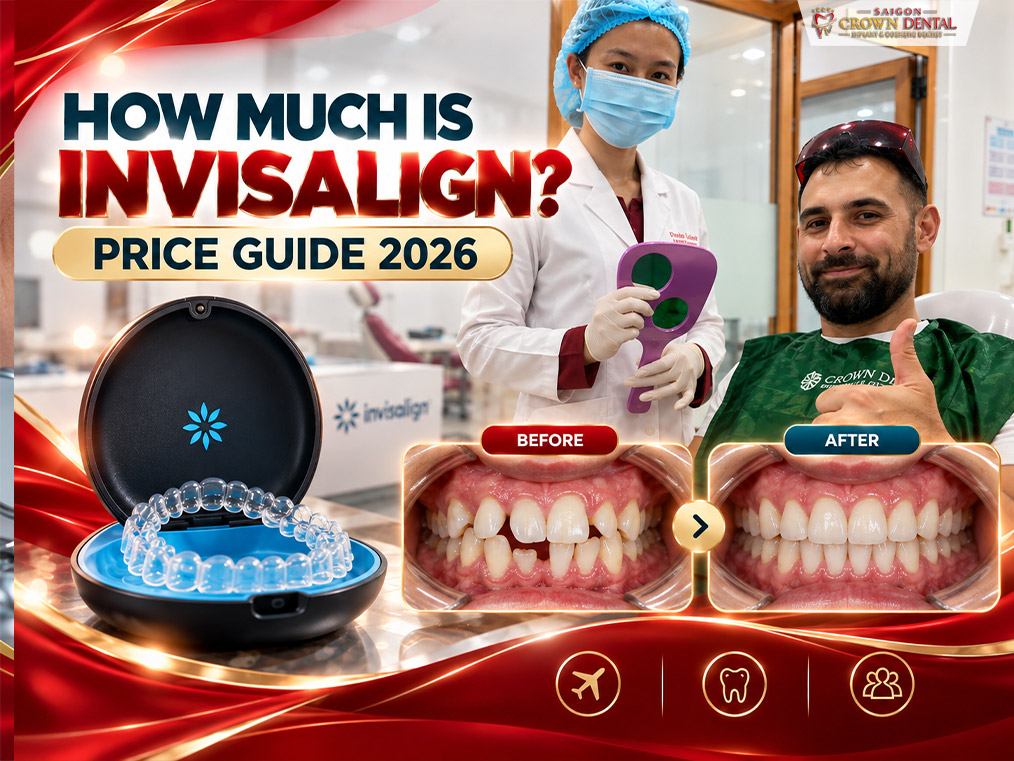
Invisalign uses a series of clear, custom-made aligners to gently shift your teeth into place, no metal wires or brackets needed. It’s a discreet alternative to traditional braces for anyone who wants straighter teeth without changing how they look at work or in photos. Naturally, that leads to the real question: how much is Invisalign? In short, the answer falls within a range that depends on your case, your goals and the clinic you choose. In this guide, we’ll break down real price ranges, what affects the final number and how to avoid hidden fees, so you can plan your smile with confidence.
Average cost of Invisalign
Invisalign pricing isn’t a single fixed number, and it shouldn’t be. After all, it changes based on how much your teeth need to move and how many aligner trays your case requires. That’s why two patients can walk into the same clinic and receive two very different quotes
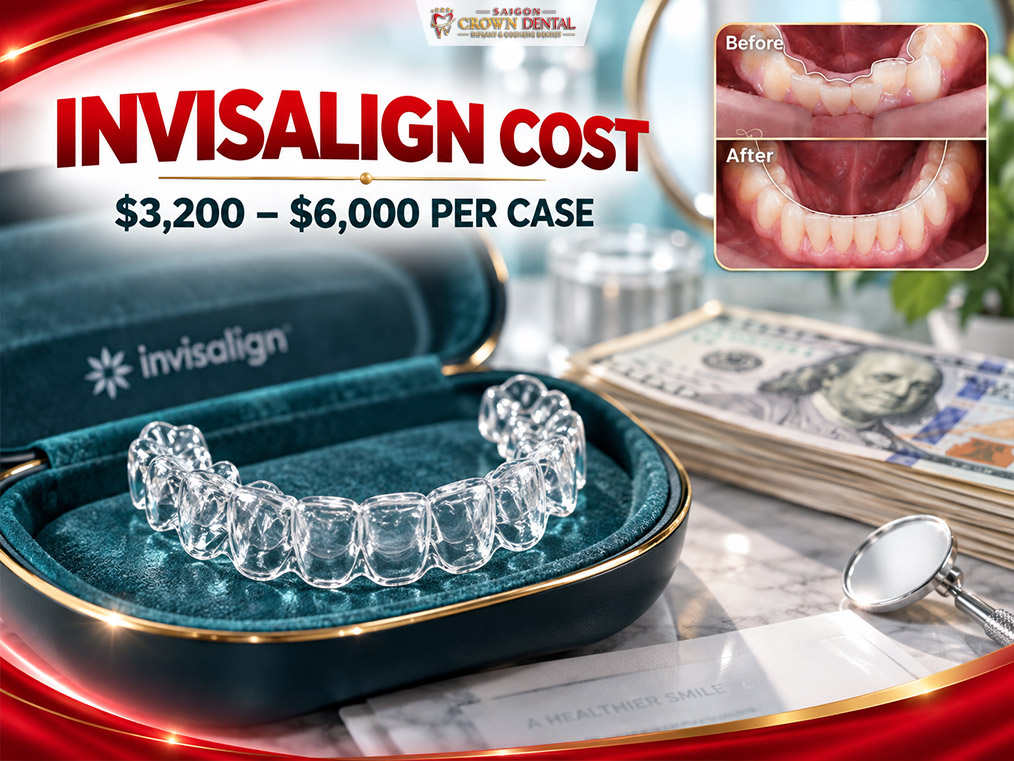
At Saigon Crown Dental, Invisalign treatment typically falls within a range of $3,200 to $6,000 per case. This range reflects real variation in case complexity, not a random markup. As a result, a patient correcting mild spacing will sit near the lower end, while a more complex bite correction sits closer to the top.
For comparison, other orthodontic options at our clinic sit below Invisalign in price, which reflects the added technology, customization and lab work behind each set of clear aligners.
| TREATMENT | PRICE IN USD | NOTE |
| Metal braces | $1,200 – $2,400 | per case |
| Ceramic braces | $1,600 – $3,200 | per case |
| Invisalign (Clear aligners) | $3,200 – $6,000 | per case |
| Self-ligating bracket system +30% | ||
Every quote at our clinic starts with a 3D scan and a real conversation with Dr. Anh Van. Importantly, this step matters, because it means your number reflects your actual teeth, not a generic online estimate. Final pricing is always confirmed after that assessment, since no two mouths are identical.
What affects Invisalign cost
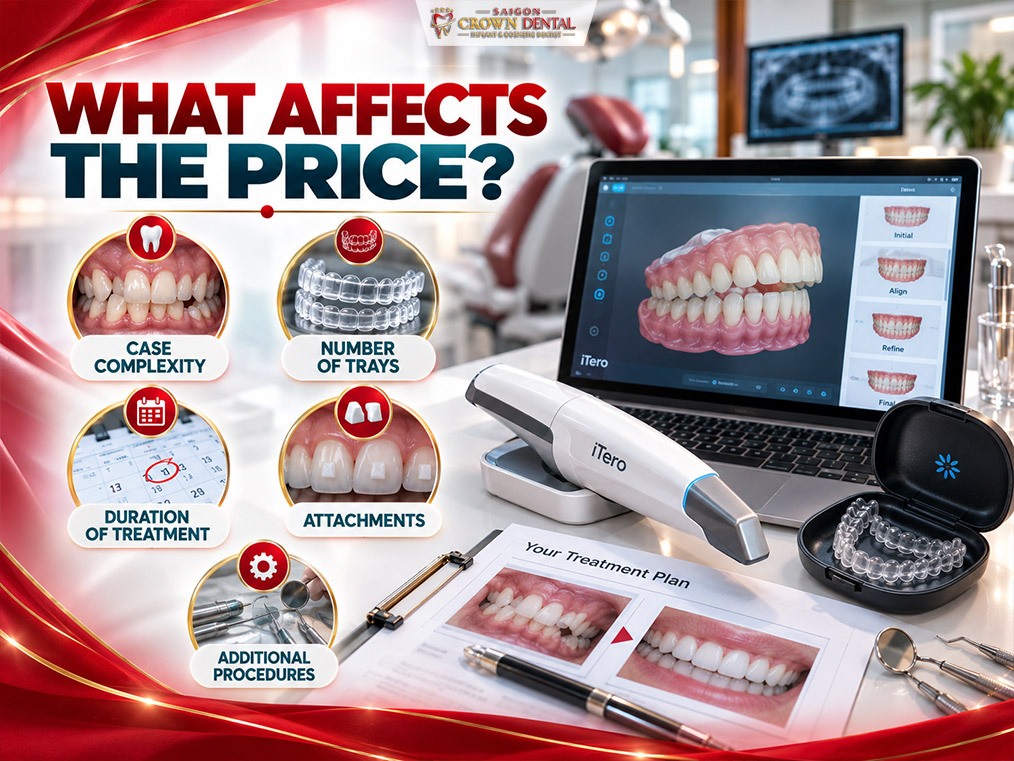
Not every case is priced the same, and that’s actually good news. It means you’re not paying for treatment you don’t need. A handful of clear factors decide where your quote lands within the price range, and seeing them side by side makes the pricing logic much easier to follow.
|
Factor |
How it affects price |
|
Case complexity |
Mild crowding or small gaps sit lower in the range; a full bite correction sits higher |
|
Number of aligner trays |
Each tray is custom-made, so more trays mean a higher total cost |
|
Treatment duration |
Longer plans need more monitoring visits, which adds to the price |
|
Attachments or IPR |
Small tooth-shaping steps can shift a quote upward |
|
Retainers after treatment |
Sometimes priced separately from the main aligner cost |
Case complexity is usually the single biggest driver on this list. A small gap between front teeth is simply a shorter, simpler job than correcting a misaligned bite, so straightforward cases naturally land toward the lower end.
Attachments and IPR (interproximal reduction) are worth explaining, since patients often haven’t heard the terms before. Attachments are tiny tooth-colored bumps that help trays grip certain teeth more precisely, while IPR gently reshapes the space between teeth to create room for movement. Both are minor steps, but they’re common enough to affect a final quote.
Every factor in the table above should appear somewhere on your written treatment plan. If a quote skips over one of them, it’s completely reasonable to ask your dentist to walk through it line by line.
Invisalign vs braces: price comparison
This is one of the most common questions we hear in consultations. Patients want to know if clear aligners are worth the extra thought compared to metal braces, and the honest answer starts with the numbers.
|
Metal Braces |
Ceramic braces |
Invisalign |
|
|
Price range |
$1,200 – $2,400 |
$1,600 – $3,200 |
$3,200 – $6,000 |
|
Visibility |
Most visible |
Blends in more |
Nearly invisible |
|
Removable for eating |
No |
No |
Yes |
|
Typical visit frequency |
Frequent |
Frequent |
Less frequent |
At our clinic, Invisalign sits above both types of braces in price. So the straightforward answer is that Invisalign usually costs more, not the same, as traditional options.
That price gap tends to make sense once you look past the number. Metal braces are the most affordable choice, but they’re also the most visible and come with the most food restrictions, since brackets can trap food and are easily damaged by hard or sticky snacks. Ceramic braces close some of that gap with tooth-colored brackets that blend in better, which is why they sit in the middle of the table.
Invisalign, at the top of the range, trades a higher price for near-invisibility, fewer chairside adjustments, and the freedom to remove the trays for eating and brushing. For many adults balancing treatment with a visible career or social life, that trade-off is exactly why they choose it despite the higher cost.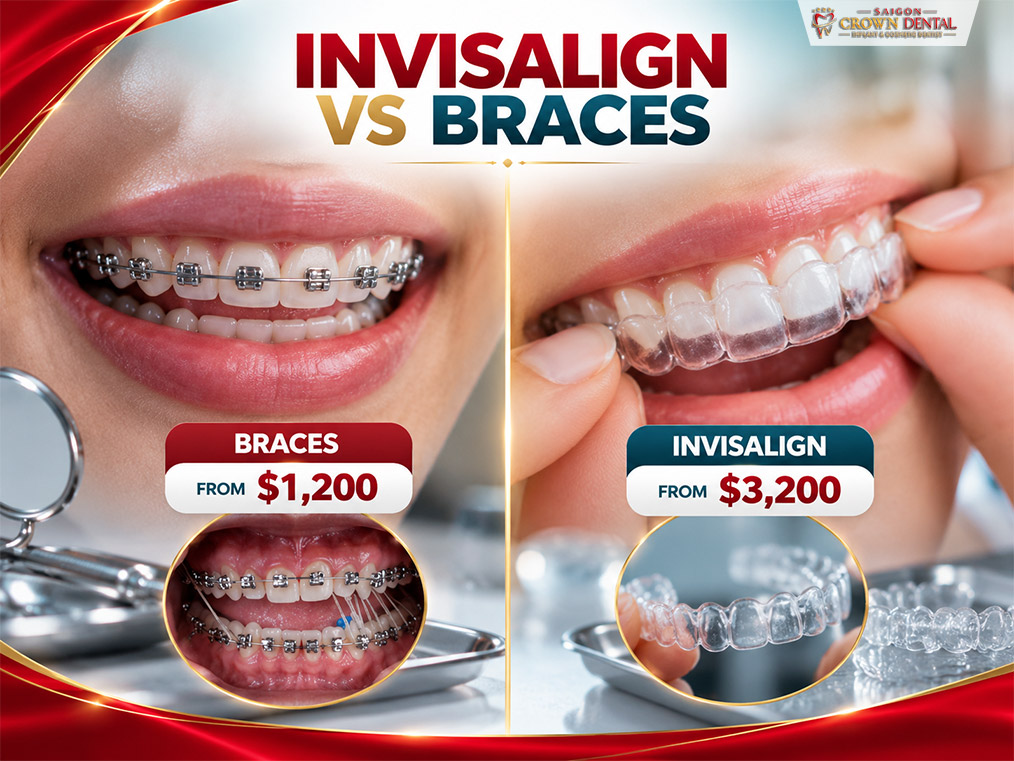
Invisalign vs Braces Cost and Treatment Comparison
Invisalign cost in Vietnam for foreigners
A growing number of our patients are expats and international visitors living in or traveling to Ho Chi Minh City. For this group, the price range for Invisalign in Vietnam is often one of the main reasons they choose to treat here instead of at home, though the real gap is smaller than many expect.
|
Country |
Typical Invisalign price |
Approx. savings at our clinic |
|
Saigon Crown Dental (Vietnam) |
$3,200 – $6,000 |
— |
|
United States |
Around $5,000 |
Up to ~20% |
|
Australia |
Around $6,000 |
Up to ~20% |
|
United Kingdom |
Around £3,500 |
Comparable range |
That 20% figure is worth sitting with for a moment. Unlike implants or veneers, where the cost gap between Vietnam and Western countries can reach 70-80%, Invisalign savings abroad are comparatively modest. This is exactly why cost alone shouldn’t be the only reason to travel for treatment.
What tends to matter more for international patients is how the clinic handles the parts of treatment that happen outside the chair. A written, English-language contract avoids the confusion that comes from translated paperwork. Likewise, a doctor’s certification and case history should be something you can verify before booking, not something you take on faith. And since aligner treatment runs for months, a clear plan for remote monitoring between visits matters just as much as the number on the quote.
Many international patients also combine Invisalign with a broader Dental Tourism package, which can include a free consultation, complimentary X-rays, airport transfer, and hotel accommodation. For a full smile makeover involving multiple treatments, the overall savings tend to be far more significant than for Invisalign alone.
Does insurance cover Invisalign?
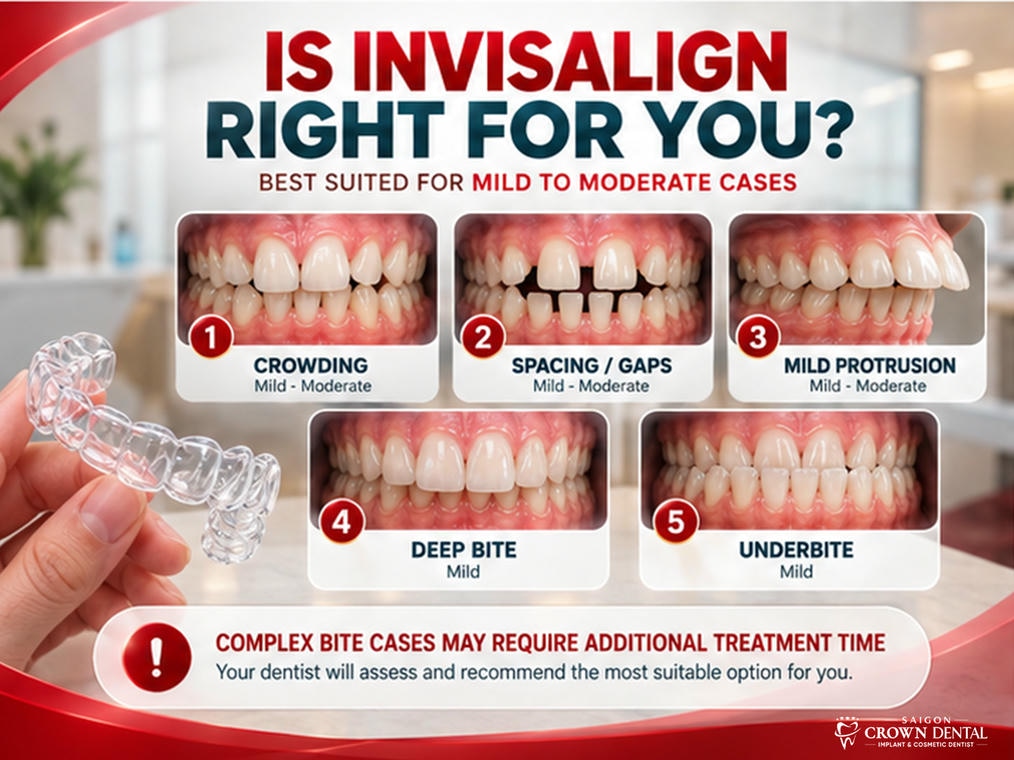
Insurance coverage for Invisalign varies a lot depending on your provider and your home country’s plan.
Some plans offer partial reimbursement, especially for adult orthodontic treatment, while others treat it purely as cosmetic and exclude it entirely.
Even when insurance doesn’t cover the full cost, it’s still worth checking. Many patients were surprised to learn their plan covers a portion they didn’t expect, sometimes a fixed lifetime orthodontic benefit rather than a percentage of the bill.
For international patients treating outside their home country, direct insurance billing usually isn’t available, since most clinics abroad aren’t registered with foreign warranties. In that case, our team can issue a detailed invoice you can submit to your insurance for reimbursement after treatment.
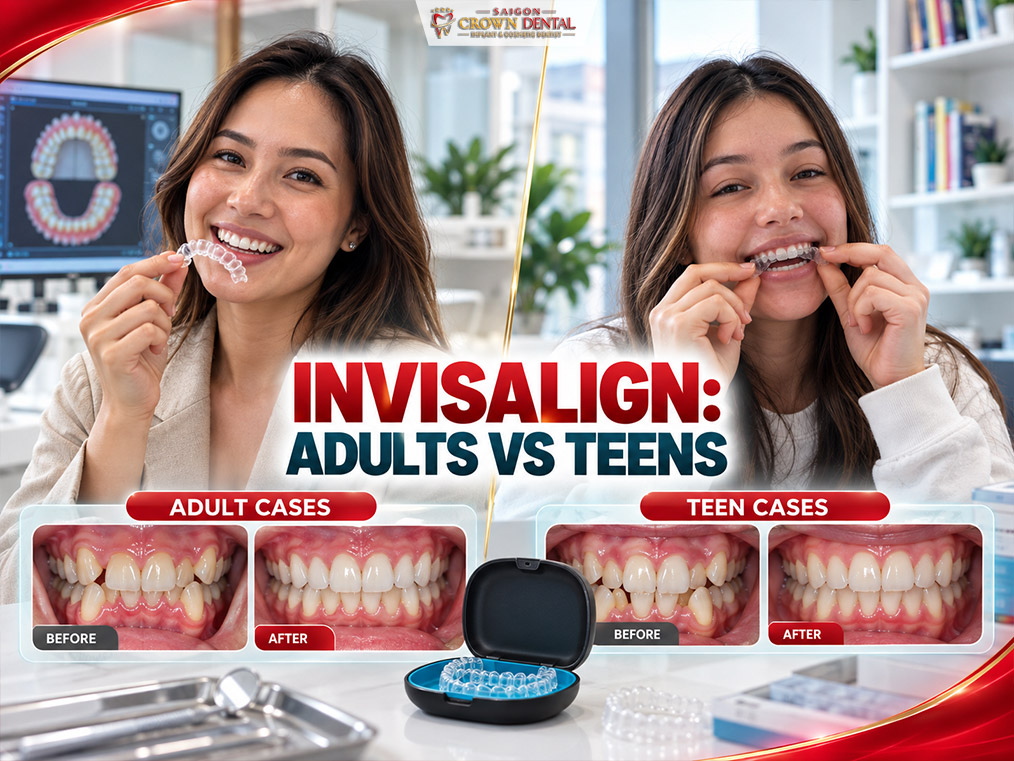
Age itself doesn’t set your price, but it does influence where your case lands within the range. Adults and teens often present very different orthodontic needs, which shows up clearly once compared side by side.
| Adults | Teens | |
|---|---|---|
| Common cases | Relapse from old braces, wear from years of shifting | Simpler, earlier-stage crowding |
| Often needs | Attachments, coordination with crowns/veneers | Compliance tracking on trays |
| Typical position in range | Middle to higher end | Lower to middle |
| Retainer use after treatment | Essential | Essential |
The table above gives a quick snapshot, but the reasons behind each column are worth understanding, since they explain the gap you’ll actually see on your own quote.
Why adult cases often cost more:
- Years of gradual shifting.
Adult teeth have had decades to drift, so even mild crowding today may involve more underlying movement than it appears at first glance.
- Relapse from old braces.
Many adults wore braces as teens but skipped or lost their retainers afterward. Correcting that relapse is often more involved than treating crowding that’s never been fixed before.
- Coordination with restorative work.
Adults are more likely to have crowns, veneers, bridges or missing teeth that need to be factored into the treatment plan, since aligners have to move real teeth around existing dental work.
- Attachments and IPR are more common.
Fully developed adult jaws generally need more of these small aids to achieve precise movement, which adds to the final quote.
Together, these factors are why adult cases tend to land in the middle to higher end of the price range.
Why teen cases often cost less:
- Simpler, earlier-stage crowding.
Most teens start treatment before misalignment has had years to worsen, so the correction needed is usually more straightforward.
- More predictable tooth movement.
Younger jaws are still developing, which generally means teeth respond to aligners more consistently and on a more predictable timeline.
- Shorter treatment windows.
Because movement tends to be more efficient at this age, many teen cases finish with fewer trays and less overall monitoring.
- Compliance tracking built in.
Invisalign trays for teens include wear indicators, so the dentist can confirm the aligners are actually being worn as prescribed, which helps keep treatment on schedule and on budget.
As a result, teen cases more often land toward the lower end of the range.
What stays the same for both groups:
Regardless of age, retainers after treatment aren’t optional. Skipping them is the single most common reason teeth drift back after a course of aligners, undoing months of progress and, in some cases, leading to a second round of correction later. Whether the patient is 16 or 45, protecting the result is just as important as achieving it.
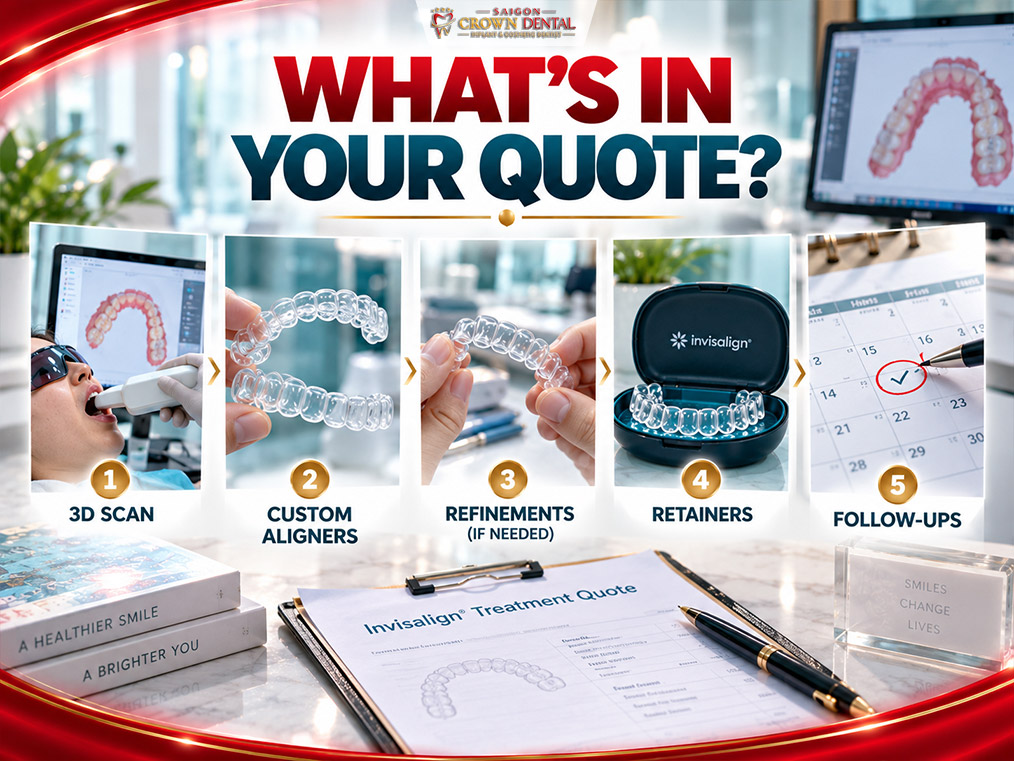
What’s included in your Invisalign quote (Avoiding Hidden Fees)
A common frustration patients mention is receiving a low initial quote, only to be surprised by add-on charges later. This is avoidable, but only if you know what to check before agreeing to start.
|
Line Item |
Why it matters |
|
3D scan |
Some clinics bill this separately, making an attractive quote misleading |
|
Refinement trays |
Many cases need a mid-treatment adjustment; ask if it’s included |
|
Retainers |
Protects your result; check if at least one set is bundled in |
|
Follow-up visits |
Routine check-ins should be listed as included or billed separately |
|
Lost or damaged tray policy |
Confirm the replacement cost and process in advance |
The first two rows tend to cause the most confusion. Refinements happen more often than most patients expect, since teeth don’t always move exactly on schedule, so knowing upfront whether that extra set of trays is covered or billed separately can meaningfully change your final cost.
If a clinic can’t answer every row in that table clearly and in writing, that’s worth treating as a warning sign rather than a minor detail.
Risks of cheap clear aligners
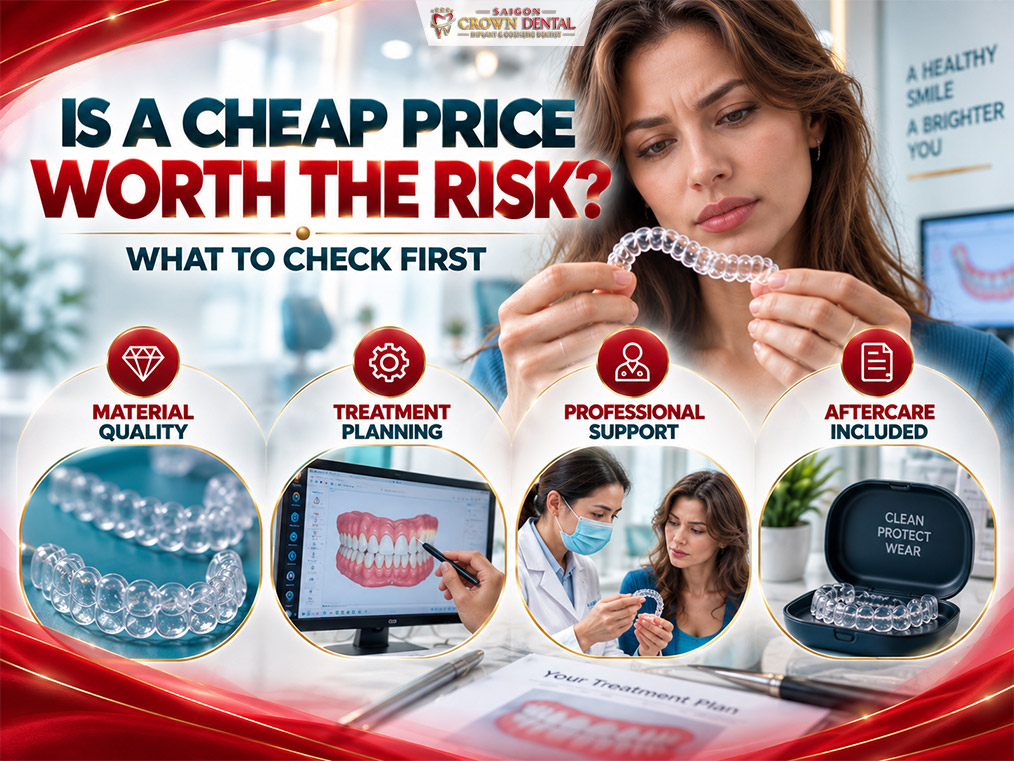
It is tempting to chase the lowest price point. However, orthodontic treatment is not something to be purchased based on price alone; the cost of correcting mistakes almost always exceeds the cost of getting it right the first time.
Poorly planned aligner treatment can lead to incorrect tooth movement, extend the total treatment time beyond initial estimates, or necessitate a second round of corrections later. In dentistry, cutting corners early on tends to cost more, not less.
Here are a few warning signs to watch out for:
-
Quotes without an exam or 3D scan:
Receiving a price quote without an in-person examination or 3D scan (as a doctor cannot accurately price a case without assessing it).
-
Unidentified treating doctor:
The clinic does not specify the name of the doctor who will be directly treating you.
-
Opaque policies:
Evasiveness or silence when asked about policies regarding refinements (adjustments) and retainers.
-
Pressure for early payment:
Being pressured to pay the full cost before any actual treatment steps take place.
A reasonable price range and a safe price range are not mutually exclusive. At a well-run clinic, they are one and the same.
Before and after results
-
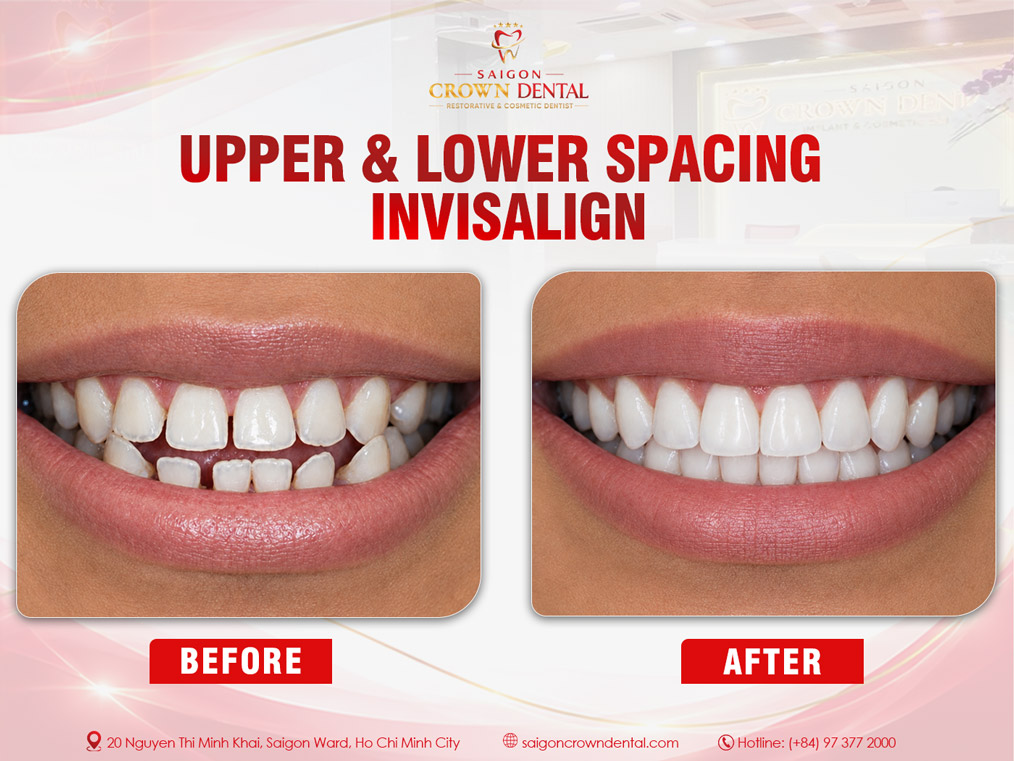
Case 1: Upper & Lower Spacing:
Generalized gaps and diastemas distributed across maxillary and mandibular anterior arches with unsealed contact points [cite: 39]. Invisalign: Controlled crown movement for space closure and gap reduction without excessive labial tipping.
-
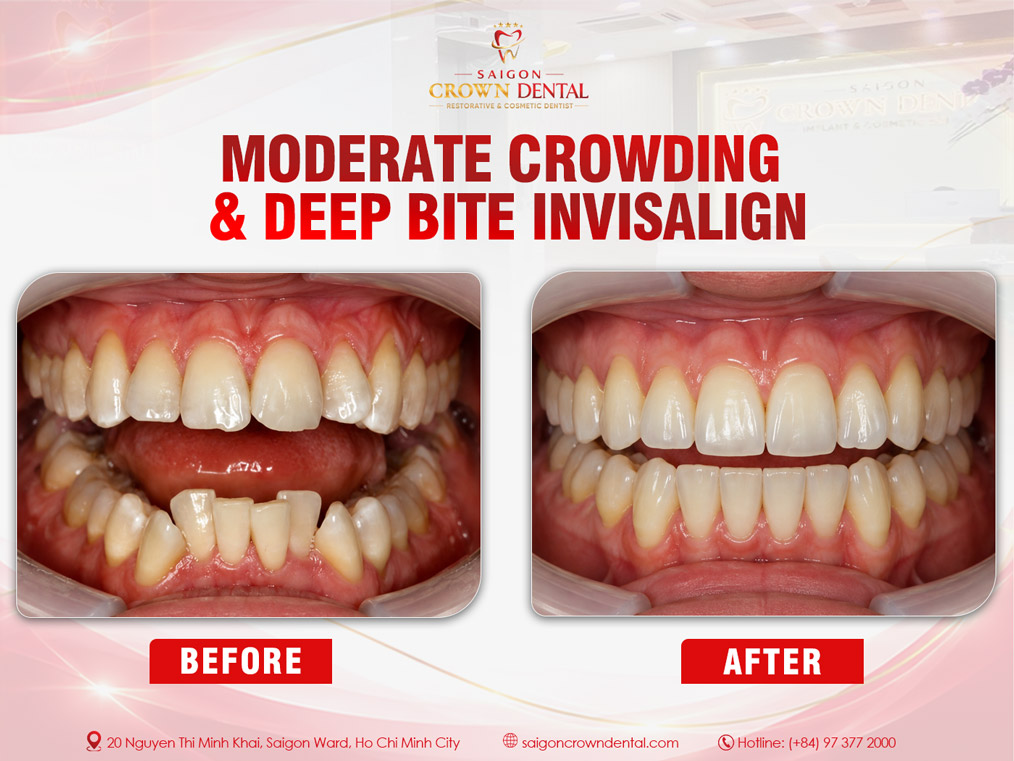
Case 2: Moderate Crowding & Deep Bite:
Moderate lower anterior crowding and rotation combined with deep overbite covering lower incisors [cite: 39]. Invisalign: Arch leveling, intrusion/extrusion control, and bite ramps to correct vertical overlap.
-
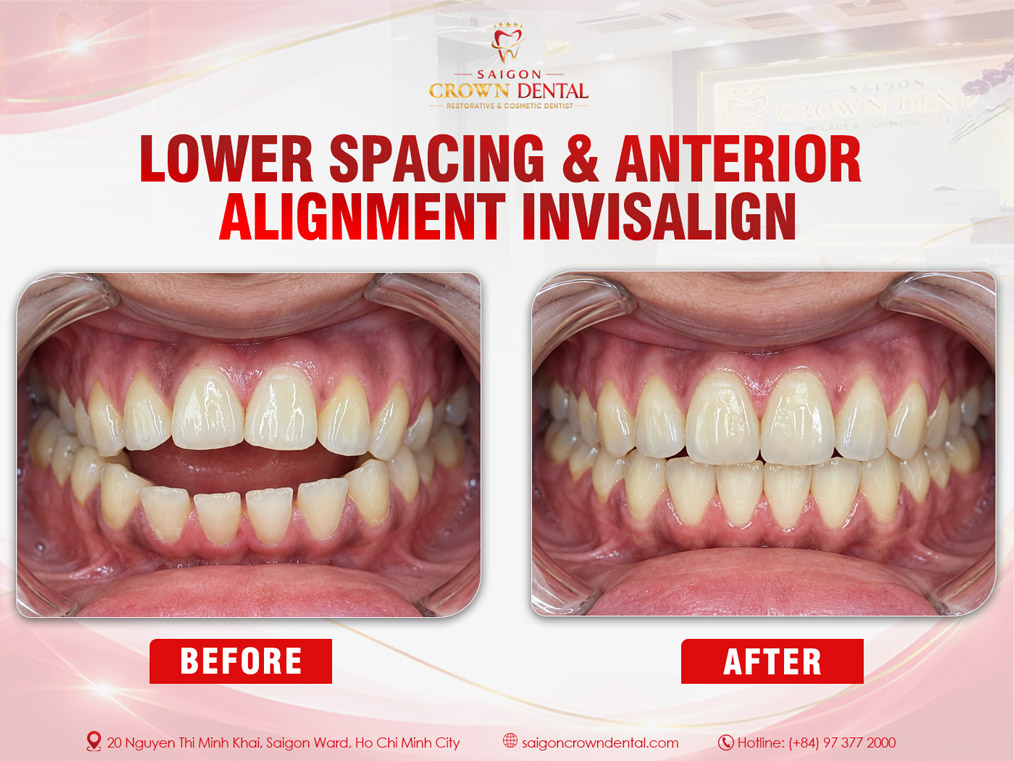
Case 3: Lower Spacing & Anterior Alignment:
Mild lower anterior spacing and minor axial irregularity of mandibular incisors [cite: 39]. Invisalign: Mandibular space closure paired with smooth anterior alignment and torque control.
-
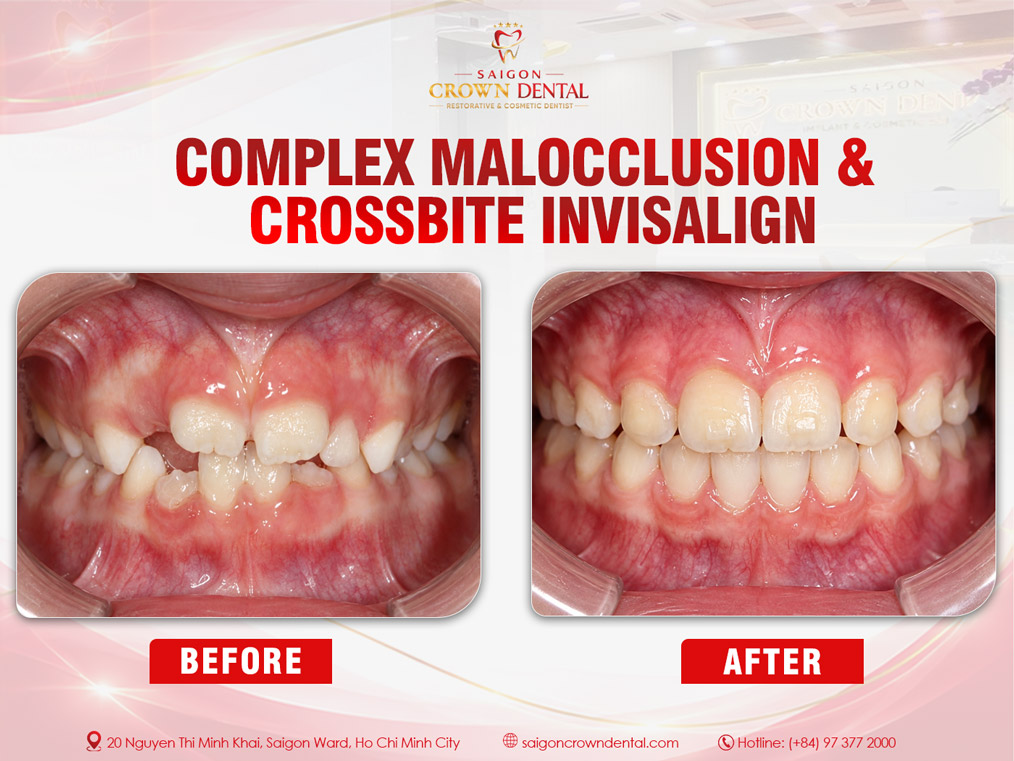
Case 4: Complex Malocclusion & Crossbite:
Severe structural misalignment and anterior/posterior crossbite with displaced tooth coordinates [cite: 39]. Invisalign: Multi-stage 3D root and crown movements to disengage crossbite and harmonize occlusal planes.
-
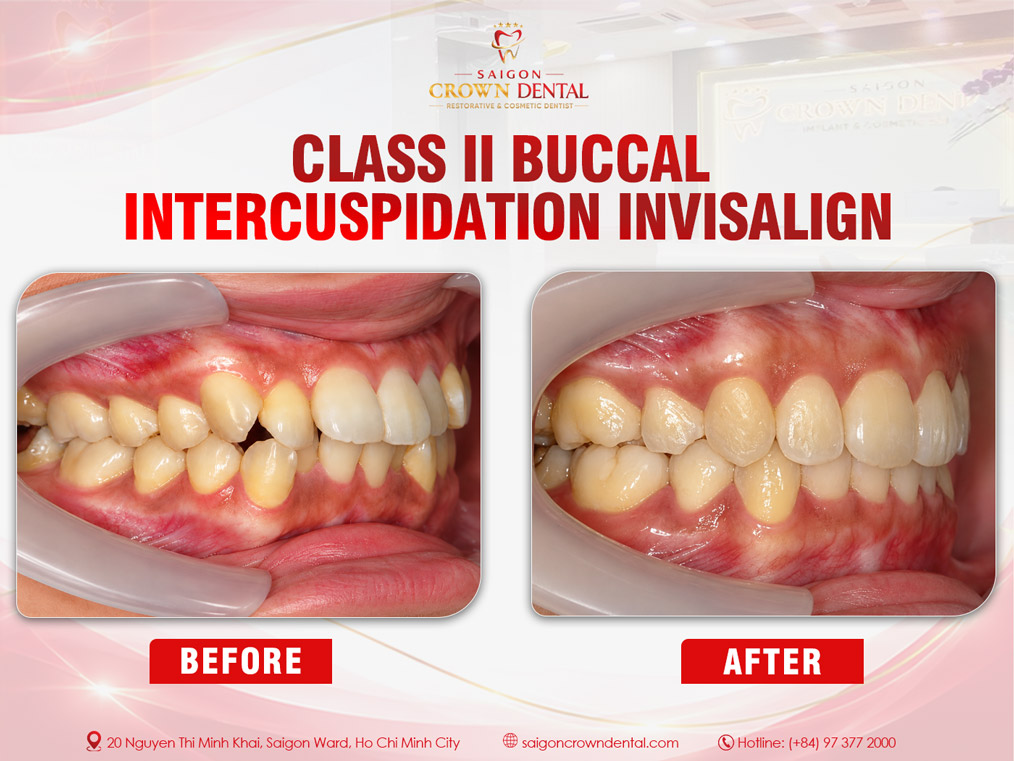
Case 5: Class II Buccal Intercuspidation:
Class II posterior buccal relationship with unmeshed molar and canine intercuspidation [cite: 40]. Invisalign: Distalization or elastics support to transition posterior occlusion into functional Class I intercuspidation.
-
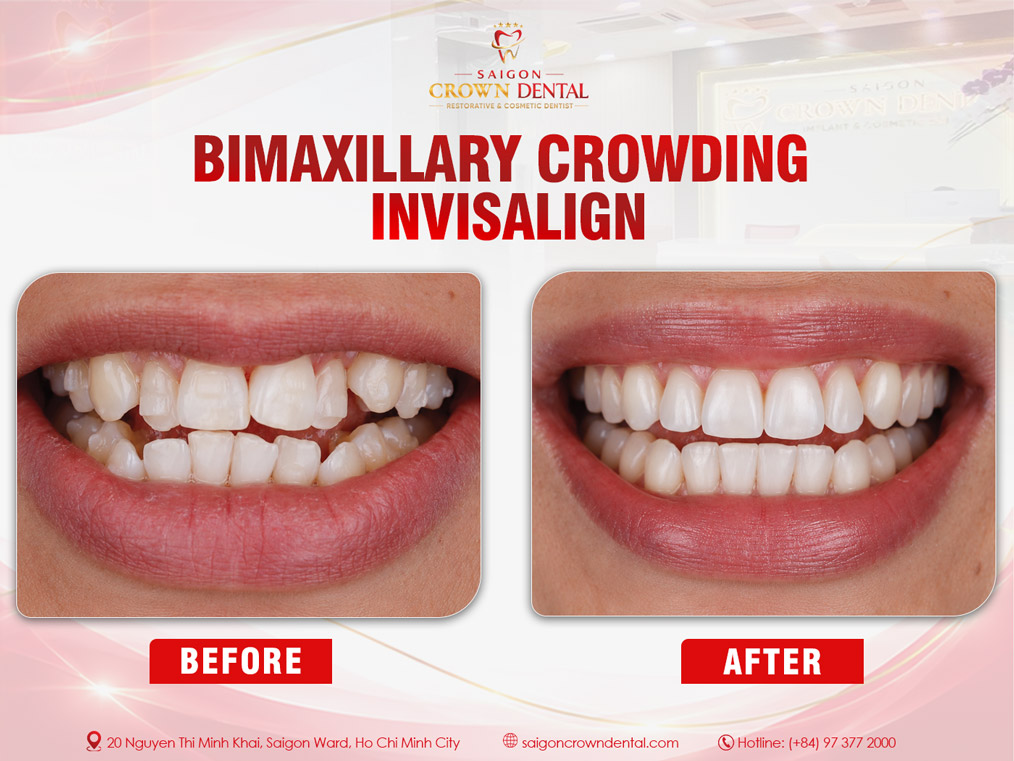
Case 6: Bimaxillary Crowding:
Crowded, rotated, and misaligned teeth across both upper and lower arches impairing arch form [cite: 40]. Invisalign: Controlled arch expansion and selective IPR to resolve crowding and widen the smile arc.
-
Case 7: Arch Expansion & Ectopic Tooth:
Constricted V-shaped upper/lower arch width with an ectopic or displaced tooth outside the arch form [cite: 40]. Invisalign: U-shaped arch expansion combined with guided traction/integration of the ectopic tooth into alignment.
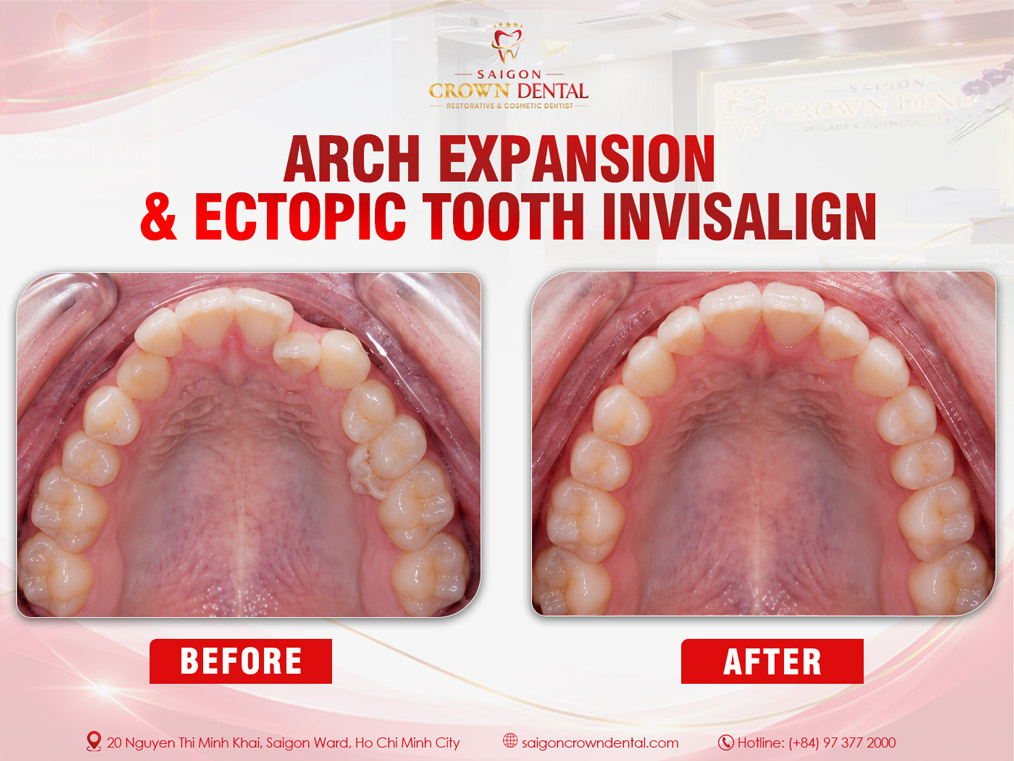
Real results tell you more than any price chart. Every case shown above followed the same process: diagnosis first, aesthetics second, never the other way around.
Where to get an Invisalign quote in Vietnam
If you’re comparing where to start treatment, look past the number on the page. Look at who is treating you and what happens after your last aligner tray.
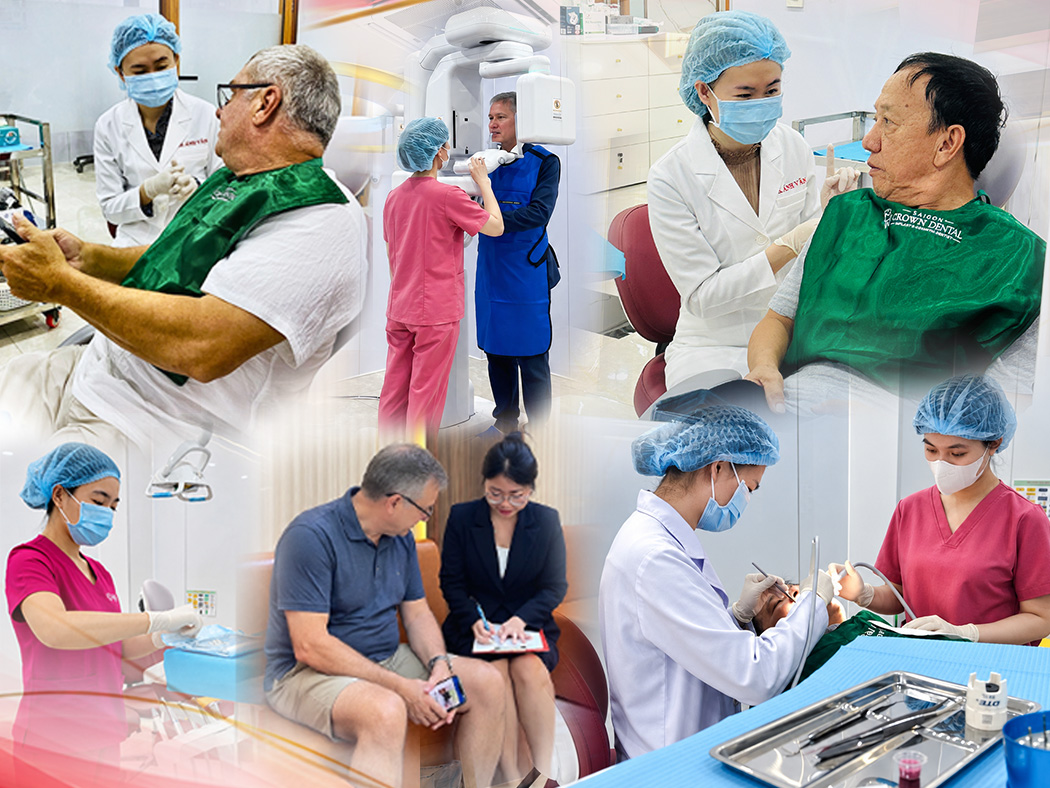
At Saigon Crown Dental, every Invisalign case is planned and reviewed personally by Dr. Anh Van. Our clinic sits in the heart of Ho Chi Minh City, making it convenient for local patients, medical travelers and the expat community alike. Consultations and contracts are handled in fluent English, so nothing gets lost between diagnosis and decision.
Nguồn dữ liệu: American Association of Orthodontists
Frequently asked questions
-
How much is Invisalign on average?
At our clinic, Invisalign typically falls within $3,200-$6,000 per case. Your exact position in that range depends on case complexity, confirmed only after a 3D scan.
-
Does insurance cover Invisalign?
It depends on your plan. Some providers offer partial coverage, especially for adult orthodontic treatment.
-
Is Invisalign cheaper than braces?
Generally no. At our clinic, Invisalign sits above metal and ceramic braces in price, though it offers fewer visits and no food restrictions.
-
Can I get refinements if my teeth don’t move as expected?
Yes. Ask your clinic to confirm their refinement policy before starting treatment.
-
What happens if I lose an aligner while traveling?
A good clinic will have a clear replacement policy and can guide you remotely until your next visit.
Choosing Invisalign isn’t just about finding a number you’re comfortable with. It’s about finding a team that explains that range clearly, plans around your life, and stands behind the result. If you’d like a personal, no-pressure estimate based on your own teeth, our team at Saigon Crown Dental is ready to walk you through it, scan, plan and price, in plain English, with no surprises.