
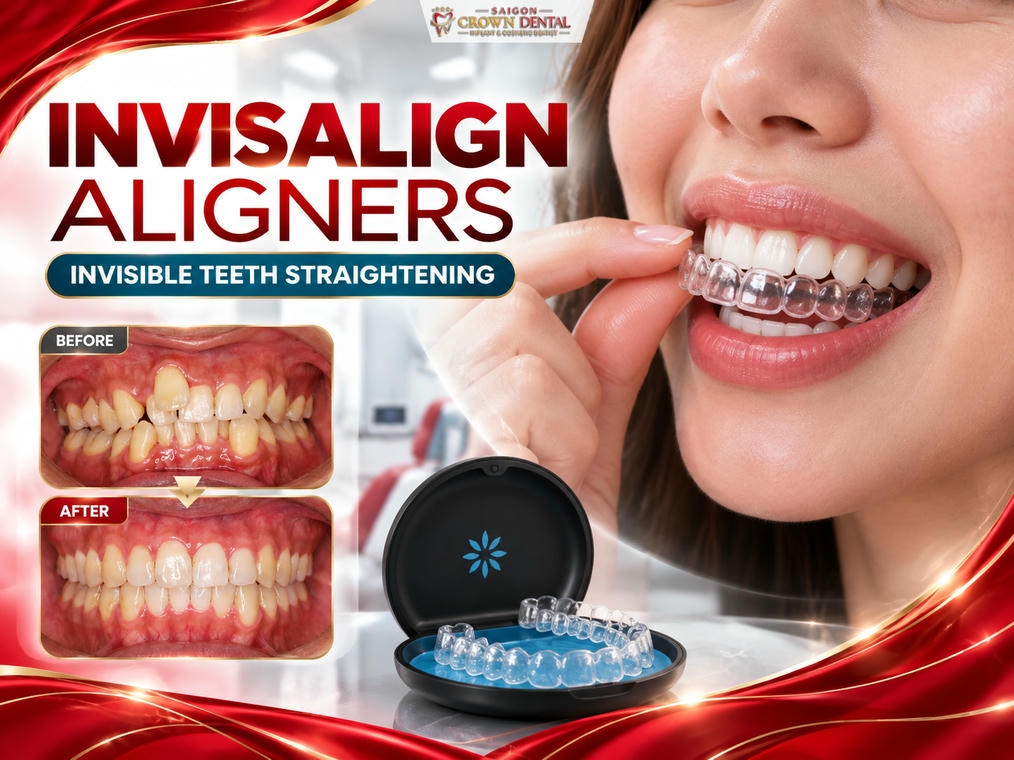
Considering Invisalign aligners but shocked by a $5,000–$8,000 quote in the US, UK, or Australia? You’re not alone. Meanwhile, a growing number of expats and international patients now travel to Ho Chi Minh City for orthodontic care, saving up to 70% on cost. Accordingly, this guide breaks down what Invisalign aligners are, how they actually move your teeth, who they suit, and how you’ll be monitored once you’ve flown home.
What Are Invisalign Aligners?
Invisalign aligners are a series of custom-made, transparent plastic trays used to straighten teeth without metal wires or brackets. Each tray in the series is designed for one small stage of movement. Together, the full sequence carries your teeth from their starting position to the final planned result.
Unlike generic clear aligners sold online, these trays are milled from SmartTrack®, a multilayer medical-grade thermoplastic polyurethane that is completely BPA-free. The material hugs the tooth surface closely. As a result, it applies gentle, continuous pressure rather than the harsher, intermittent force of a metal wire.
The entire process starts digitally. Instead of biting into a tray of silicone impression paste – a step many patients dread – your dentist captures your bite with an intraoral 3D scanner. This single scan becomes the blueprint for every aligner you’ll wear.
How Invisalign Aligners Actually Move Your Teeth

-
Force Mechanism
The force mechanism behind Invisalign aligners differs fundamentally from traditional braces. Whereas metal braces rely on a fixed steel wire tightened by the dentist, Invisalign aligners generate movement from their own shape: each tray molds slightly out of alignment with your current tooth position, pushing the tooth forward.
-
Grip and Attachments
Smooth enamel fails to give the aligner enough grip. For complex movements such as rotating a tooth, pulling down an unerupted tooth, or intruding/extruding a tooth the tray needs an anchor point. Thus, your dentist bonds small, tooth-colored attachments onto specific teeth so the aligner can grip and steer rotation and tilt with precision.
-
Tracking and Micro-Stages
Behind the scenes, the ClinCheck treatment plan breaks your journey into micro-stages. Teeth wait for the previous tooth to clear space, which spreads the load evenly and protects the periodontal ligament. At every check-in, your dentist compares progress against the simulation (Tracking). If a tooth drifts off-path (Off-Tracking), then the dentist refines the design or extends wear time.
-
Wear Discipline
Because the system depends on constant pressure, aligners must stay in for 20-22 hours a day. Falling short slows progress and alters the fit of subsequent trays. Many clinics recommend biting on a foam “chewie” for 5-10 minutes a day to seat the tray fully and apply intended force.
Benefits of Invisalign Aligners

Straighter teeth are only part of the appeal. Patients who switch to Invisalign aligners usually mention a handful of everyday advantages that traditional braces simply can’t match.
Comfort is often the first thing people notice. There’s no wire or bracket edge to irritate the inside of your cheeks or lips, and the smooth plastic edges are far gentler on soft tissue during the first days of a new tray.
Flexibility is the second big draw. Because the trays are removable, they fit around a normal life instead of restricting it – no food is off-limits, and cleaning your teeth stays as simple as it always was.
-
Nearly invisible:
Clear trays that most people won’t notice in daily conversation or meetings.
-
Removable when needed:
Take them out to eat or brush, with no dietary restrictions.
-
Fewer clinic visits:
Check-ins every 6-8 weeks on average, ideal for busy schedules or long-distance patients.
-
Comfortable digital impressions:
A 3D scan replaces the traditional impression tray, with no gag reflex involved.
-
Closely tracked progress:
The ClinCheck treatment plan lets your dentist monitor every stage of movement.
That said, the results still depend heavily on discipline. Your dentist will stress the 20-22 hour wear rule at the very first consultation, because it’s the single biggest factor in staying on schedule.

Who Should Get Invisalign Aligners?
Invisalign aligners suit a wide range of patients, but a few groups tend to benefit the most. Understanding where you fit can help you set realistic expectations before your first scan.
Professionals who meet clients or attend meetings regularly often choose Invisalign aligners specifically for their low visibility. For them, discretion during treatment matters as much as the end result.
International patients and Vietnamese expats form another core group. They typically need a treatment schedule built around their visits home, rather than a fixed weekly appointment they can’t keep.
Younger patients – students and young professionals – usually value the freedom to eat normally and brush without navigating brackets. And for anyone who has avoided braces in the past out of fear of pain or bulk, Invisalign aligners tend to feel far less intrusive day to day.
-
Working professionals:
Prioritize a discreet appearance during client meetings and presentations.
-
Expats and international patients:
Need a flexible schedule built around trips back to Vietnam.
-
Students and young adults:
Want to eat freely and clean their teeth without extra hassle.
-
Anyone hesitant about traditional braces:
Prefers a gentler, less bulky treatment experience.
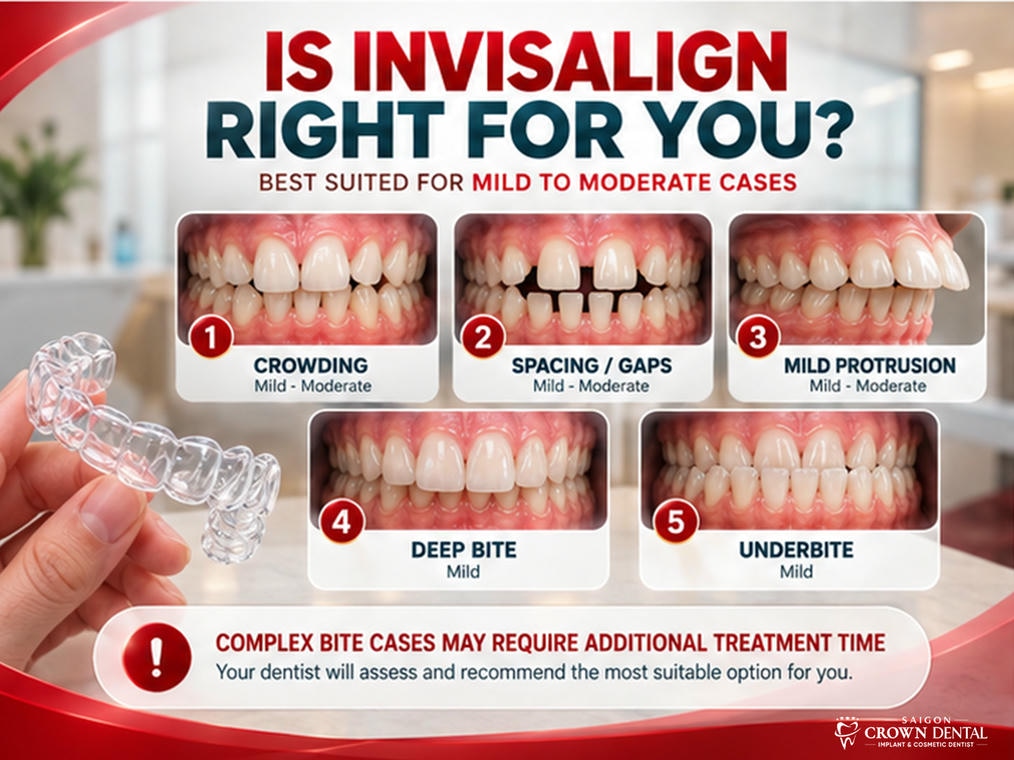
In terms of dental conditions, Invisalign aligners work best for mild to moderate crowding, gaps between teeth, or a mild bite misalignment. More complex cases may need additional appliances alongside the aligners – something your dentist can only confirm after an in-person exam and 3D scan.
Invisalign Aligners vs Traditional Braces
Not everyone understands how the available options actually differ in daily life, not just in price. The table below lines up the key differences side by side.
|
Criteria |
Metal Braces |
Ceramic Braces |
Invisalign Aligners |
|
Appearance |
Highly visible |
Less visible, tooth-colored |
Nearly invisible |
|
Removable |
No |
No |
Yes, for eating and brushing |
|
Average treatment time |
18-24 months |
18-24 months |
12-18 months (case-dependent) |
|
Clinic visit frequency |
Every 2-4 weeks |
Every 2-4 weeks |
Every 6-8 weeks, with remote monitoring |
|
Reference cost |
Lowest |
Mid-range |
Higher, offset by convenience and fewer visits |
|
Suited to overseas/dental tourism patients |
Hard to monitor remotely |
Hard to monitor remotely |
Best suited, thanks to remote monitoring |
In short, Invisalign offers aesthetic benefits and significantly reduces the number of in-person visits required during a short-term stay in Vietnam. It is a solution that minimizes the need for face-to-face appointments while ensuring the treatment process remains closely monitored.

What Happens to Your Treatment Once You’re Back Home?
This is the number one concern for international patients weighing orthodontic care abroad. It’s rarely about the price – it’s about who’s actually watching your progress once you’ve left the country.
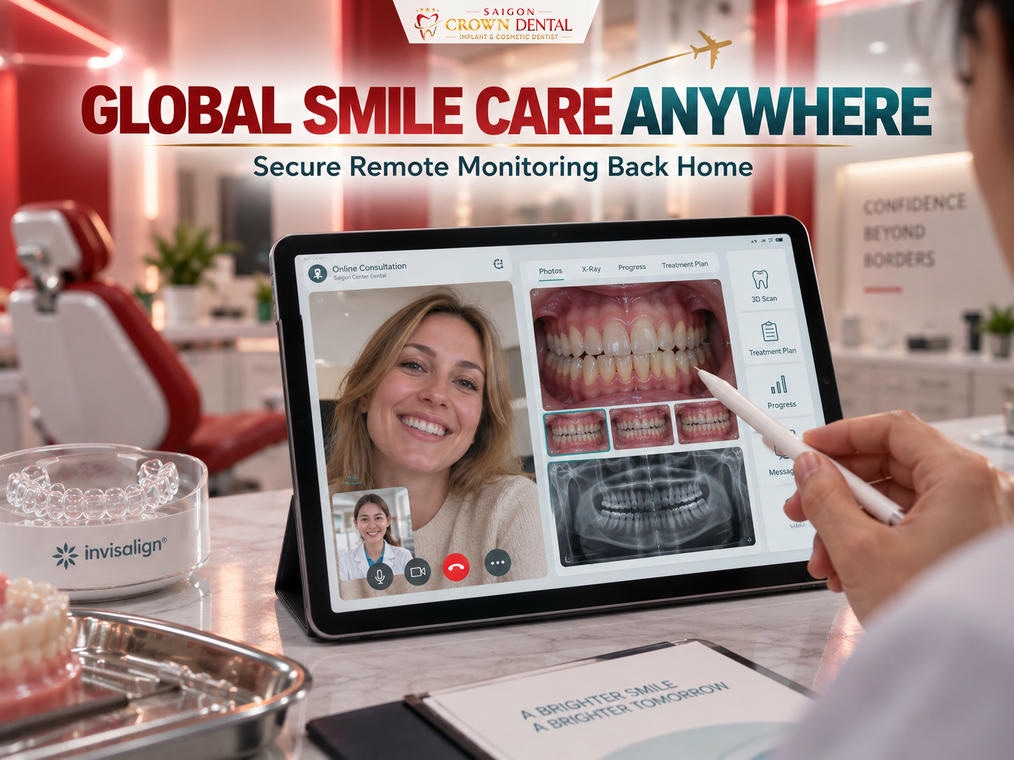
We address this directly with a structured remote monitoring process, rather than leaving you to manage the rest of your treatment on your own.
Before you leave Vietnam, your dentist prepares a clear plan so nothing is left to guesswork between visits, and every stage has a defined start date.
- You receive a full set of aligners for the entire upcoming stage, along with a week-by-week wearing schedule.
- You send periodic photos or hop on a video call so your dentist can assess progress and catch any Off-Tracking early.
- If an adjustment is needed, the clinic coordinates with a local dentist in your home country (if you have one) or schedules a review for your next visit to Vietnam.
- The full schedule – including exactly how many in-person visits you’ll need – is mapped out at your very first consultation, with no surprises mid-treatment.
Invisalign Treatment Timeline
A common worry is how much pain to expect, how many appointments are needed, and whether the plan will actually match what was promised upfront. The timeline below lays out each stage in plain terms.
-
Step 1: Consultation and 3D Digital Scan
Your dentist performs a general exam, takes X-rays, and captures a full digital scan of your mouth. This includes scanning the upper and lower arches, recording your bite, and checking the file quality before it’s sent for treatment design.
-
Step 2: ClinCheck Simulation and Plan Approval
You’ll preview your entire treatment journey – from your current smile to the projected final result – inside the ClinCheck treatment plan software before committing to anything.
-
Step 3: Receiving Your Aligners in Stages
Aligners are manufactured to match your approved plan. You’ll switch to a new tray roughly every 1-2 weeks, based on your dentist’s assessment of how your teeth are responding.
-
Step 4: Ongoing Check-ins or Remote Monitoring
Local patients in Ho Chi Minh City return for an in-person check-up every 6-8 weeks. Patients based abroad combine in-person visits during trips to Vietnam with remote monitoring in between.
-
Step 5: Wearing Your Retainer
Once your teeth reach their final position, a retainer keeps that result stable long-term. It’s the step people most often skip – and the one that determines how lasting the whole treatment really is.

Invisalign Aligners Pricing – No Hidden Fees
For local patients, the biggest worry isn’t discomfort during treatment – it’s usually upsold extra services or hit with surprise fees along the way. Consequently, the pricing below is an all-inclusive package covering every aligner, every check-up, and your retainer.
|
Treatment Level |
Best For |
Reference Price (USD) |
|
Invisalign Lite |
Mild misalignment, fewer aligners needed |
$1,800 – $2,500 |
|
Invisalign Full |
Moderate to complex misalignment |
$2,800 – $4,200 |
|
Invisalign Full + International Patient Support |
Long-distance patients needing remote monitoring |
$3,200 – $4,500 |
Reference pricing only, before VAT. The final cost depends on your actual dental condition after an in-person exam.
International patient support package: patients enrolling in Invisalign Full or higher receive a free Tan Son Nhat Airport pickup, appointment scheduling built around their travel dates, and an additional discount for groups of two or more.
Real Invisalign Case Studies
Generic before-and-after photos aren’t enough when you’re weighing a long-term decision. Below are real treated cases, shown with actual context.
-
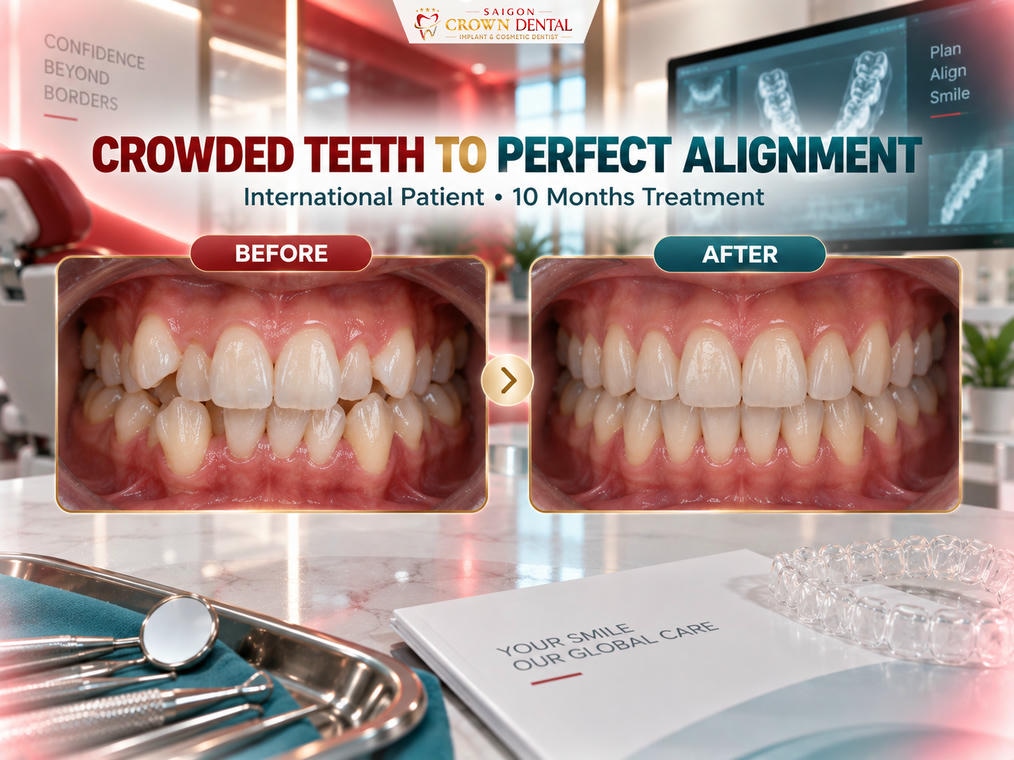
Case: Anterior Crowding & Alignment
Initial Presentation: Moderate anterior dental crowding with overlapping incisors and misaligned arch form
Treatment: Clear aligner therapy (Invisalign) programmed for sequential de-rotation, expansion, and leveling
Clinical Improvement: Resolved anterior crowding, harmonized dental arches, and achieved a well-aligned functional occlusion
-
Case: Moderate Crowding & Arch Leveling
Initial Presentation: Anterior and premolar crowding with constricted alignment
Treatment: Clear aligner therapy (Invisalign) with controlled tooth movement and space redistribution
Clinical Improvement: Straightened dental alignment, normalized curve of Spee/arch symmetry, and improved smile aesthetics

-
Case Precision Bite Correction
Initial Presentation: Mismatched dental midline and intercuspal discrepancy (mismatched bite)
Treatment: Clear aligner therapy (Invisalign) configured for precision torque and occlusal coordination
Clinical Improvement: Balanced bite (balanced occlusion), corrected midline/arch alignment, and harmonious interdigitation

-
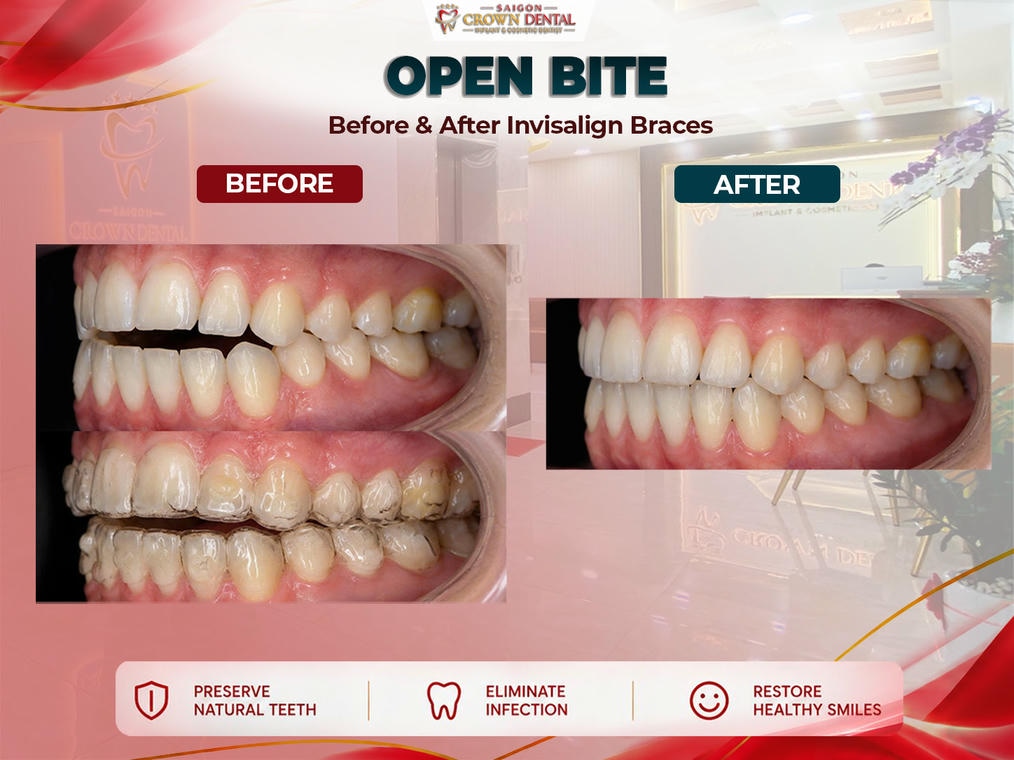
Case Anterior Open Bite
Initial Presentation: Anterior vertical gap lacking vertical contact between opposing incisors.
Treatment: Clear aligner therapy (Invisalign) programmed with vertical control and extrusion vectors.
Clinical Improvement: Closed anterior vertical discrepancy, establishing functional anterior guidance.
-
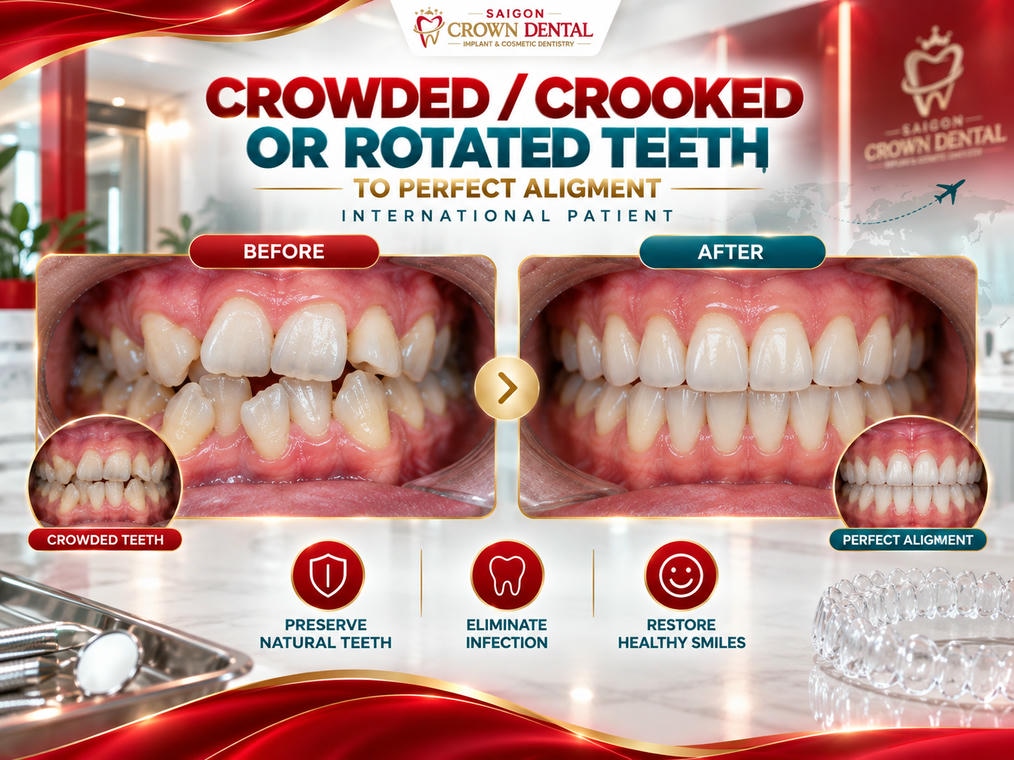
Case Rotated & Crowded Teeth – Invisalign
Initial Presentation: Rotated anterior/premolar units with localized crowding.
Treatment : Sequential root-crown derotation staging using custom clear aligners (Invisalign).
Clinical Improvement: Full derotation, smooth arch perimeter, and predictable alignment without traditional metal brackets.
Our Invisalign braces doctors and clinical credentials
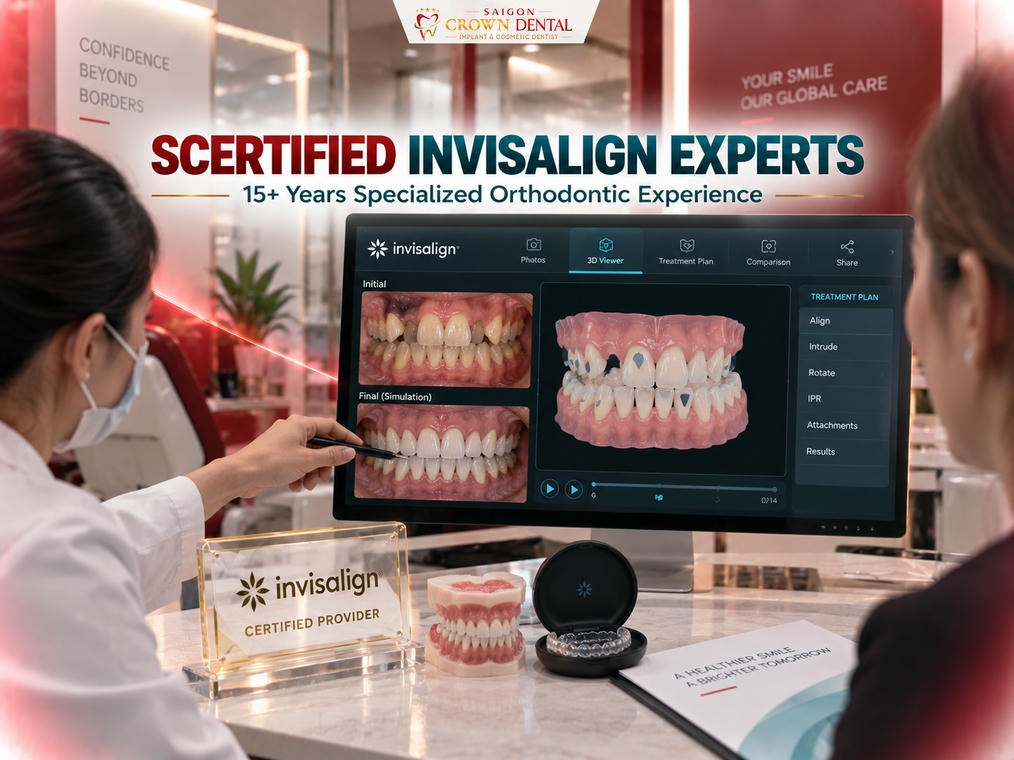
The dentist who plans every Invisalign case at our clinic has more than 15 years of orthodontic experience and holds an Invisalign Certified Provider credential, earned through advanced training in the United States. In practice, this means your ClinCheck treatment plan is always reviewed and refined by a human dentist – never left fully to automated software, which remains a common shortcut at less experienced clinics.
Invisalign Aligners Support Package for Dental Tourists
For international patients and expats, fitting treatment around a trip – whether it’s a holiday or a business visit – is usually the top priority. Planning that overlap well from day one avoids wasted trips later. Therefore, coordination starts at your very first consultation, not after your treatment plan is already underway.
- A suggested visit schedule, such as “3 trips to Vietnam over 12 months” for a typical Invisalign Full case.
- Free Tan Son Nhat Airport pickup and transport between your hotel and the clinic.
- Recommendations for comfortable accommodation near the clinic, for easier check-ins.
- Appointments coordinated around your time zone and actual length of stay.

Frequently Asked Questions
-
Do Invisalign aligners hurt?
You may feel mild pressure for the first 1-2 days after switching to a new tray. It’s noticeably less uncomfortable than tightening metal braces, and it fades as your teeth adjust.
-
How do Invisalign braces move teeth precisely?
The SmartTrack material generates gentle, continuous pressure based on each tray’s slightly offset shape. Combined with attachments and the Tracking feature inside ClinCheck, your dentist can control the direction and rotation of each tooth closely.
-
Who shouldn’t get Invisalign braces?
Severe bite misalignments or cases requiring jaw-bone intervention may call for a different approach or additional appliances. This can only be confirmed after an in-person exam. According to the American Association of Orthodontists, complex skeletal cases often require combined orthodontic-surgical treatment.
-
How do I get monitored while I’m back home?
You’ll leave Vietnam with a full set of aligners for the next stage, send progress photos or video calls periodically, and schedule an in-person check-up for your next visit.
-
Are there any food restrictions?
No – the trays come out for meals, so nothing is off-limits. You just need to wear them at least 20-22 hours a day for the treatment to stay on track.
-
How many trips to Vietnam will I need?
Depending on complexity, most Invisalign Full cases need 3-5 in-person visits, mapped out in detail during your first consultation.
Ready to Start Your Invisalign Aligners Journey?
If you’re weighing Invisalign aligners but still unsure about real costs or how you’ll be monitored after flying home, our team at Saigon Crown Dental offers a free consultation. We’ll map out a treatment schedule around your travel plans, with full transparency from your very first visit – no surprises along the way.
Whether you’re exploring orthodontic care in Vietnam for the first time or comparing treatment options as a local patient, understanding what Invisalign aligners actually are – and how they move your teeth – matters more than picking a brand name off a price list.