
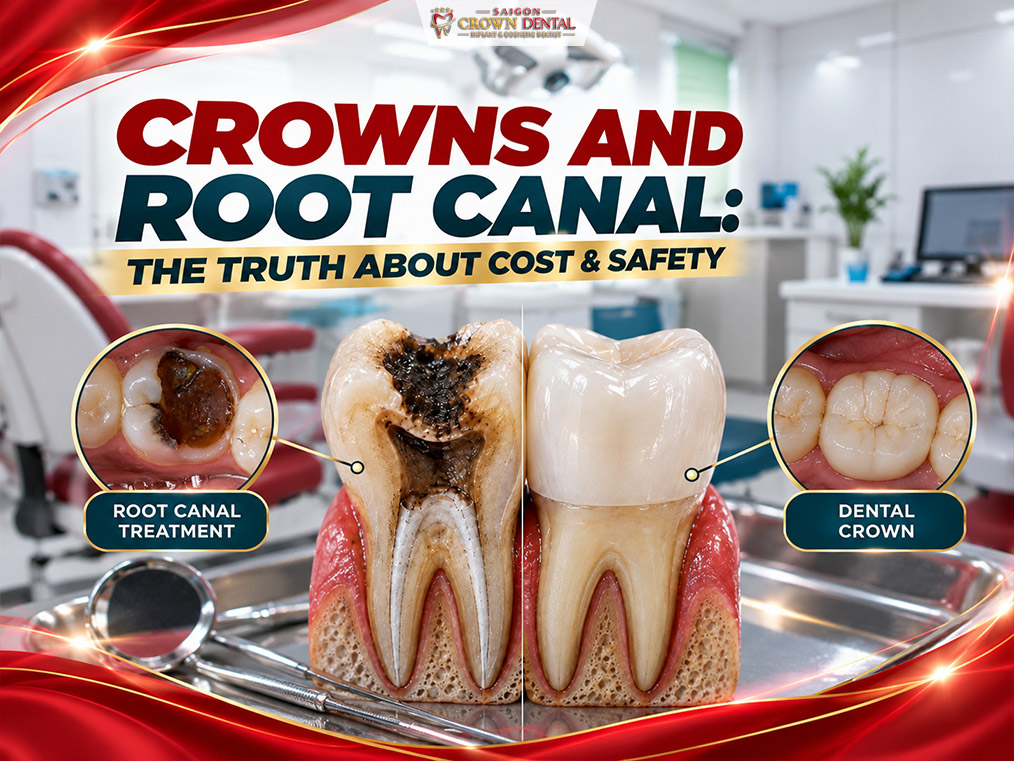
A severe toothache is one of the most agonizing experiences a person can go through – but the moment that pain finally fades, many patients start wondering: are crowns and root canal treatment really necessary together, or is the crown just an unnecessary extra expense? In reality, a tooth that has had its pulp removed loses its natural nourishment and becomes noticeably more brittle than a healthy one. This article breaks down exactly when a crown is truly needed, how much discomfort to expect, and the full cost breakdown so you can make the right decision.
Crown and root canal difference: what sets them apart?

A root canal answers the question “how do I stop the pain,” while a dental crown answers “how do I keep this tooth strong for years to come.” These are two separate but complementary stages of the same treatment plan – not two options to choose between.
Many people mistakenly believe a root canal and a crown are two alternative methods to pick from, rather than two sequential steps in the same process of saving a natural tooth. Skipping either one cuts the overall success of the treatment roughly in half.
The goal and mechanism of each step
-
A root canal
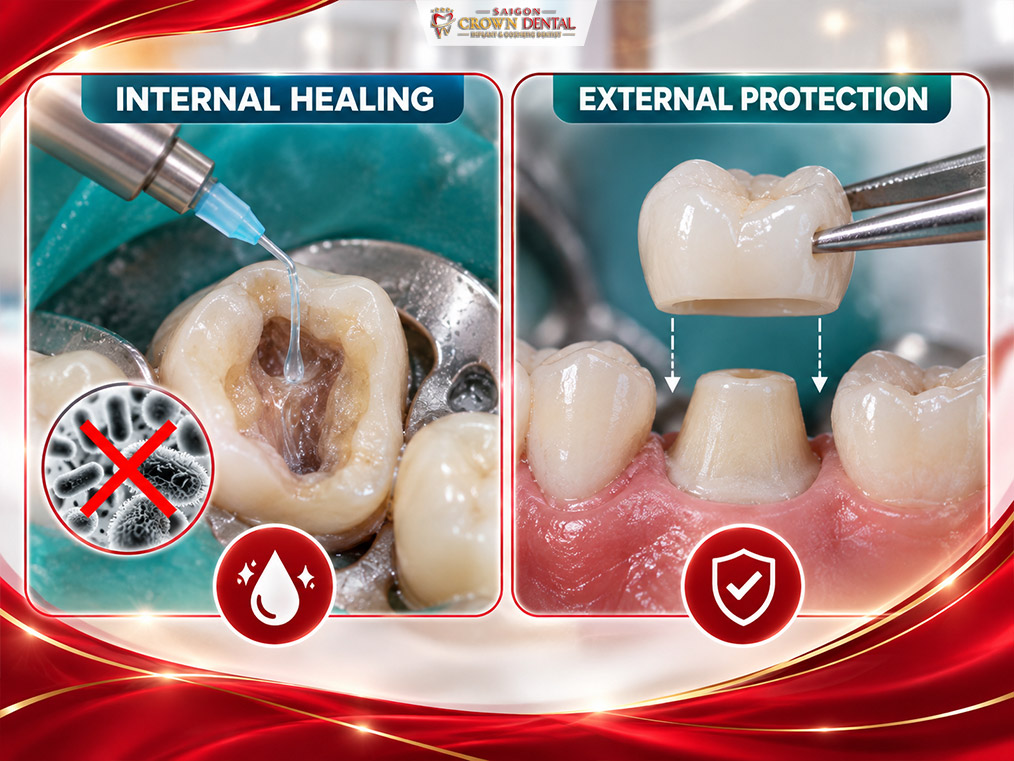
Is a cleaning and healing procedure performed from the inside. The dentist removes all infected pulp tissue deep within the tooth and root, then seals the space to permanently eliminate pain.
The purpose of a root canal is to end the pain completely, remove bacteria, and preserve the natural root beneath the gum.
-
A dental crown
Is a mechanical protection and restoration step performed from the outside. Once the canal is clean, the dentist gently reshapes the tooth and caps it with a custom-made “porcelain cap” designed specifically for that tooth.
The dentist crafts a crown that matches the shape and color of a natural tooth to cover the treated tooth structure. This porcelain shell acts like a helmet, helping the tooth regain roughly 99% of its original chewing strength and appearance while blocking bacteria from re-entering.
Here’s a quick comparison to help you visualize the distinct role of each step:
|
Criteria |
Root Canal |
Dental Crown |
|
Main goal |
Eliminate bacteria & stop pain |
Reinforce strength & mechanical protection |
|
Where it works |
Inside the root canal |
Outer surface of the tooth |
|
Order |
Step 1 (Healing phase) |
Step 2 (Protection phase) |
Why is getting a crown right after treatment so important?
Clearing out the infection only gets you halfway there. So what actually happens if you stop at the root canal and “forget” the crown? Why does a pulpless tooth become so fragile and prone to cracking?
It’s no coincidence that most dentists recommend a crown immediately after a root canal. Here are three core reasons you shouldn’t overlook:
-
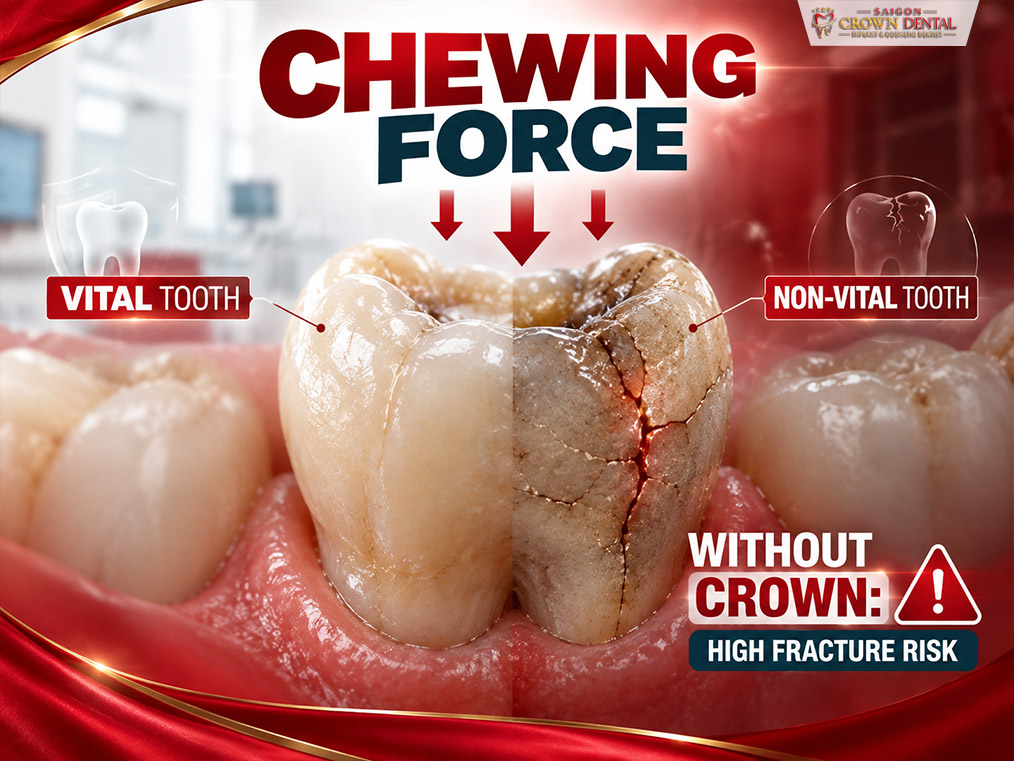
A pulpless tooth becomes brittle over time

A healthy tooth stays alive thanks to the blood vessels and nerves that continuously nourish it through the pulp. Once the pulp is removed, the tooth completely loses its internal supply of moisture and nutrients.
Over time, the enamel and dentin structure gradually dries out, becoming brittle and prone to cracking – much like a dry branch compared to a fresh, flexible one.
Without a crown to evenly distribute biting force, just one bite on something hard, like a grain of rice or a small bone fragment, can split or crack the tooth instantly.
-
It prevents bacterial reinfection beneath the root

After a root canal, the dentist typically uses a temporary filling to seal the opening. However, this temporary filling or composite filling can only protect the tooth for a short period. It isn’t designed for permanent use, so it wears down under constant exposure to saliva and chewing pressure, becoming worn, gapped, or shifted.
Tiny bacteria in the oral cavity can easily slip through the gaps of a worn filling, travel back into the root canal, and cause reinfection. A dental crown creates a near-airtight seal that keeps bacteria out and protects the results of your root canal for years to come.
-
It restores a natural appearance and a smooth, comfortable bite
Teeth that require a root canal are usually already severely decayed, badly chipped, or have a large cavity. After the dentist opens the tooth and cleans out the hollow interior, the remaining natural structure is often very thin and prone to discoloration.
Capping the tooth with a high-quality porcelain crown, such as full-ceramic Zirconia or E.max, helps you:
-
Restore natural color:
Clear and natural, indistinguishable from a real tooth.
-
Standardize your bite:
Comfortable chewing with no awkward high spots or fear of fracture.
At this point, you’re probably wondering – is there ever an exception, or is a crown always required?
Can you skip a crown after root canal treatment?
A rare exception: minor damage to a front tooth
The clinical answer is: yes, but only in a small number of very specific cases. Outside of those exceptions, choosing to skip a crown after root canal treatment carries a real risk of fracture and reinfection that’s hard to predict in advance.
A dentist may consider skipping the crown if the treated tooth is a front tooth (incisor), the original damage was minor, and at least 80% of the natural enamel is still intact.
Since front teeth mainly handle biting soft food rather than heavy grinding, a high-quality composite filling can sometimes be enough to protect the tooth on its own in this situation.
The dangerous complication of skipping a crown on a molar
However, if the treated tooth is a molar (a large or small back tooth), getting a crown is essentially MANDATORY. Molars endure up to roughly 200 psi of pressure (about 14 kg/cm²) with every bite. If only a standard filling is used on a molar that has had a root canal, the risk of a vertical root fracture within 1–2 years is very high.
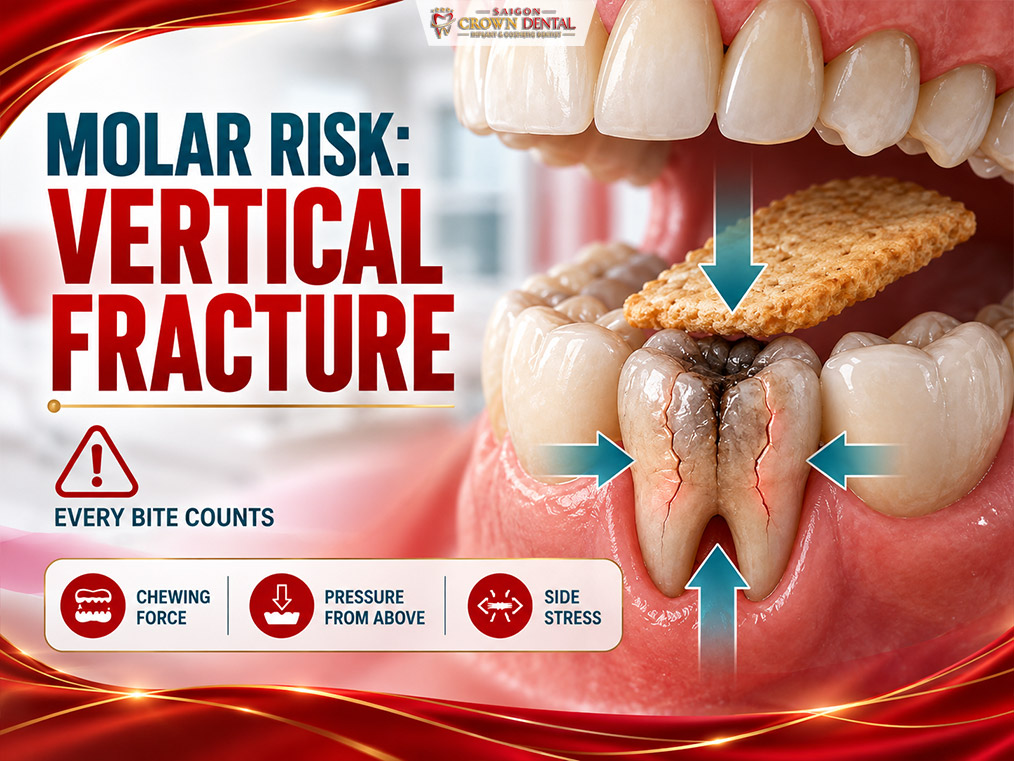
Once the root cracks vertically below the gumline, there is almost no way to repair it – the tooth must be extracted entirely, and replacing it with an implant typically costs 3–4 times more. In other words, delaying a crown to save money upfront usually ends up costing far more later on.
Root canal crown pain: does the procedure hurt?
Almost no pain during the procedure itself – just a brief mild soreness once the anesthesia wears off.
For many people, “root canal” conjures memories of needles, drilling sounds, and pain, but with today’s modern dental technology, the treatment experience has completely changed.
What determines your comfort level throughout the process comes down to two phases: the numbing before the procedure, and the recovery period once the anesthesia fades.
-
Anesthesia technology eliminates pain during treatment
Today, before any step begins, the dentist administers local anesthesia to the treatment area using modern techniques.
You won’t feel any sharp pain while the dentist cleans the root canal or shapes the tooth. The only sensation you’ll notice is a gentle vibration from the dental equipment.
-
Managing mild soreness after the anesthesia wears off
After the procedure is completed and the anesthesia fully wears off, you may feel mild soreness around the surrounding gums for about 24–48 hours.
This is a completely normal physiological response as the gum tissue heals. Your dentist will prescribe standard pain relief medication to help you stay comfortable and go about your day normally.
Once the fear of pain is put to rest, the next thing to understand is the timeline and steps involved so you can plan your schedule.
Root canal treatment process at SAIGON CROWN DENTAL
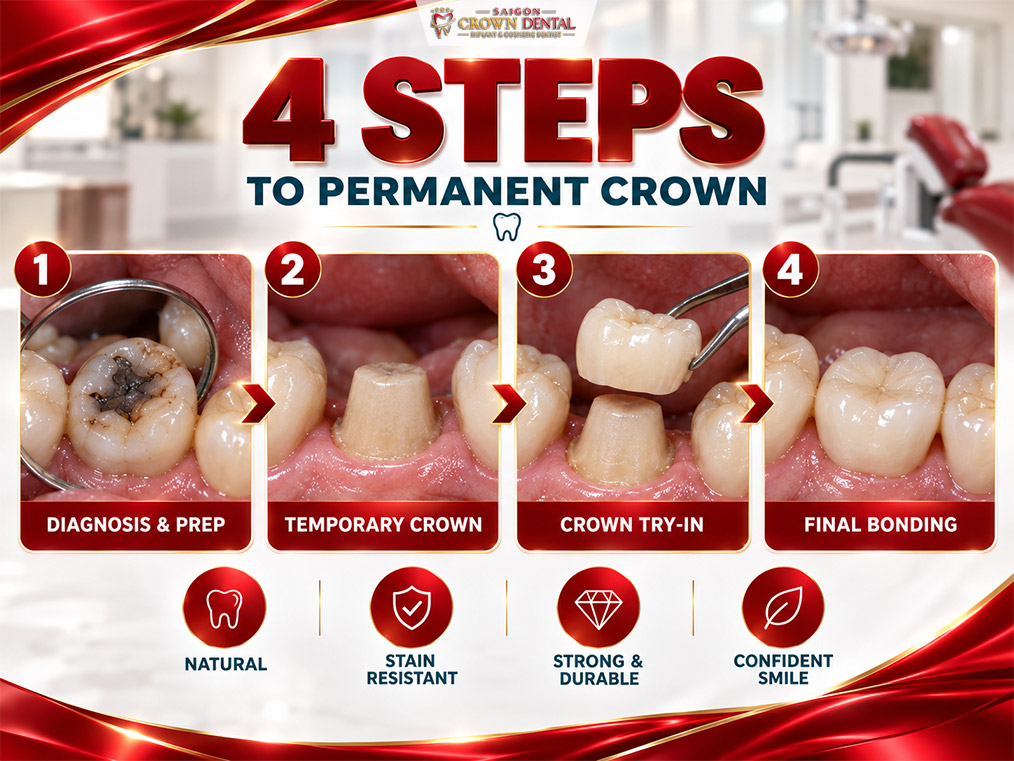
A medically standard treatment path doesn’t stop at simply cementing a crown – it involves several checkpoints to ensure a precise fit and long-term safety. At SAIGON CROWN DENTAL, the entire process from root canal to a finished crown takes 5–7 working days, divided into four short appointments to guarantee absolute safety and the most precise, natural-looking fit.
-
Visit 1: Diagnosis, root canal treatment, tooth preparation & 3D scanning
Imaging & treatment: The dentist takes a 3D Cone Beam CT scan to examine the root canal, then performs a thorough, sterile root canal treatment.
Tooth preparation: The tooth is gently reshaped to preserve as much natural structure as possible.
3D digital impression: A digital scanner captures the tooth shape down to the micrometer and sends the data to the dental lab.
-
Visit 2: Temporary crown placement & fine-tuning to protect the tooth
After the lab quickly fabricates a temporary tooth, the dentist fits the temporary crown onto the prepared tooth. The fit is carefully adjusted to protect the natural tooth structure from bacteria and temperature (hot/cold) while allowing you to eat and go about daily life comfortably while waiting for the permanent crown.
-
Visit 3: Crown try-in, shade check & bite adjustment
Try-in: The permanent crown is placed on the tooth to evaluate the fit of the margin, shape, and how well the color matches your other teeth.
Bite optimization: The dentist checks your bite and makes immediate adjustments if any high spots, discomfort, or misalignment are found, ensuring the most natural chewing feel.
-
Visit 4: Final personalization & permanent cementation
Once the crown has been fully adjusted to your satisfaction based on Visit 3, the dentist gives you one final check. When you’re 100% happy with the result, the dentist permanently cements the crown using specialized dental adhesive, completing your smile restoration journey.
Treatment cost & timeline comparison
The cost of combining a root canal with a dental crown depends on the tooth’s location, the extent of damage, and the crown material chosen. Below is an average cost comparison between Vietnam and Western countries to help you plan your budget:
|
Treatment Item |
Average Cost (Vietnam) |
Cost in the US/EU |
Timeline |
|
Root Canal |
1,500,000 – 3,000,000 VND |
$700 – $1,500 |
1–2 visits (60 min/visit) |
|
Dental Crown |
3,000,000 – 8,000,000 VND |
$800 – $2,000 |
2–4 days lab time |
|
Total |
4,500,000 – 11,000,000 VND |
$1,500 – $3,500+ |
Completed within 1 week |
Frequently asked questions
-
How long does a dental crown after root canal last?
With modern materials like Zirconia or E.max and proper care, a crown typically lasts 10 to 15 years, and can even last much longer. Durability depends heavily on the precision of the dentist’s fitting technique and your daily oral hygiene habits.
With premium full-ceramic materials such as Zirconia or E.max, a crown placed after a root canal usually lasts 10 to 15 years, and sometimes a lifetime with proper care. This longevity depends on two core factors:
The dentist’s skill: precise tooth shaping and an absolutely tight crown fit.
Your daily oral hygiene habits and chewing forces.
-
Do I need to follow any precautions after getting the crown?
In the first 24 – 48 hours after permanent cementation, avoid chewing food that’s too hard, too sticky, or too hot/cold so the dental cement can fully set.
Long term, keep brushing twice a day with a soft-bristled toothbrush, use dental floss or a water flosser to clean around the crown, and return for a checkup every 6 months.
-
Can I delay getting a crown after a root canal?
Dentists strongly advise against waiting more than 2 weeks. A temporary filling only offers short-term protection. Delaying too long causes the filling to loosen or wear away, allowing bacteria to reinfect the root canal or leading to an irreversible tooth fracture.

Conclusion
Investing in crowns and root canal treatment together isn’t a wasteful extra expense – it’s a smart investment in keeping your natural tooth for as long as possible. Don’t let a tooth you just saved end up cracked and extracted just to save a little money upfront.
Are you currently struggling with tooth pain, or have you just finished a root canal?
Contact SAIGON CROWN DENTAL now via our hotline, or leave your information below, to get an examination and personalized treatment plan from our specialists!