
Worried that braces might be too visible, uncomfortable, or get in the way of everyday conversations? That’s exactly why dental clear aligners have become the top choice for young professionals and international patients alike. This article breaks down what they are, their pros and cons, and the clinically standard treatment process, giving you the full picture before you decide.
How Do Clear Aligner Trays Work?
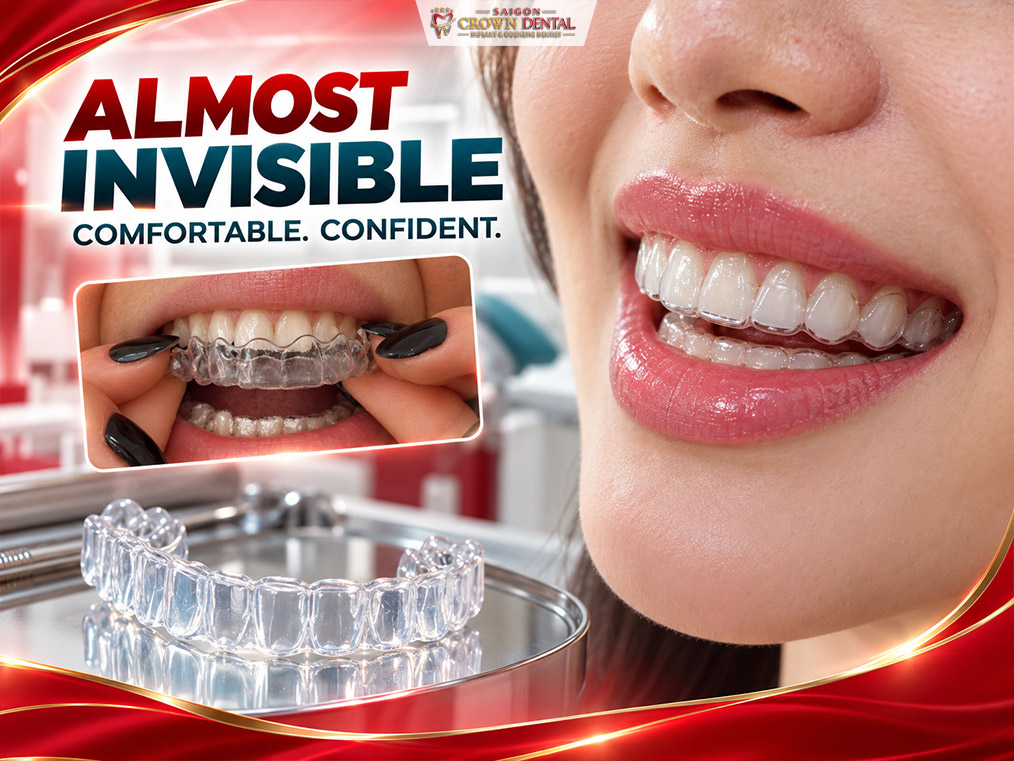
This treatment is a breakthrough in modern cosmetic dentistry. Instead of relying on fixed metal brackets and wires, it uses digital technology to produce a series of premium medical-grade plastic trays, custom-designed for each patient based on a 3D dental scan. Each tray applies gentle pressure on the teeth, guiding them to shift gradually along a pre-planned path.
The combination of biocompatible materials and digital technology creates an entirely new orthodontic experience. As a result, patients achieve effective tooth movement while staying comfortable and confident throughout daily social interactions.
Most patients switch to a new tray every one to three weeks, depending on their doctor’s treatment plan. The exact timing depends on the overall treatment roadmap, the type of tray, how much movement is needed, and how each patient’s teeth respond. Because of this gradual approach, the process tends to feel far gentler than traditional methods.
The biggest advantage is that the trays are fully removable. This makes eating and cleaning your teeth significantly easier compared to a fixed appliance.

Clear Aligners vs Traditional Braces: Which Should You Choose?
This is often the question people spend the most time weighing when they begin their journey toward a straighter smile. In reality, no single method is perfect for everyone – each option is designed to address different aesthetic preferences, lifestyles, and levels of misalignment.
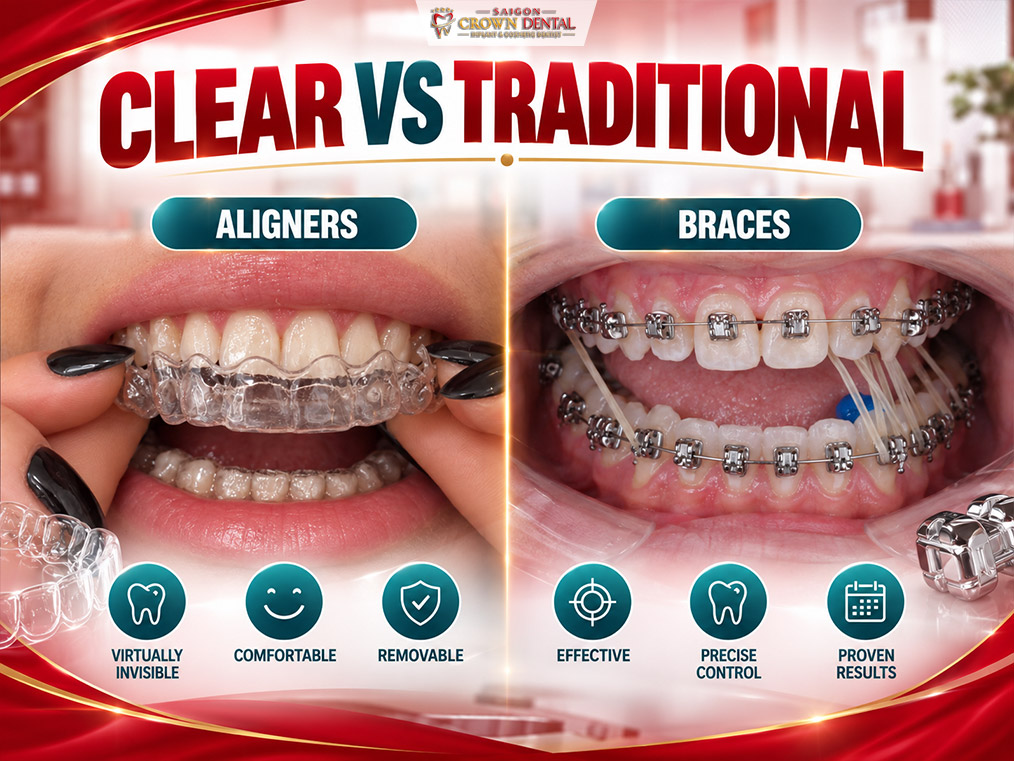
Understanding the true nature of each method will help you make a more confident choice. The comparison table below summarizes the key differences between the two options.
Clear Aligners vs Traditional Metal Braces Comparison
|
Comparison Criteria |
Clear Aligners (Invisalign) |
Traditional Braces |
|
Aesthetics |
Nearly invisible, very hard to notice at conversational distance |
Metal or ceramic brackets and wires are clearly visible |
|
Removability |
Flexible – can be removed for eating or cleaning |
Fixed in place for the entire treatment |
|
Oral hygiene |
Easy – brush and floss as normal |
Harder – requires special tools like interdental brushes and floss threaders |
|
Suitability |
Best for mild to moderate misalignment |
Suitable for most cases, including complex ones |
|
Check-up frequency |
Generally less frequent, depending on how many trays your doctor issues |
More frequent, needed to adjust wire tension |
Overall, if your work requires frequent face-to-face communication and you prioritize aesthetics and daily comfort, clear aligners are well worth the investment. However, for cases involving significant jaw structure misalignment or severe crowding, your specialist may still recommend traditional braces to maintain better control over tooth movement.
Pros and Cons of Clear Aligners
Before committing your time and budget, it’s worth understanding both the benefits and the limitations of this treatment. Doing so helps you set realistic expectations and prepare properly for the process ahead.
Weighing these factors carefully will also help you have a more productive first conversation with your dentist about whether this approach truly fits your needs and daily routine.
Key benefits:
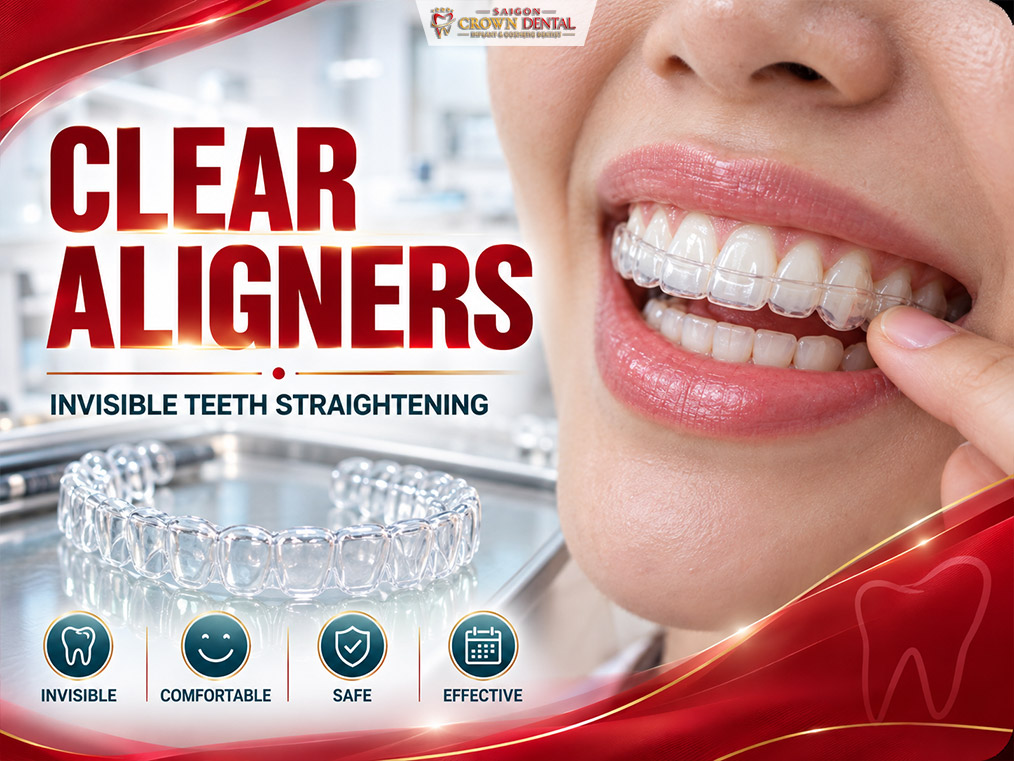
- High aesthetic value – most people won’t even notice you’re undergoing treatment
- More comfortable, with far less irritation to the soft tissue inside your mouth
- Easy to clean, lowering the risk of cavities and gum inflammation
- Fewer check-up visits compared to traditional braces
Limitations to keep in mind:
- Requires strong discipline – trays must be worn 20 to 22 hours per day to stay on track
- Typically costs more than conventional metal braces
- Not ideal for severe jaw structure misalignment
Clear Aligner Treatment Process
Many patients, especially those visiting from abroad, want to understand exactly what each step involves. Knowing the process in advance makes it much easier to plan your treatment timeline.
The overall journey is broken down into a series of clearly defined stages, each designed to keep your treatment accurate and on schedule.
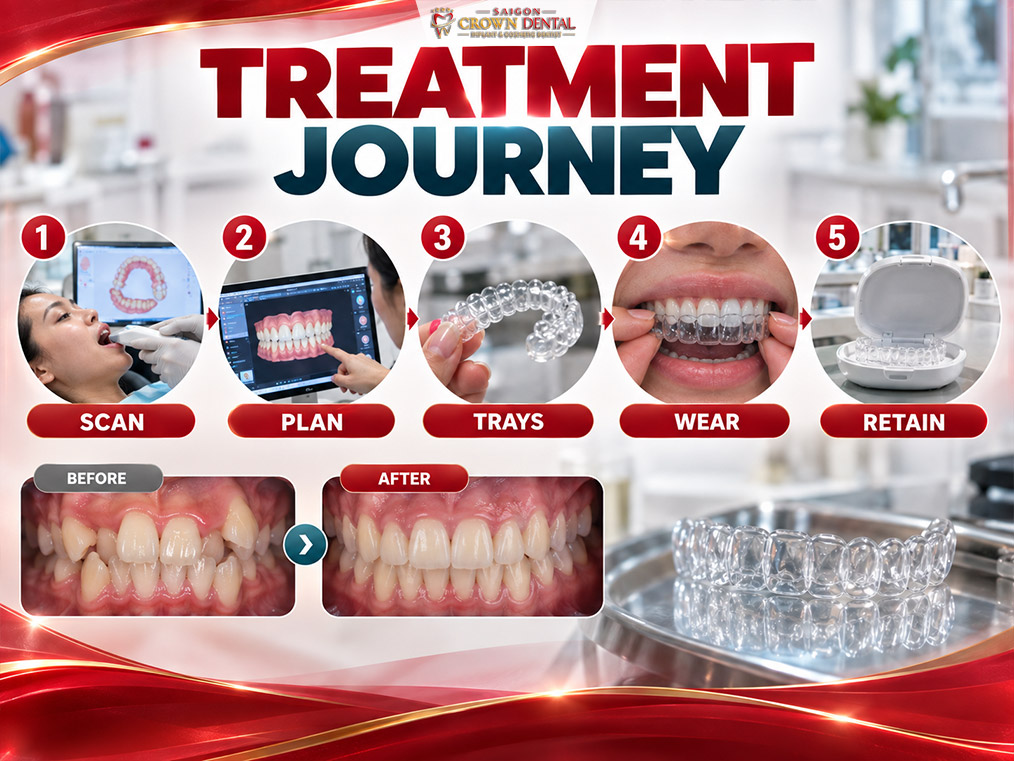
- Consultation and examination: Your dentist performs a full check-up, takes X-rays, and captures a 3D digital scan of your teeth.
- Treatment planning: Software simulates your entire tooth-movement journey, letting you preview your expected results before treatment begins.

Fast Digital 3D Scanner Process - Tray fabrication: Each set of trays is manufactured specifically for your treatment stage.
- Wearing trays and regular check-ups: You switch trays on schedule and return for check-ups so your dentist can monitor progress.
- Retention: Once treatment is complete, you’ll wear a retainer as directed to keep your results stable long-term.
For international patients on a short-term visit, many clinics now offer remote monitoring for their dental clear aligners patients. This means you can continue your treatment even after returning home, as long as you keep up with scheduled virtual check-ins.
Tips for Wearing Aligners
Real-world results depend on more than just the technology or your dentist’s skill – they also depend heavily on how consistently you follow the treatment plan.
Because the trays are removable, becoming careless with your daily routine can slow down tooth movement or lead to avoidable issues with your trays.

Daily Care Tips for Clear Aligners Clean
- Wear your trays consistently for 20-22 hours a day, removing them only for meals or oral hygiene
- Clean your trays daily with a soft brush and clean water, and avoid hot water, which can warp the material
- Brush and floss thoroughly before putting your trays back in to prevent bacteria buildup
- Always carry a storage case and a spare set of trays when traveling or away from home
- Contact your dentist right away if a tray cracks, goes missing, or no longer fits snugly
Dental Clear Aligners in Vietnam: A Trusted Choice for International Patients
With treatment costs considerably lower than in many developed countries, Vietnam is quickly becoming a top destination for overseas Vietnamese and international patients who want to combine a getaway with a smile makeover. That said, behind the cost appeal, the real driver of a successful outcome still comes down to your dentist’s expertise and the quality of the materials used.

For a smooth and worry-free experience, keep these criteria in mind when choosing a clinic abroad:
- English-speaking support: Ensures clear communication when discussing your treatment plan and getting detailed consultations in your own language
- Transparent pricing: Full cost clarity from your very first consultation, with no hidden fees along the way
- Professional remote follow-up: A reliable system for progress check-ins and virtual consultations, easing any concern about distance during long-term treatment
Conclusion
This treatment is more than just an aesthetic trend – it’s a practical solution for anyone who wants a better smile without disrupting their everyday routine. What matters most is choosing an experienced dentist, a reputable clinic, and staying disciplined throughout your treatment plan.
If you’re considering this option to refresh your smile, take the first step today – book a consultation and let our specialists design a treatment plan tailored to your unique dental needs.