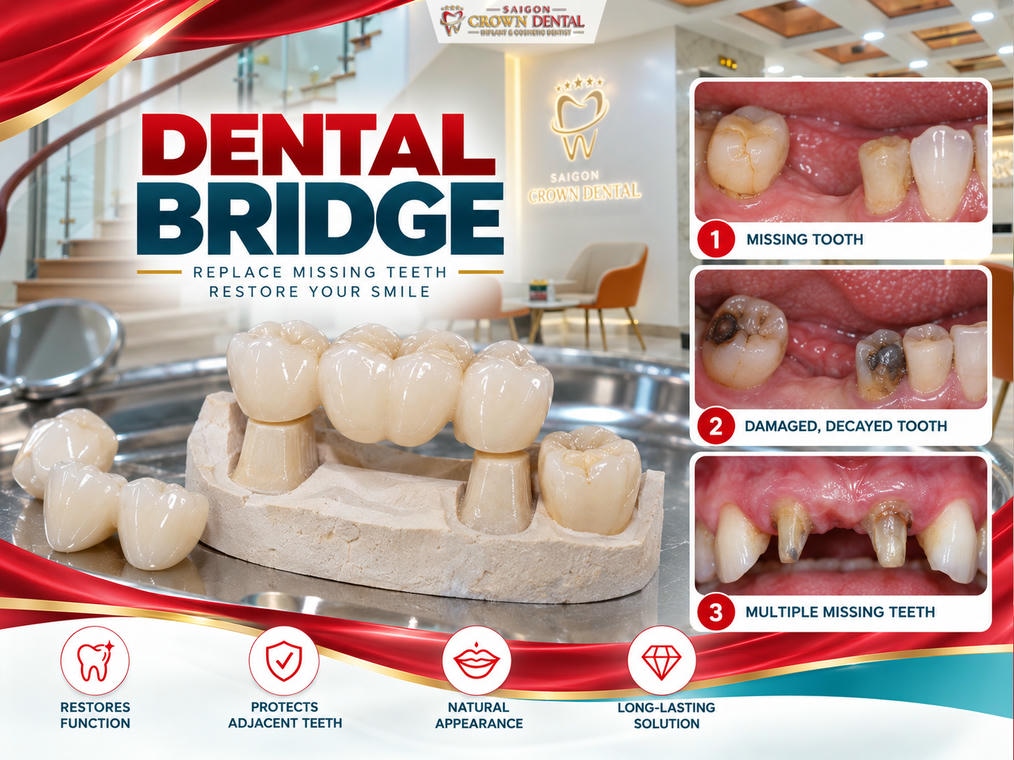
Missing a tooth is stressful. Surgery sounds worse. Luckily, a dental bridge closes the gap without touching the jawbone at all. There’s no drilling into bone and no months-long wait. At Saigon Crown Dental in Ho Chi Minh City, most patients finish the entire process during one short trip.
What Is a Dental Bridge?
A dental bridge replaces one or more missing teeth in a row. It never touches the jawbone.
Instead, it anchors onto two healthy teeth beside the gap. Those are called abutment teeth, and each one gets a ceramic crown. Between them sits a pontic – the false tooth that fills the space.
As a result, you get one solid piece. It chews, looks, and feels like real teeth. Your bite evens out, and neighboring teeth stop drifting into the space.
The consequences of leaving a missing tooth untreated
A missing-tooth gap rarely stays the same. Left alone, it tends to get worse. That’s why most dentists recommend addressing it within the first few months.
Neighboring teeth gradually tilt into the empty space. This throws off your bite alignment. The opposing tooth can also over-erupt, since it no longer has anything to bite against. Over time, this uneven pressure makes chewing less efficient.
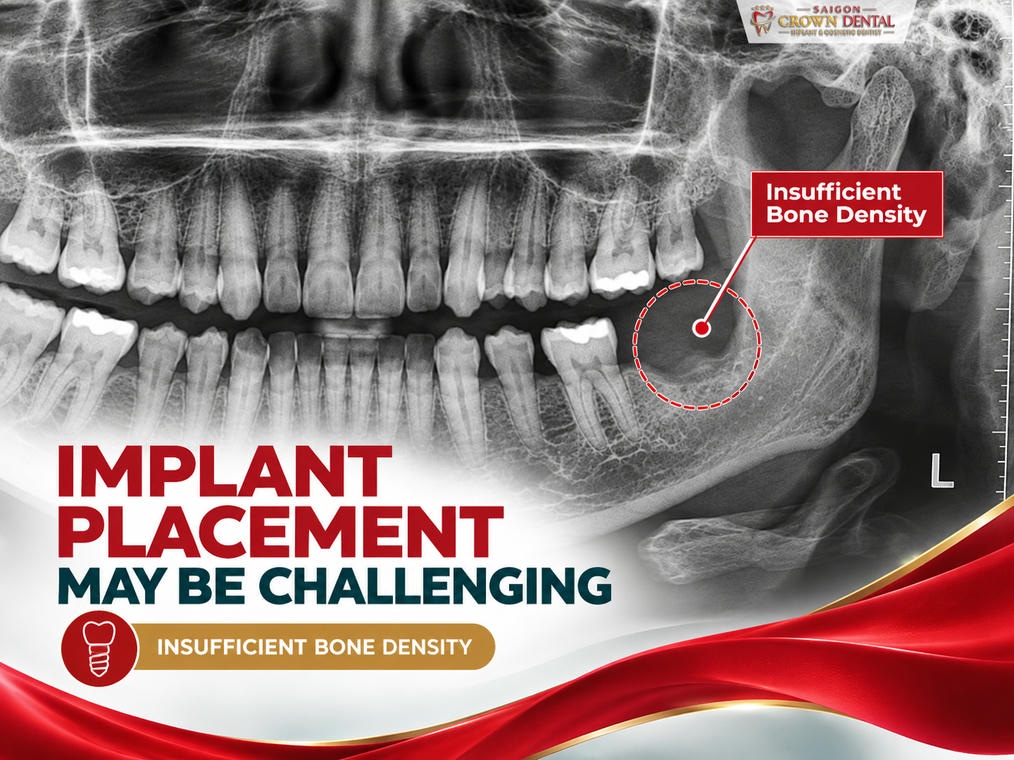
On top of that, the gap is harder to keep clean. Food collects there, so decay and gum inflammation become more likely. Meanwhile, the jawbone underneath slowly loses density from lack of stimulation – which can make a bridge or an implant harder to fit well later on.
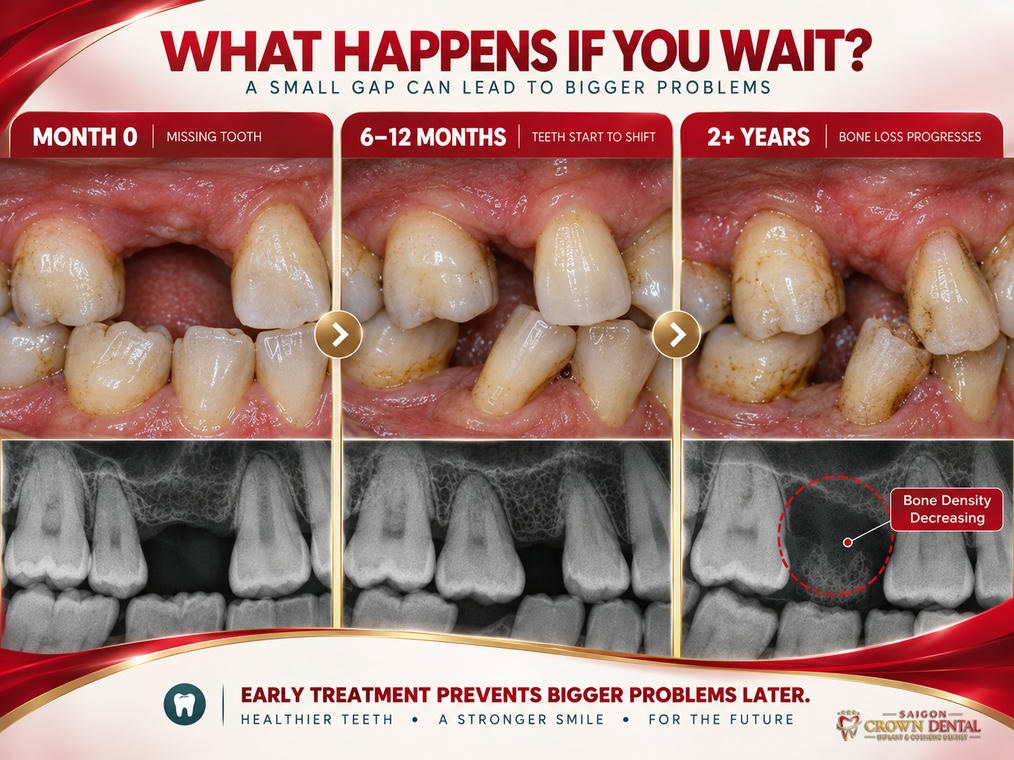
None of this happens overnight. Even so, it’s worth getting the gap assessed early – especially if you’re planning treatment around a trip home.
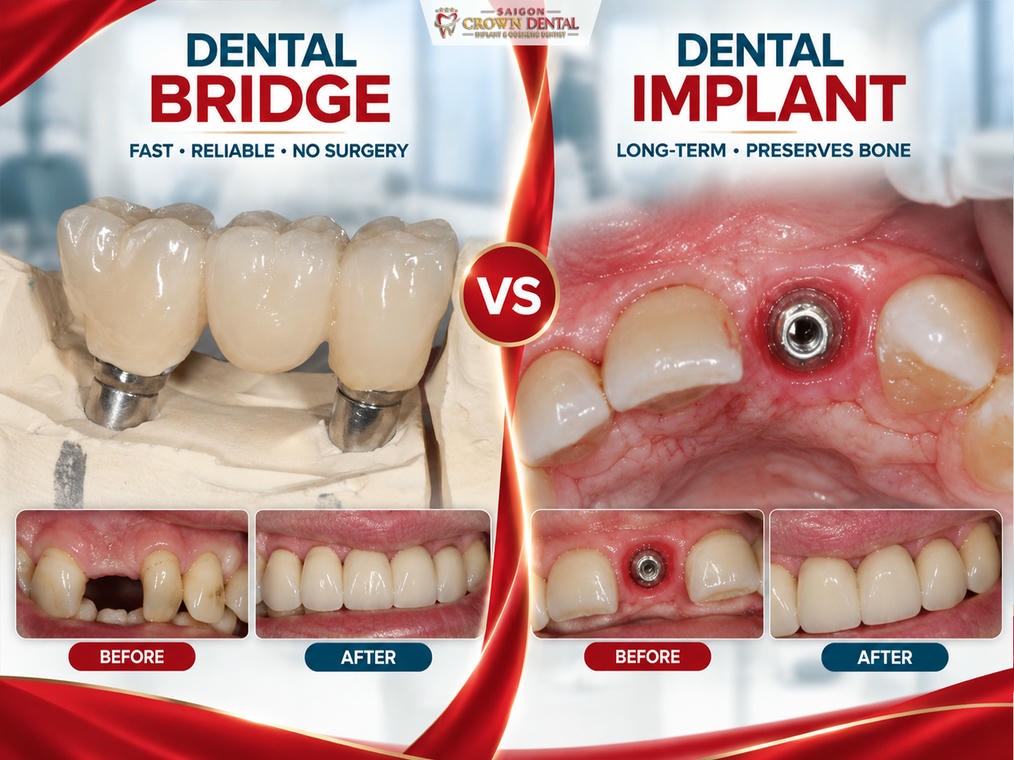
Dental Bridge vs. Dental Implant
A dental bridge gives you a fixed result fast. There’s no incision, no gum surgery, and no waiting for bone to integrate.
That’s exactly why it works so well for a short trip. Most bridge cases finish in 3 to 5 visits, all within about a week. An implant, by contrast, often needs months.
There’s a bonus, too. If the teeth beside your gap already need crowns, a bridge fixes both problems in one plan – one trip, one result.
An implant still has its place. It preserves the jawbone better long-term, which matters most if you’re planning decades ahead. However, for speed and comfort on a short international trip, a bridge is usually the more practical choice.
Who Needs a Dental Bridge?
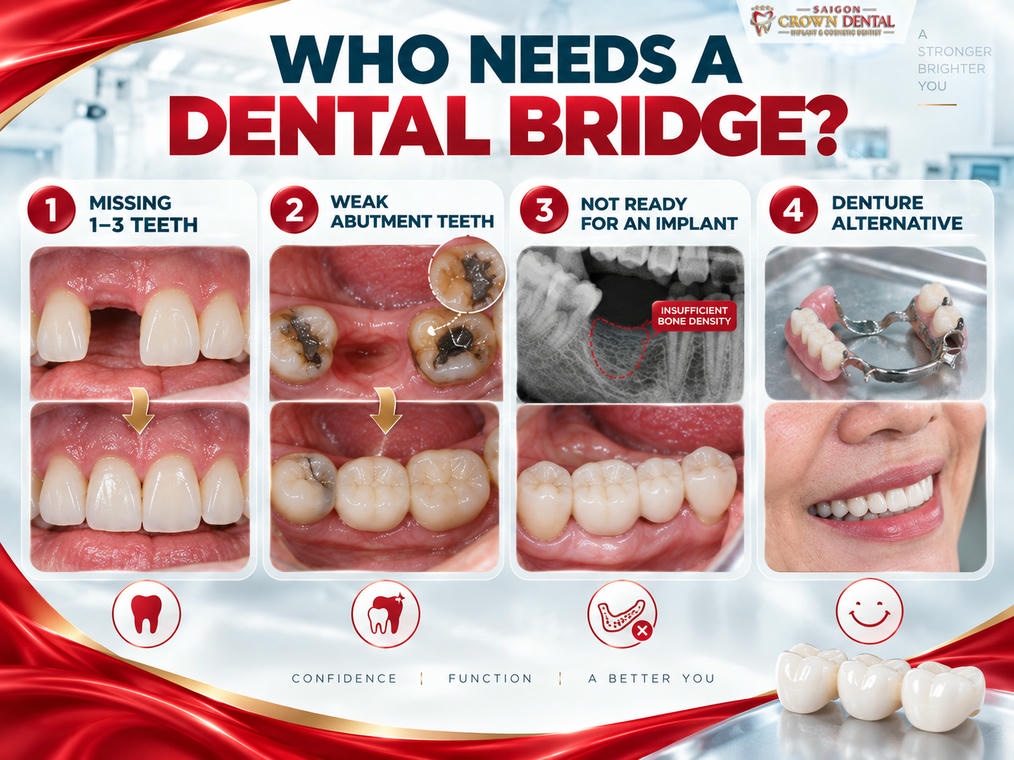
Not every missing tooth needs the same fix. Here’s when a bridge usually makes sense.
-
Missing 1–3 Teeth
This is the most common case. As long as the gap spans only a few teeth, a bridge is fast and reliable.
-
Weak Abutment Teeth
Sometimes the teeth beside the gap are already decayed or cracked. In that case, a bridge restores them and replaces the missing tooth at once.
-
Not Ready for an Implant
Some patients don’t yet have enough bone density; others simply prefer to avoid surgery and a long integration period. A bridge gives you a fixed, good-looking result without either requirement.
-
Denture Alternative
Unlike a removable denture, a bridge stays in place permanently. Therefore, patients who dislike loose dentures often switch to a bridge instead.
If more than one of these applies to you, it’s worth planning full treatment at your first visit.
How Long Does a Dental Bridge Take?
Most patients want a straight answer. A dental bridge takes 4 to 5 appointments, spread across 7 to 10 days. It runs slightly longer than a single crown, since a multi-unit bridge needs extra bite checks. Your dentist will map exact dates against your flight schedule at the first visit.
The Dental Bridge Treatment Process
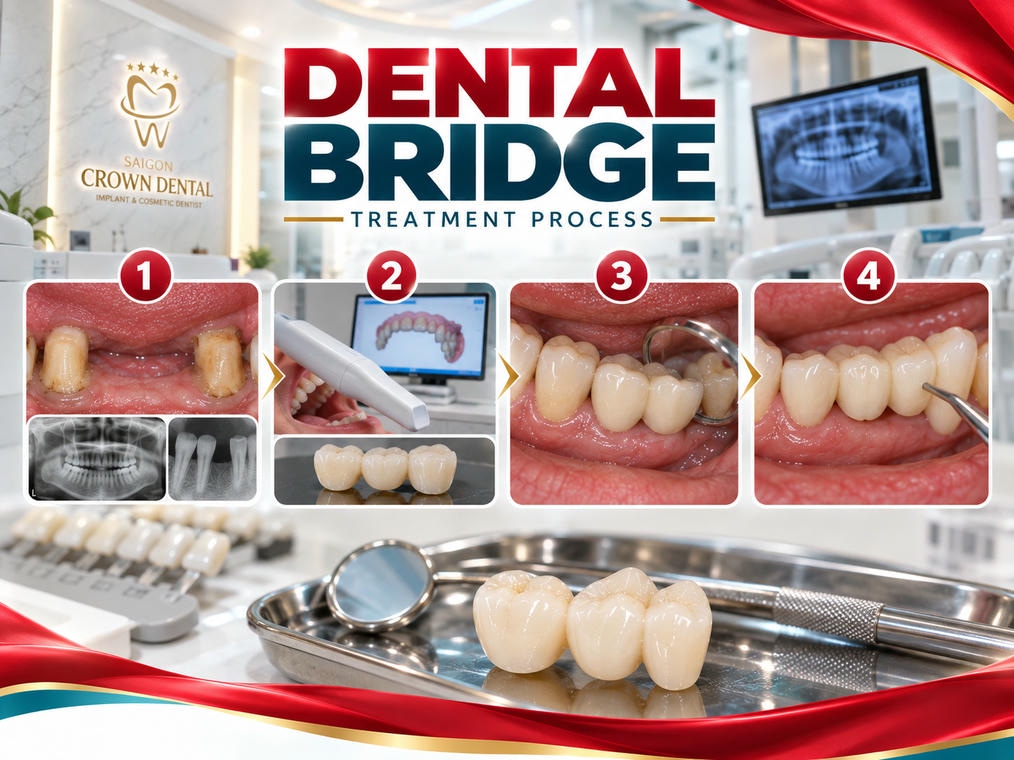
Here’s exactly what happens at each visit, from your first exam to the moment the bridge is permanently in place.
-
Visit 1 – Exam & Abutment Preparation (Day 1)
X-rays and a full exam come first. Then, the abutment teeth are lightly prepared — just enough to hold the crowns.
-
Visit 2 – Digital Impressions & Temporary Bridge (Day 1–2)
A 3D intraoral scanner captures the gap precisely. This is faster and more comfortable than a putty tray. Meanwhile, a temporary bridge protects your teeth while the lab works – a process that takes about 72 hours.
-
Visit 3 – Fit Check (around Day 5–6)
Next, the finished bridge is tried in. Your dentist checks the fit, the bite, and the shade match.
-
Visit 4 – Permanent Cementation (Day 7–10)
Finally, once everything looks right, the bridge is cemented in place. A last check follows before you head to the airport.
Dental Bridge Cost and Ceramic Material Options
A bridge is priced per unit, not per tooth. So, a 3-unit bridge covers two abutment crowns plus one replacement tooth. Choosing Ho Chi Minh City for treatment typically saves 50–70% compared to the US, UK, or Australia.
Material strength matters here, since a bridge carries load across several units. That said, not everyone needs the longest warranty available. For most cases, Zirconia’s durability is more than enough.
|
Ceramic Line |
Origin |
Best For |
Warranty |
|
Zirconia |
South Korea |
Cost-effective, strong load-bearing durability |
5 years |
|
Cercon HT |
Germany |
Popular choice, natural translucency |
7 years |
|
Lava Plus 3M |
USA |
Outstanding wear resistance for multi-unit bridges |
10 years |
|
Nacera |
Germany |
High aesthetics for front-tooth bridges |
15 years |
|
Orodent |
Italy |
Premium aesthetics and biosafety |
20 years |
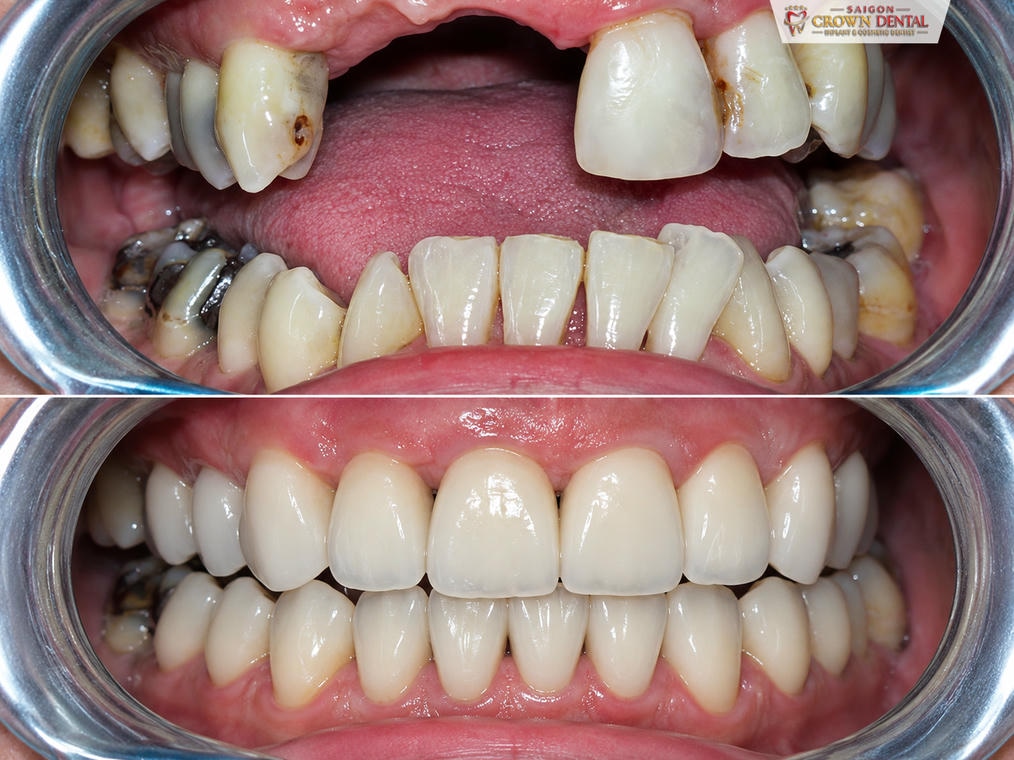
Before & After: Real Dental Bridge Results
Seeing a real case makes it easier to picture your own outcome.
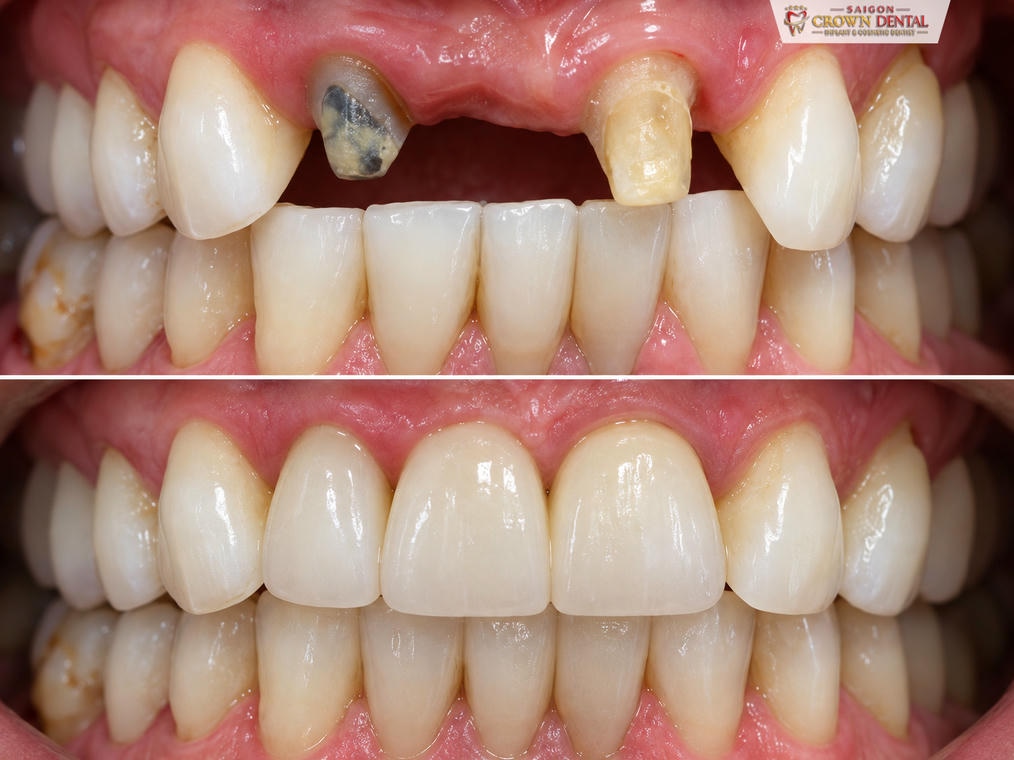
Dental Bridge Case 1: Multiple Missing and Decayed Front Teeth
Several upper front teeth were missing or badly decayed. A full-arch bridge rebuilt the entire smile line in one continuous, natural shade.
Dental Bridge Case 2: Multiple Missing Teeth With a Decayed Abutment
Here, one abutment tooth was decayed and several teeth were missing nearby. A single bridge spanned the gap, restoring the whole row at once.
Why Choose Saigon Crown Dental?
Choosing a clinic abroad takes more than trust in marketing. Here’s what actually sets Saigon Crown Dental apart.
Location & convenience
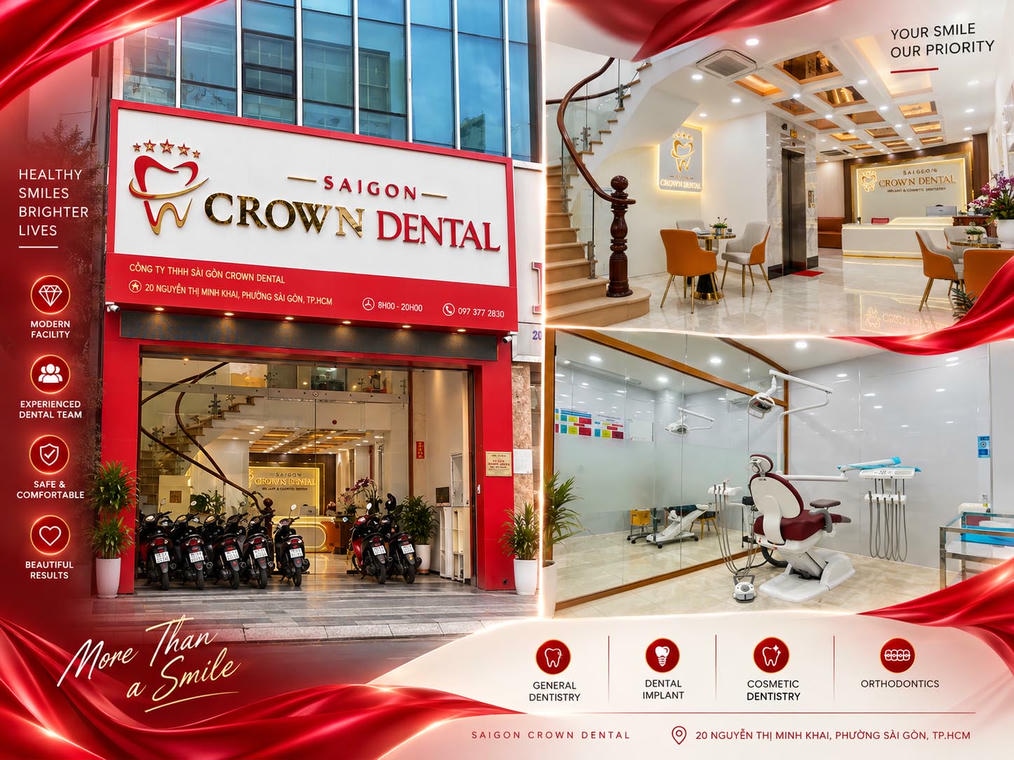
- Clinic located in central Ho Chi Minh City – easy to reach from major hotels and the airport
- Flexible scheduling built tightly around your arrival and departure dates
- Hotel and accommodation suggestions near the clinic
Clinical focus & expertise
- Practice focused specifically on crowns, bridges, and cosmetic-restorative dentistry – not a general walk-in clinic
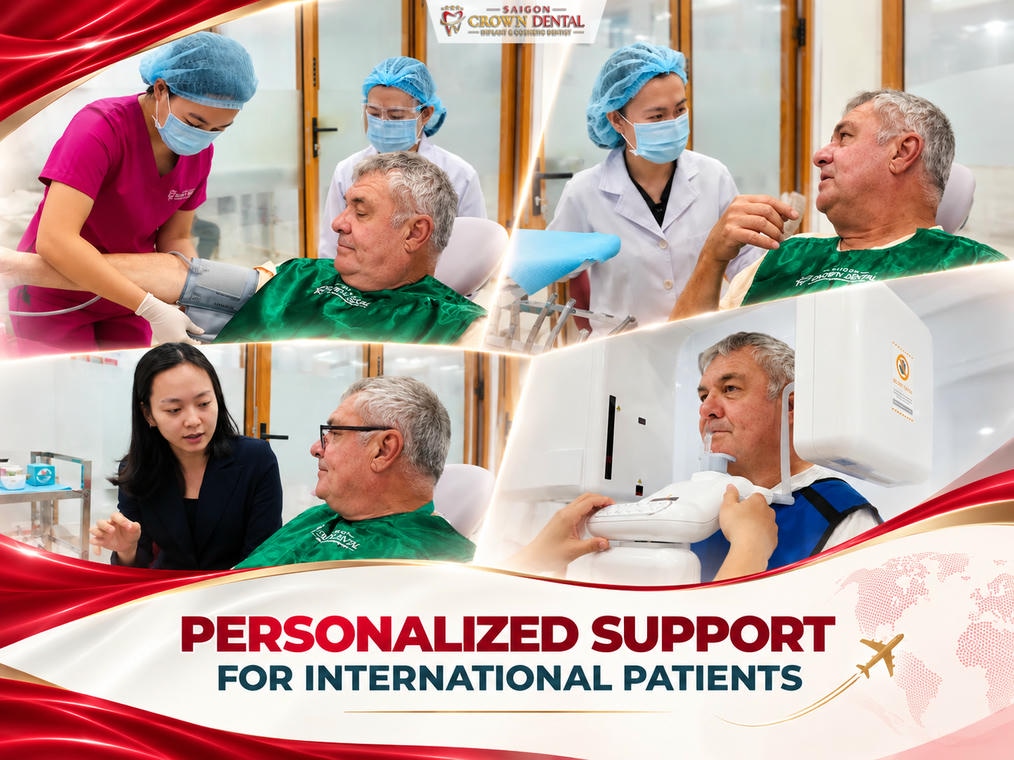
- Dentists consult directly in English, no interpreter needed
- Fully digitized workflow: 3D scanning, CAD/CAM design, minimally invasive abutment preparation
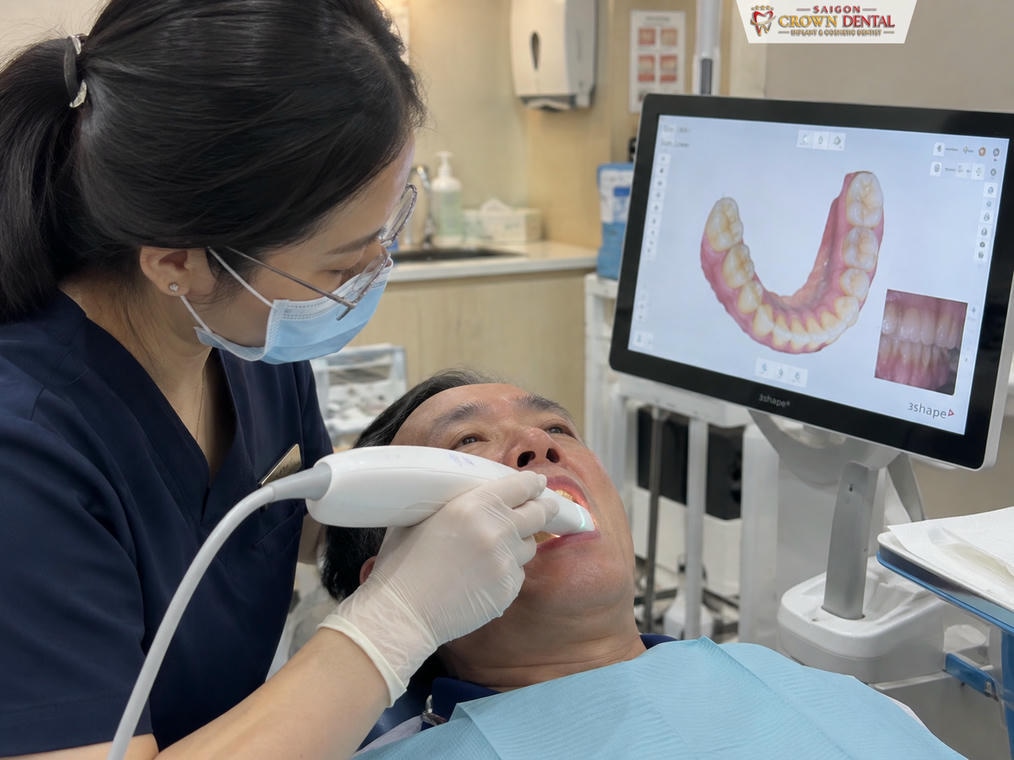
Digital Impressions Treatment Process
Trust & transparency
- Every material comes with a written warranty card by material line
- Quotes confirmed in writing after your exam, itemized by bridge unit, with no hidden fees
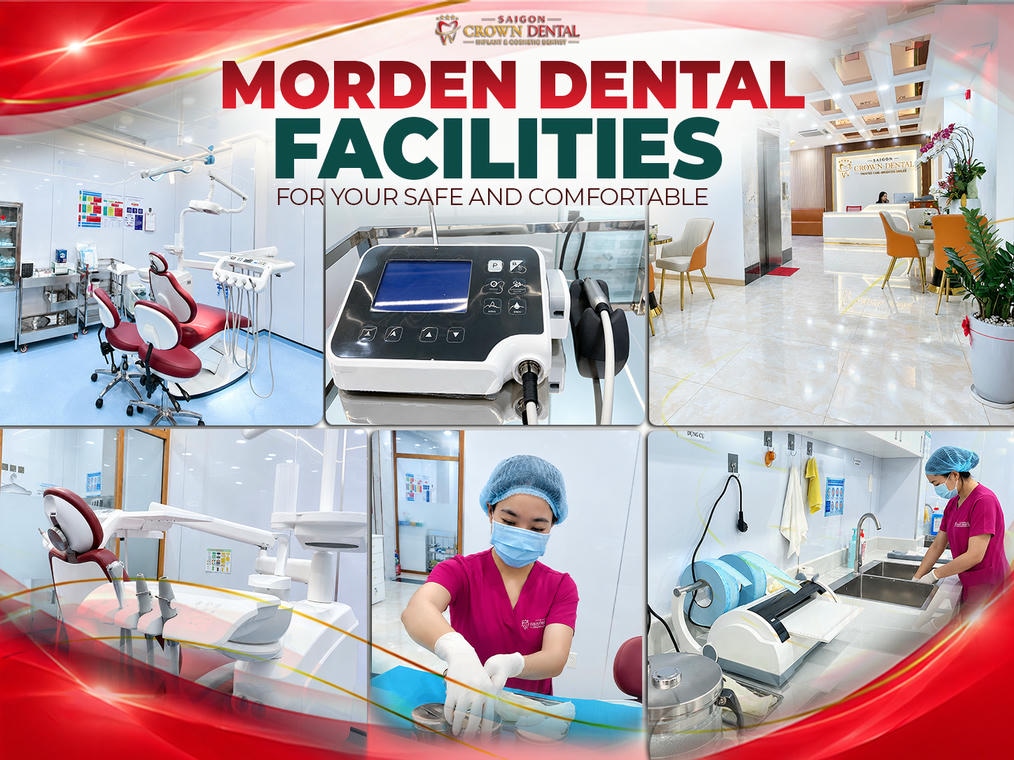
- Sterilization protocols in line with Ministry of Health standards
- Remote, online follow-up support after you’ve flown home
Frequently Asked Questions About Dental Bridges
-
Does a dental bridge weaken the teeth next to it?
The abutment teeth need a thin layer of enamel removed to hold the crowns, but preparation is kept minimally invasive. Done correctly, it doesn’t weaken healthy teeth long-term.
-
How do I clean under a dental bridge?
You’ll need a floss threader or a water flosser to clean underneath the pontic, since regular floss can’t reach that area. Your dentist will walk you through the technique at your final visit.
-
Should I get a bridge or an implant for one missing tooth?
Both work well. A bridge is faster and avoids surgery, especially if the neighboring teeth already need crowns. An implant preserves jawbone better long-term but needs more time. Your dentist will help you weigh the two based on your bite, budget, and schedule.
-
What if something goes wrong after I’ve flown home?
Every dental bridge comes with a written warranty by material, from 5 years for Zirconia up to 20 years for Orodent. Our team also offers remote follow-up support.
Ready to plan your dental bridge treatment around your next trip home? Send us a photo of the missing tooth area over WhatsApp before you book your flight, and we’ll help you decide between a bridge or an implant – plus a transparent quote, before you ever sit in the chair.