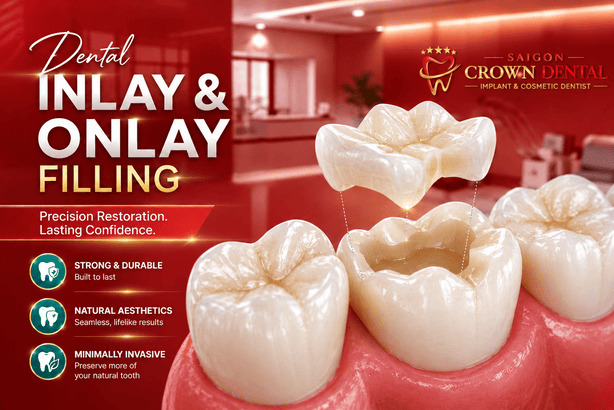
A large cavity or a cracked cusp doesn’t always mean you need a full crown. Dental inlay and onlay filling offers a middle-ground solution – restoring your tooth while preserving as much natural structure as possible. At Saigon Crown Dental, this procedure is done using modern CAD-CAM technology, delivering precise results right at the clinic.
What Are Dental Inlays and Onlays?
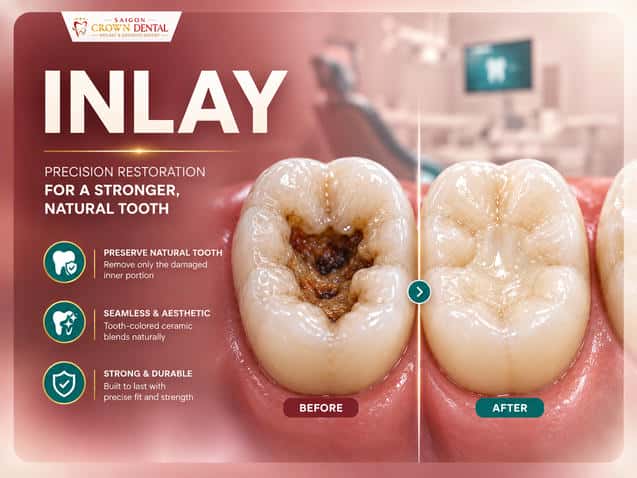
What Is an Inlay?
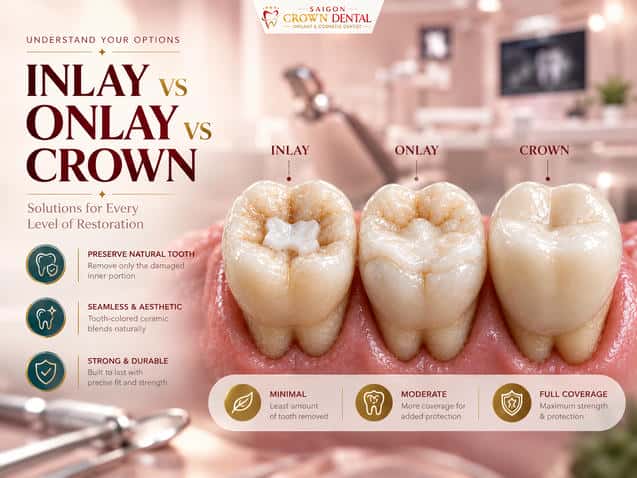
An inlay is an indirect filling, custom-made outside the mouth before being bonded to the tooth. It fits precisely within the inner cusps of the tooth, filling a cavity or crack that hasn’t spread to the outer edge.
Your dentist removes only the decayed tissue or old filling material. As a result, the healthy cusps and tooth walls stay almost entirely intact.
Inlays are typically made from high-grade ceramic or composite resin. Once designed and fabricated, they’re bonded to the tooth with specialized dental cement.
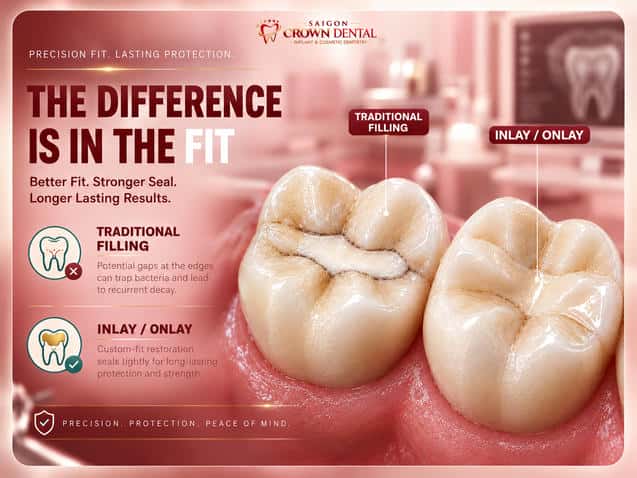
Compared to a traditional filling placed directly at the chair, an inlay offers a tighter fit and a longer lifespan – often 15 to 20 years with proper care.
This option usually fits patients with moderate decay or cracks, where the tooth’s cusp structure is still sound.
What Is an Onlay?
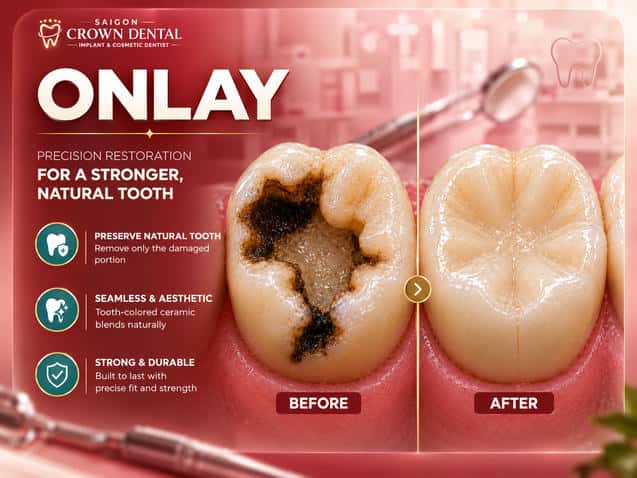
An onlay is similar to an inlay, but covers more surface area – including one or more damaged cusps.
Dentists usually recommend an onlay for more extensive damage, whether from advanced decay or after a root canal. In these cases, the chewing surface and cusps have larger areas of missing structure.
During treatment, your dentist removes the decayed tissue and gently reshapes weakened cusp edges. The tooth’s neck and healthy walls beneath the gumline, however, stay untouched.
Compared to a full crown, an inlay or onlay doesn’t require removing large amounts of healthy tooth structure. It remains a balanced choice between preserving your natural tooth and restoration durability.
Benefits of Dental Inlay and Onlay Filling
This indirect restoration method is becoming a leading trend, balancing aesthetics, durability, and natural tooth preservation.
-
Maximum preservation of natural tooth structure
Your dentist removes only the damaged portion. As a result, your natural tooth structure stays intact, without the extensive shaping required for a full crown.
-
High durability and lifespan
Fabricated precisely with CAD/CAM technology, the restoration fits tightly against the tooth. This minimizes gaps and helps prevent recurring decay. With proper care, an inlay or onlay can last 15 to 20 years or longer.
-
Strong bite force resistance
Inlays and onlays are engineered to withstand heavy chewing forces, restoring near-full function to molars under high pressure.
-
Natural-looking aesthetics
High-grade ceramic closely matches the color, shine, and translucency of natural teeth.
-
Easy to clean
The tight, precise fit lets you brush and floss just as you would with a natural tooth.
-
Minimal sensitivity or irritation
Premium ceramic and composite materials are gentle on gums and surrounding soft tissue, keeping you comfortable right after treatment.
Traditional Filling vs. Inlay/Onlay: A Visual Comparison
|
Criteria |
Traditional Filling |
Inlay/Onlay |
|
Tooth structure removed |
Low |
Low to moderate |
|
Average lifespan |
3-5 years |
15-20 years |
|
Fit precision |
Moderate |
High (custom-fabricated) |
|
Aesthetics |
Moderate |
High (especially ceramic) |
|
Number of visits |
1 visit |
2 visits |
When Should You Choose an Inlay or Onlay?
Not every case of decay calls for an inlay or onlay – and not every case calls for the same one. Your dentist decides between the two based on how much of the tooth is actually affected.
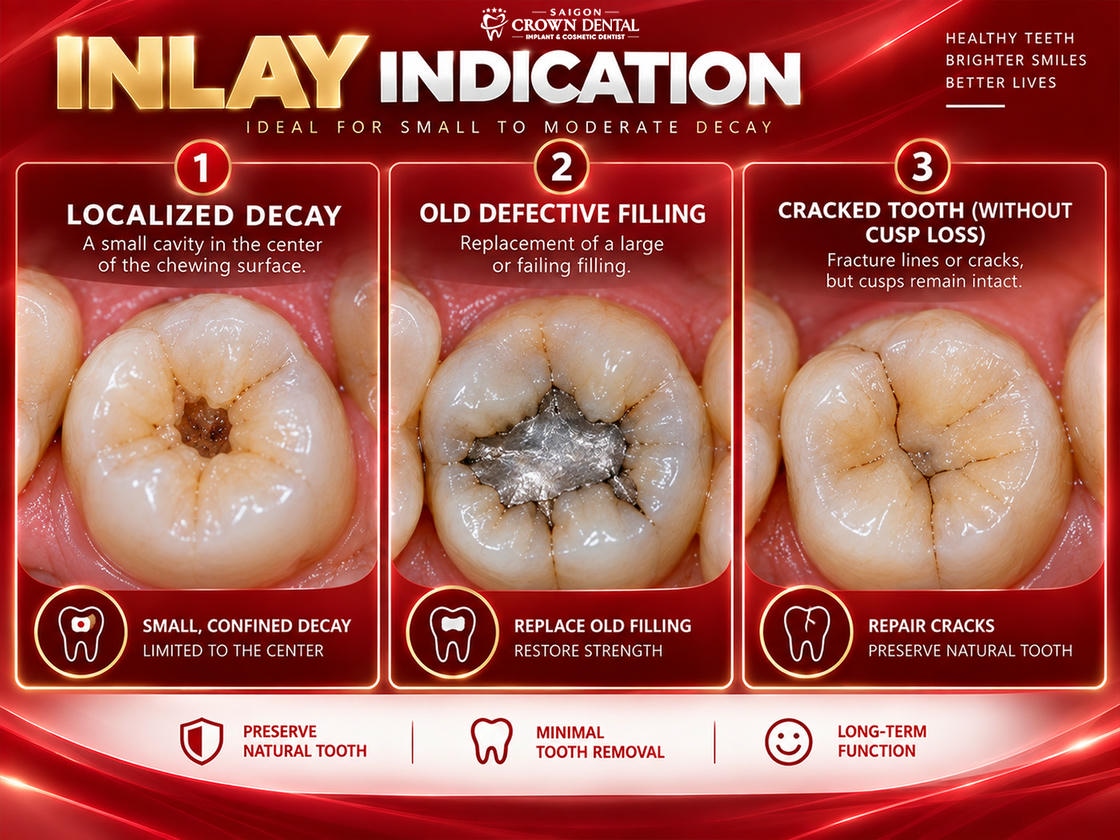
When an Inlay Is the Right Choice
-
Small, isolated decay in the center of the chewing surface
The damage hasn’t reached the cusps, and the surrounding tooth structure is still solid and healthy.
-
An old composite filling that’s failed in the middle of the tooth
Discolored, worn, or breaking down, but without affecting the healthy structure around it, so there’s no need to extend the restoration out to the cusps.
-
Mild to moderate recurrent decay under an old filling
As long as it hasn’t spread out to the biting edge of the tooth.
[Image: clinical/X-ray photo of small, centered decay – before an inlay]
When an Onlay Is the Right Choice
-
Decay that has spread into one or more cusps
The cusp is weakened or thinned and at risk of fracturing under normal chewing forces if it isn’t reinforced.
-
A root-canal-treated tooth
Without its blood supply, the tooth becomes brittle and prone to cracking. An onlay covers and protects the cusps without requiring a full crown.
- A cusp chipped or fractured from impact, biting something hard, or long-term wear
Part of the cusp structure is gone, but the walls below the gumline and the tooth’s neck are still intact.
- A large old filling that’s cracked, loosened, or covers a wide area of the chewing surface
It’s time for a more durable, better-sealed restoration.
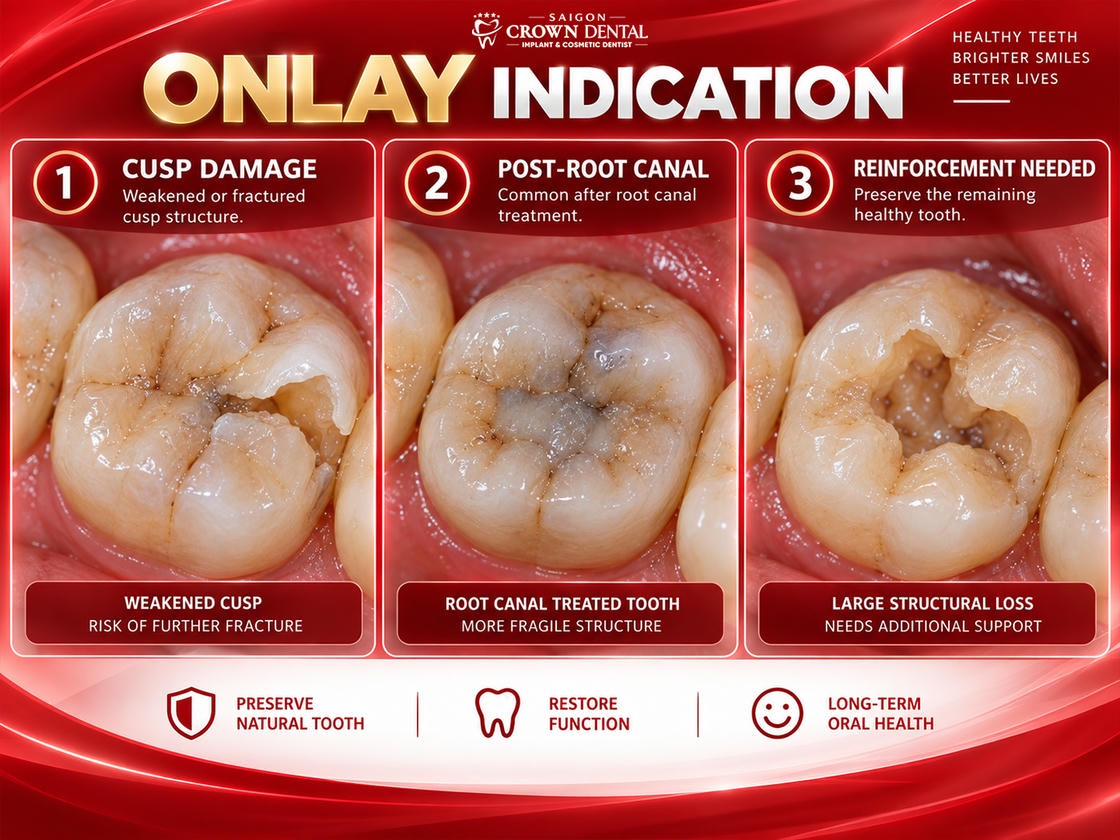
Onlay indications
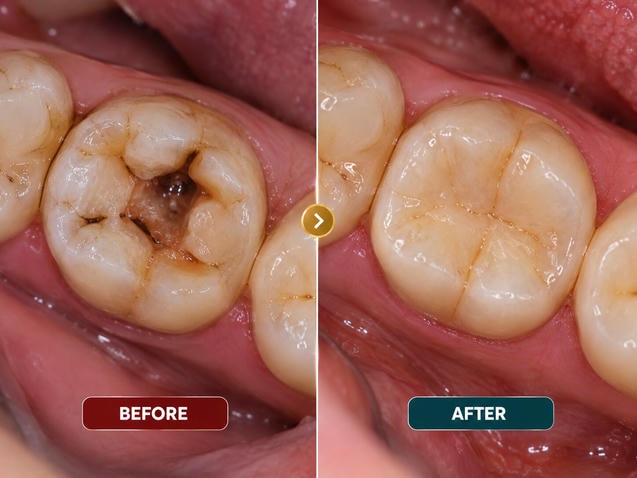
A note on this: Your dentist can only confirm whether an inlay or onlay is the right fit after a clinical exam and X-rays. The guidance above is a general reference, not a diagnosis.
Inlay and Onlay Treatment at Saigon Crown Dental
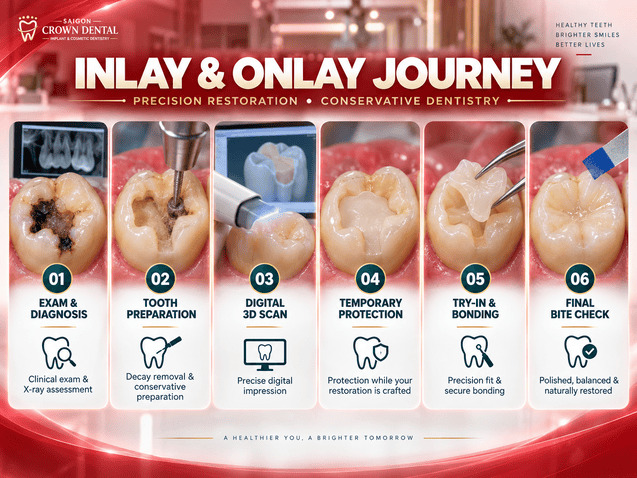
Treatment follows a structured process, designed for maximum durability, a natural-looking result, and your comfort throughout.
- Exam and diagnosis – Your dentist performs a clinical exam and takes X-rays to assess the extent of damage and your bite alignment, and to determine whether an inlay or onlay is the better fit.
- Cleaning and cavity preparation – All decayed tissue (or old filling material) is gently removed, and the cavity is shaped to create a stable, precise base for the restoration.
- Digital 3D impression – A 3D intraoral scanner (or a traditional impression tray, depending on the case) captures a precise digital model of your tooth, cutting down fabrication time.
- Temporary filling – A temporary restoration protects the tooth and keeps you comfortable while your permanent inlay or onlay is being fabricated.
- Fit check and bonding – Once your restoration is ready, your dentist checks the fit against your natural tooth, makes any final adjustments, and bonds it in place with specialized dental cement.
- Final polish and bite check – The surface is polished to a natural shine, and your bite is checked one last time so chewing feels comfortable and balanced.
How Long Does an Inlay or Onlay Take?
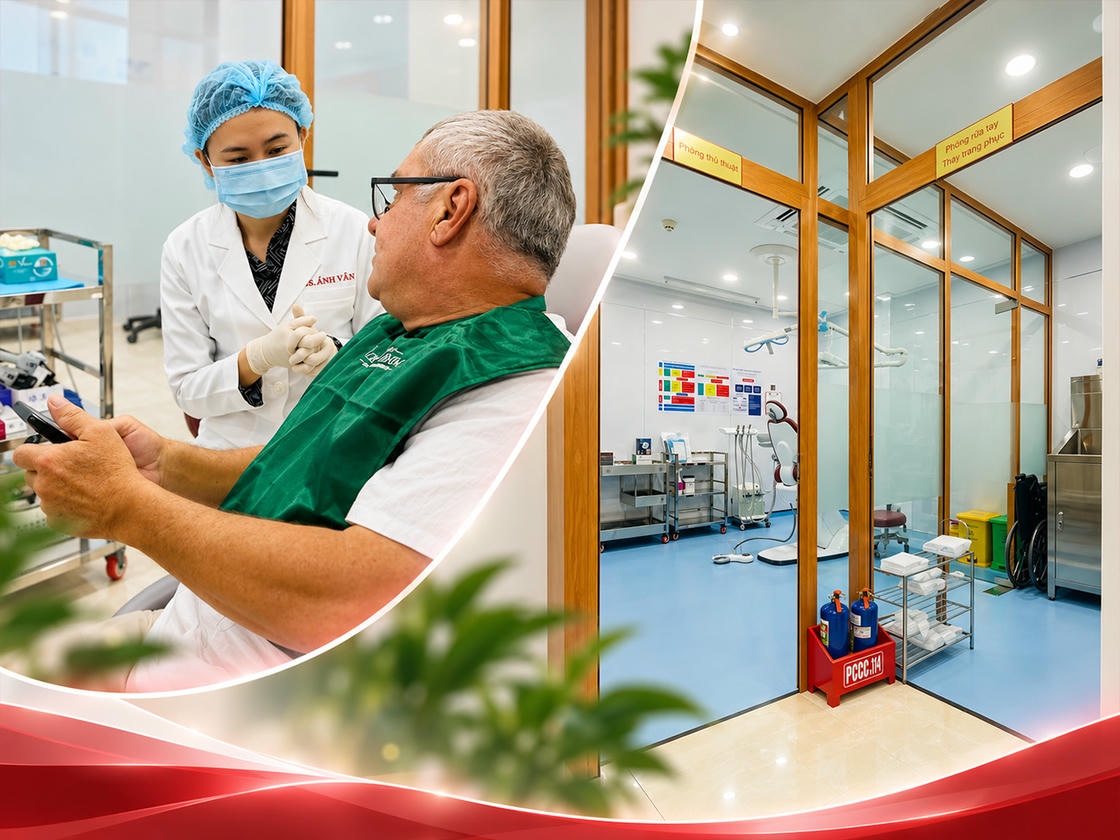
Because Saigon Crown Dental can design and fabricate restorations in-house with CAD-CAM technology, treatment time is significantly shorter than the traditional route of sending impressions out to an external lab.
- Number of appointments: Typically two visits – the first to prepare the tooth and take the digital impression, the second to try in and bond the finished restoration.
- Same-day option: With chairside CAD/CAM, some straightforward cases can be completed in a single visit, with no second appointment needed.
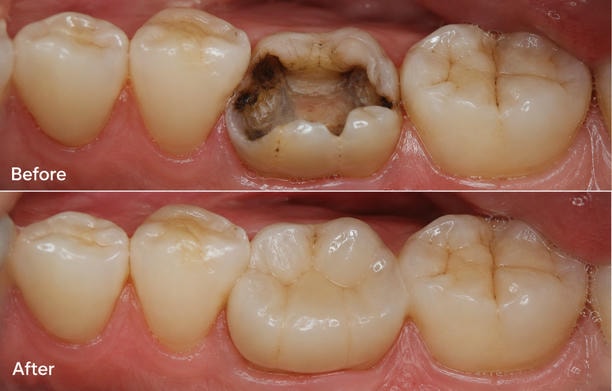
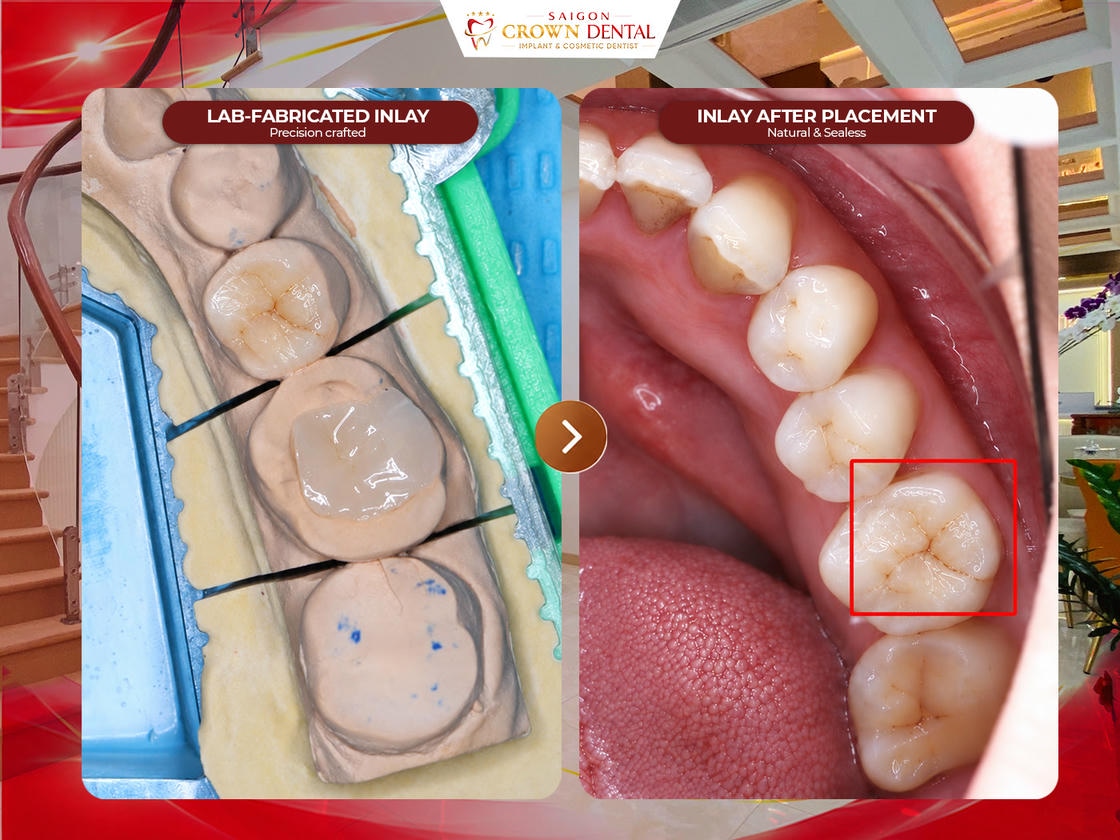
Before & After: Real Dental Inlay and Onlay Cases at Saigon Crown Dental

Why Choose Saigon Crown Dental for Your Inlay or Onlay?
-
A central Ho Chi Minh City location, easy to find and easy to reach
The clinic sits right in the heart of the city, making it simple for international patients and overseas Vietnamese to get here from the airport, their hotel, or between other stops on their trip – no long commutes required.

-
A team that communicates in English
Our dentists and consultants speak English, so international and overseas Vietnamese patients can discuss their condition and treatment plan clearly, without a language barrier getting in the way.
-
In-house CAD-CAM technology that shortens treatment time
No need to wait on an outside lab – in many cases, your dental inlay or onlay can be designed, fabricated, and fitted right here at the clinic, which matters if you’re only in Vietnam for a short stay.
-
Transparent pricing, no hidden fees
Your dentist walks you through the expected cost clearly at your very first visit, and it’s agreed on together before treatment begins.
-
Genuine, premium ceramic materials
We use biocompatible ceramics (E.max, Zirconia) known for their strength and their natural, tooth-like appearance.
-
Strict sterilization standards
Our equipment, instruments, and treatment rooms follow Ministry of Health infection-control standards closely.
-
Comprehensive support for out-of-town and international patients:
Help finding comfortable accommodation, arranging transportation, and coordinating your treatment schedule around a broader travel itinerary.
Flexible payment options – cash, bank transfer, or card, whatever works for you.
Scheduling built around however long you’re staying in Vietnam.

Dental Tourism Patient Support
How Much Does an Inlay or Onlay Cost?
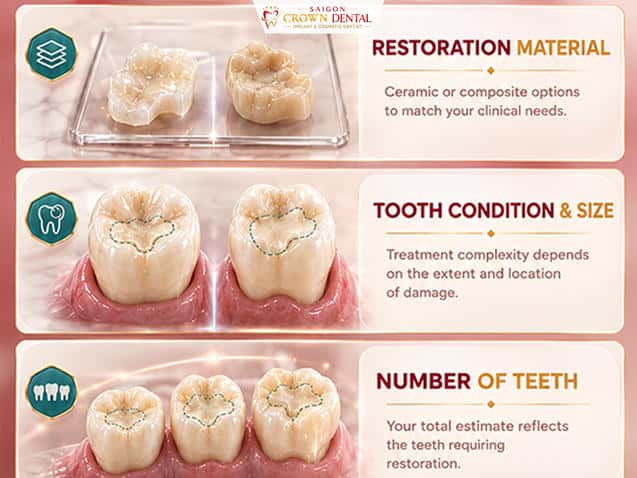
The cost of an inlay or onlay filling varies, depending on a few factors specific to your case.
-
Restoration material
You can choose between ceramic (E.max, Zirconia) or composite resin. Ceramic typically costs more, but offers greater durability and a more natural, glossy finish.
-
Extent of damage
The tooth’s location and the size of the cavity or fracture determine how much material and fabrication work is needed.
-
Number of teeth treated
Total cost is calculated based on how many teeth require restoration.
Your dentist will walk you through the estimated cost clearly during your first visit – with no hidden fees. For an accurate quote based on your specific case, we recommend booking an in-person exam.
Frequently Asked Questions
-
How long does an inlay or onlay last?
On average, 7 to 15 years with proper care, depending on the material used and your chewing habits.
-
Is getting an inlay or onlay painful?
Your dentist numbs the area beforehand, so you’ll feel little to no pain during the procedure – just mild sensitivity for a few days afterward.
-
How many appointments does it take?
Typically two: one for the impression, one for bonding. With CAD/CAM technology, some cases can be completed in a single day.
-
Does insurance cover it?
Coverage depends on your insurance provider’s policy. Check directly with your insurer, or contact the clinic for guidance.
Conclusion
Dental Inlays and onlays strike a balance between preserving your natural tooth and long-term durability – a solid option for a large cavity or a cracked cusp that doesn’t yet call for a full crown. If you’re weighing your options, the team at Saigon Crown Dental is ready to examine your case and recommend the path that fits it best.
Get in touch with us today to book an appointment and start your journey back to a healthy, confident smile.