
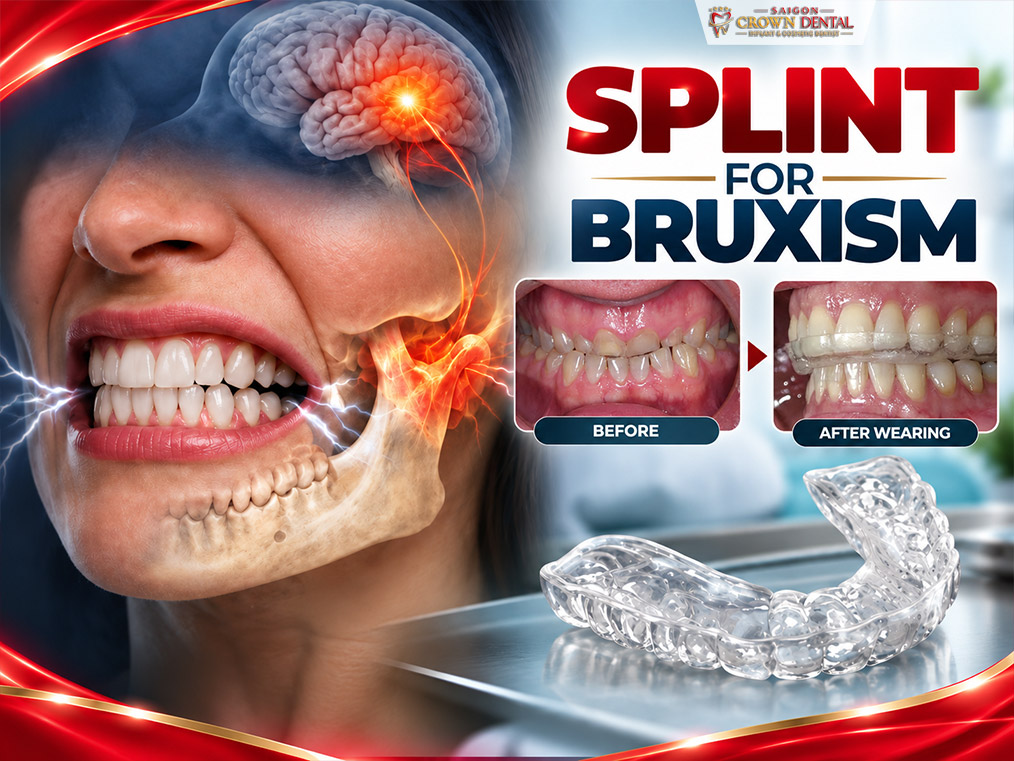
A splint for bruxism is often the missing answer when you have a cracked veneer, a loosening crown, or a jaw that aches every morning. In many cases, the restoration itself is not the problem. Instead, the real cause is bruxism, which means grinding or clenching you may not even know is happening. A splint for bruxism won’t erase the habit, but it does protect your natural teeth and restorations from the damage it causes. At Saigon Crown Dental, every splint is designed from your own digital scan and adjusted chairside, rather than shipped out as a one-size-fits-all product.
What is a splint for bruxism?
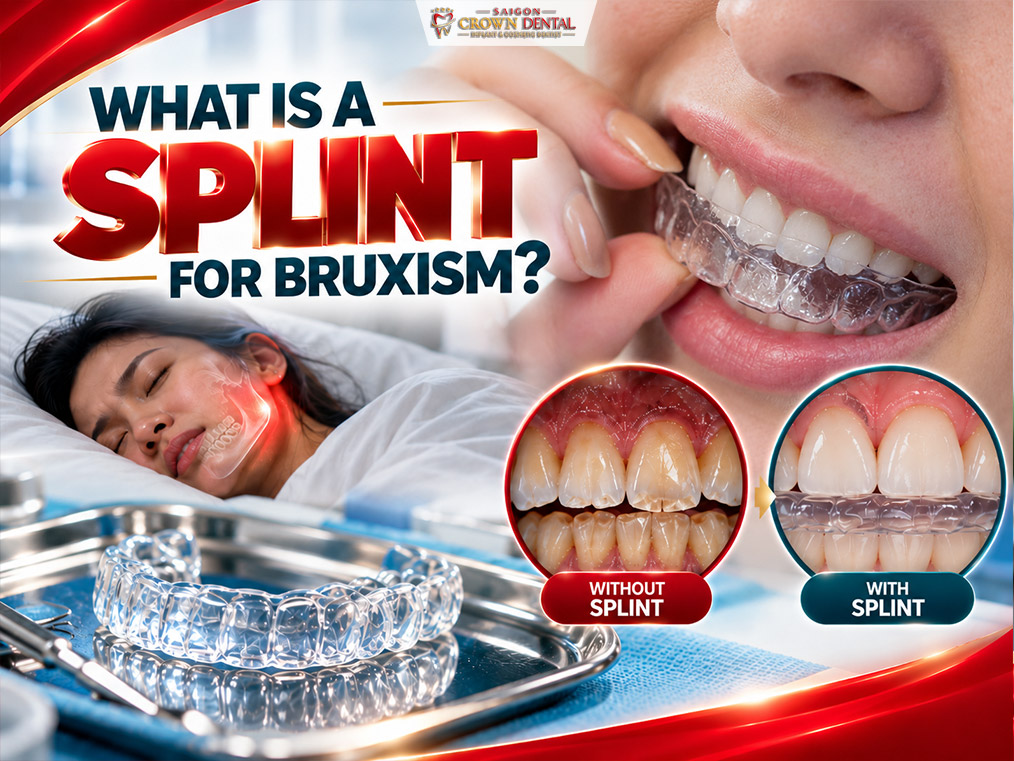
A splint for bruxism is a custom-made appliance that sits between your upper and lower teeth. Because it absorbs the force of grinding, your enamel and restorations don’t take the impact directly.
Bruxism is the involuntary grinding or clenching of teeth, either while asleep or while awake. Some patients never notice it happening. Typically, they only find out once a partner mentions the sound, or a dentist spots the wear.
However, a splint doesn’t remove the underlying habit. What it does is create a protective layer between your teeth. We say this plainly: the appliance protects your teeth from grinding, but it does not guarantee the grinding stops. For that reason, any clinic promising a permanent cure is overstating what the device can do.
Types of splint for bruxism:
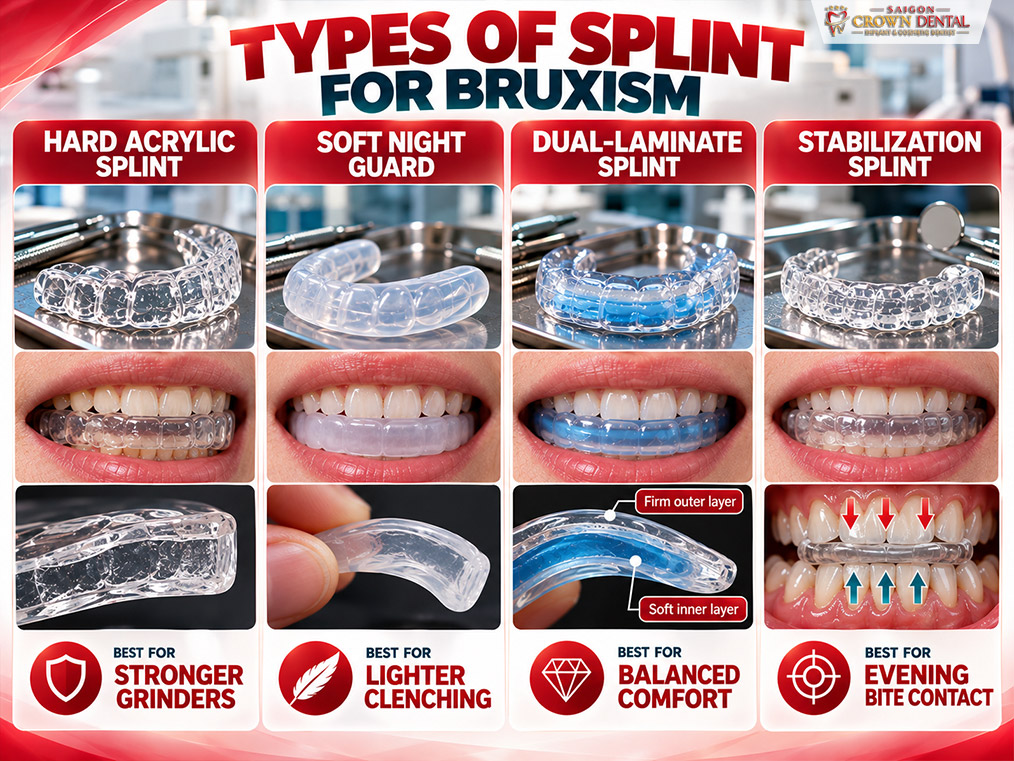
Not every grinder needs the same design. The table below shows how the main options compare.
| Type | Best suited for | What to know |
|---|---|---|
| Hard acrylic splint | Stronger grinders needing a durable, adjustable device | Takes a few nights to adapt to |
| Soft night guard | Lighter clenching, easier initial comfort | Less protective for heavy grinders |
| Dual-laminate splint | Patients wanting a soft inner layer with a firmer outer shell | Balances comfort and durability |
| Stabilization splint | Patients whose bite contact needs to be evened out | Requires precise adjustment by the dentist |
Benefits of a custom splint for bruxism
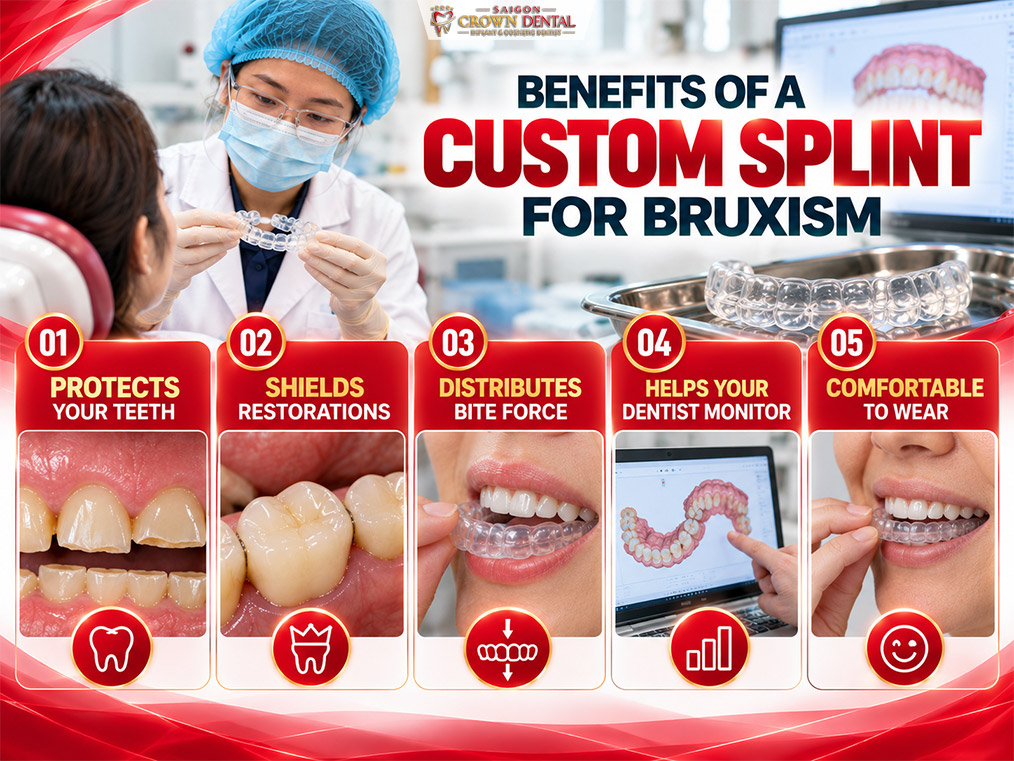
A custom splint does more than sit in your mouth at night. In fact, each benefit below comes from the fact that it is built to your bite, not a generic mold.
-
Protects your natural tooth structure.
Enamel wear slows down significantly once the splint absorbs grinding force instead of tooth-to-tooth contact.
-
Shields existing restorations.
As a result, crowns, veneers, and fillings stop taking direct impact, which is often why they were chipping or loosening in the first place.
-
Distributes bite force evenly.
Instead of concentrating pressure on a few teeth, a well-adjusted splint spreads it across your whole bite.
-
Lets your dentist track your grinding.
Wear patterns on the splint’s surface show how heavily you grind over time, and we use this information at every follow-up.
-
Comfortable enough for consistent use.
Since it is built from your own scan, most patients adapt within a few nights instead of fighting a bulky, generic guard.
Custom splint vs. store-bought guard
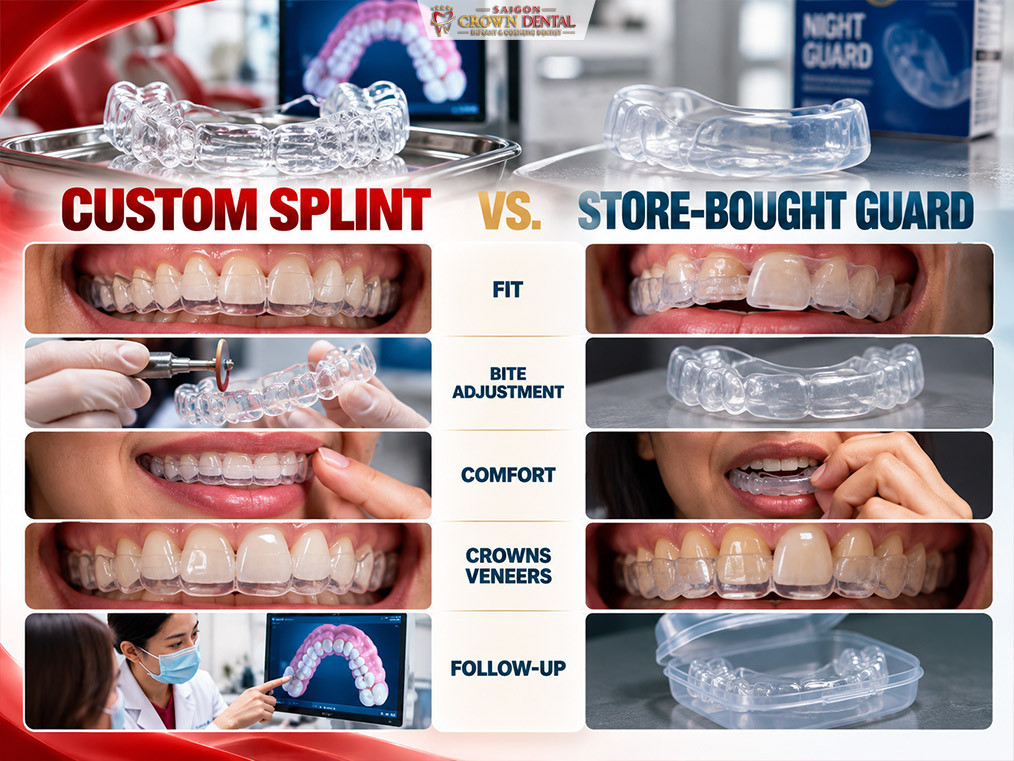
A splint for bruxism made from your own scan behaves very differently from a generic guard. The comparison below shows where the differences matter most.
|
Criteria |
Custom Splint (Saigon Crown Dental) |
Store-Bought Guard |
|
Fit |
Made from your own scan or impression |
Generic size |
|
Bite adjustment |
Checked and refined by the dentist |
Not available |
|
Comfort |
Higher, once you’ve adapted |
Often loose, bulky, or ill-fitting |
|
Compatible with crowns/veneers |
Assessed and designed around your restorations |
Not accounted for |
|
Follow-up |
Included |
Self-monitored |
A cheaper guard isn’t automatically dangerous. Even so, if you have jaw pain, restorations to protect, or a heavy grinding pattern, a device that hasn’t been checked by a dentist is a real gamble with your own teeth.
Send us your details and our dental team will review your case and contact you with a treatment plan, splint recommendation and estimated cost.
- Patient name
- Patient phone
- Patient email
- Select country
- Do you grind your teeth during sleep?
- Do you have jaw pain, headaches, or damaged restorations?
- Your message
When should you get a splint for bruxism?
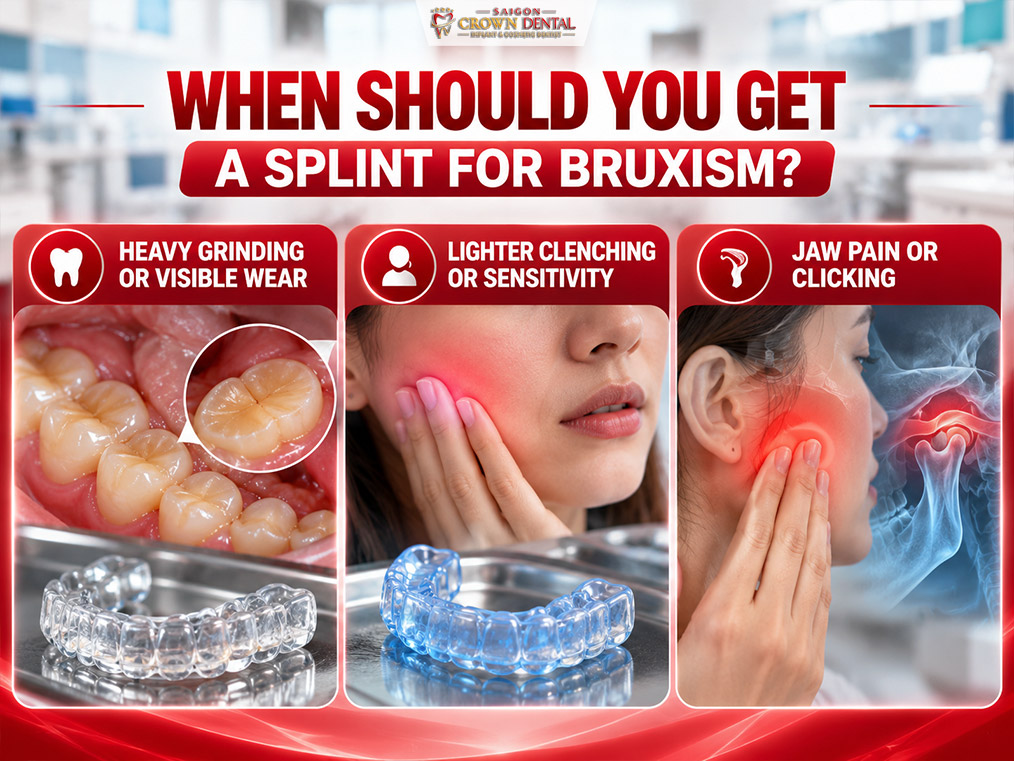
Your dentist decides which design fits, based on how heavily you grind and the condition of your teeth. Therefore, the lists below are a general reference only.
Hard acrylic splint
This design is usually the right choice if you have:
- Heavy, consistent nighttime grinding
- Existing wear, chips, or cracks already visible on exam
- Crowns or veneers that have failed more than once
- A need for a device the dentist can adjust precisely over time
Soft or dual-laminate splint
Alternatively, a softer design often suits you better if you have:
- Lighter clenching, mostly under stress or while awake
- First-time use of an appliance, so comfort matters most
- Mild sensitivity without significant tooth wear yet
Further evaluation first
In some cases, your dentist needs to examine you more closely before recommending any splint. This applies if you notice:
- Jaw joint pain, clicking, or a sensation of the jaw locking
- Difficulty opening the mouth comfortably
- Suspected TMJ involvement alongside grinding
For this reason, your dentist can only confirm which splint fits your case after a clinical exam and a look at your bite. The guidance above is not a diagnosis.
What happens if bruxism goes untreated?
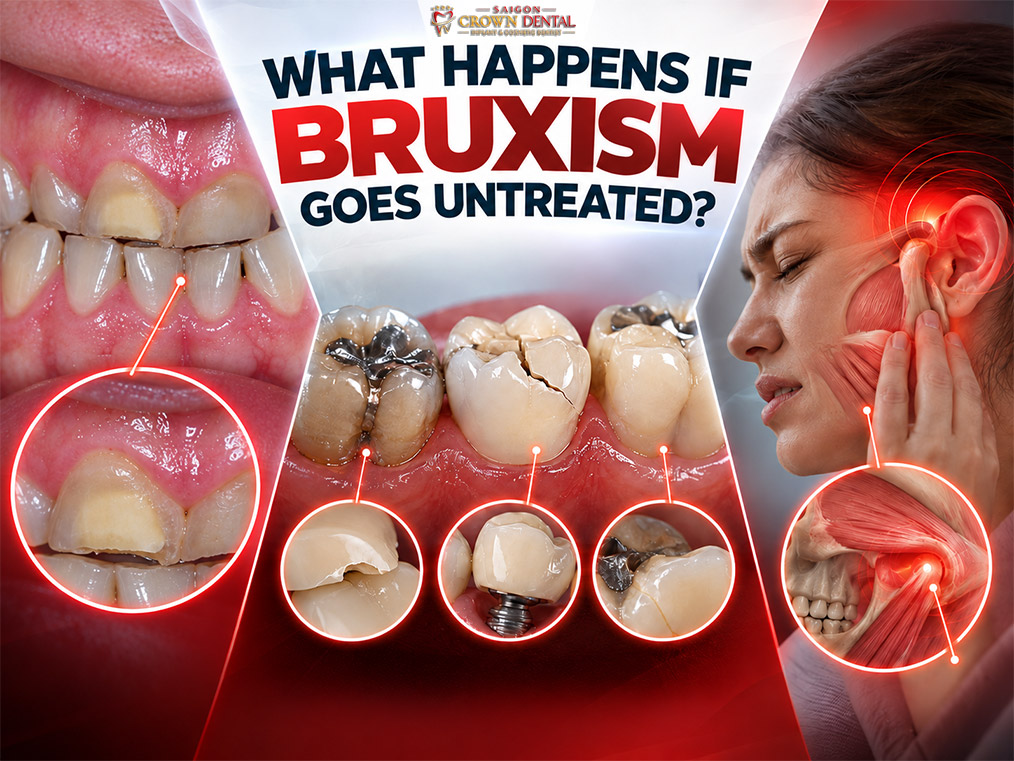
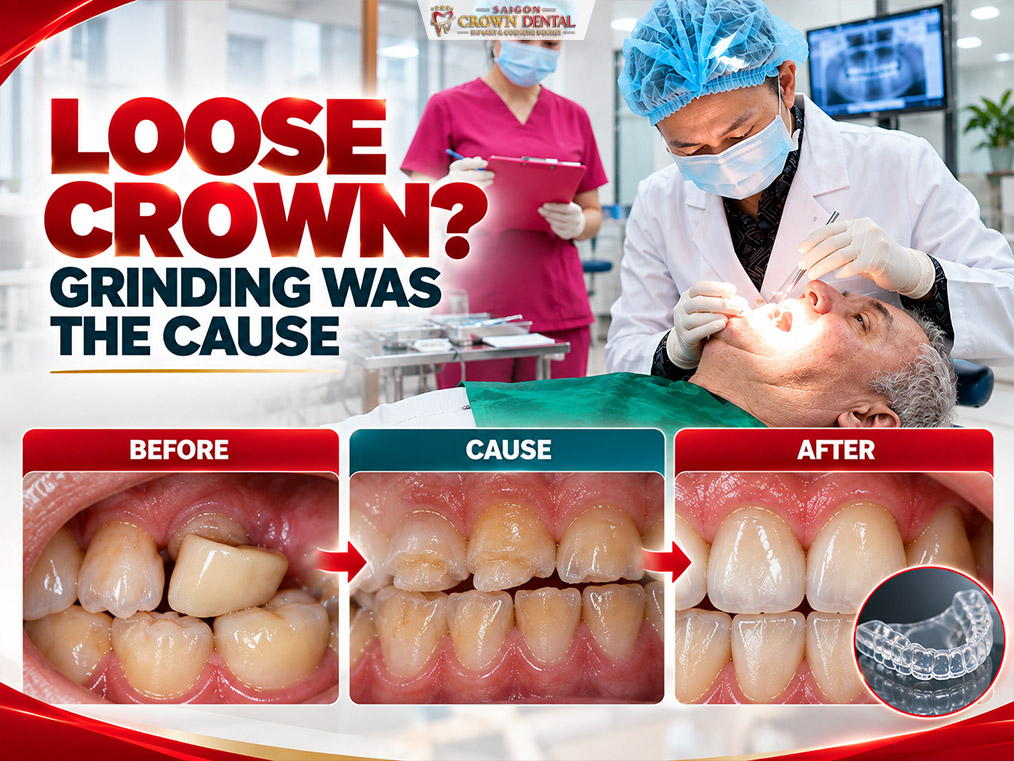
Without a splint for bruxism, grinding gradually wears down enamel, cracks teeth, and shortens the life of your restorations. Because the risk builds slowly, most patients don’t notice until damage has already started.
-
Your teeth
Enamel wears thin, sensitivity increases, and small cracks can turn into larger fractures.
-
Your restorations
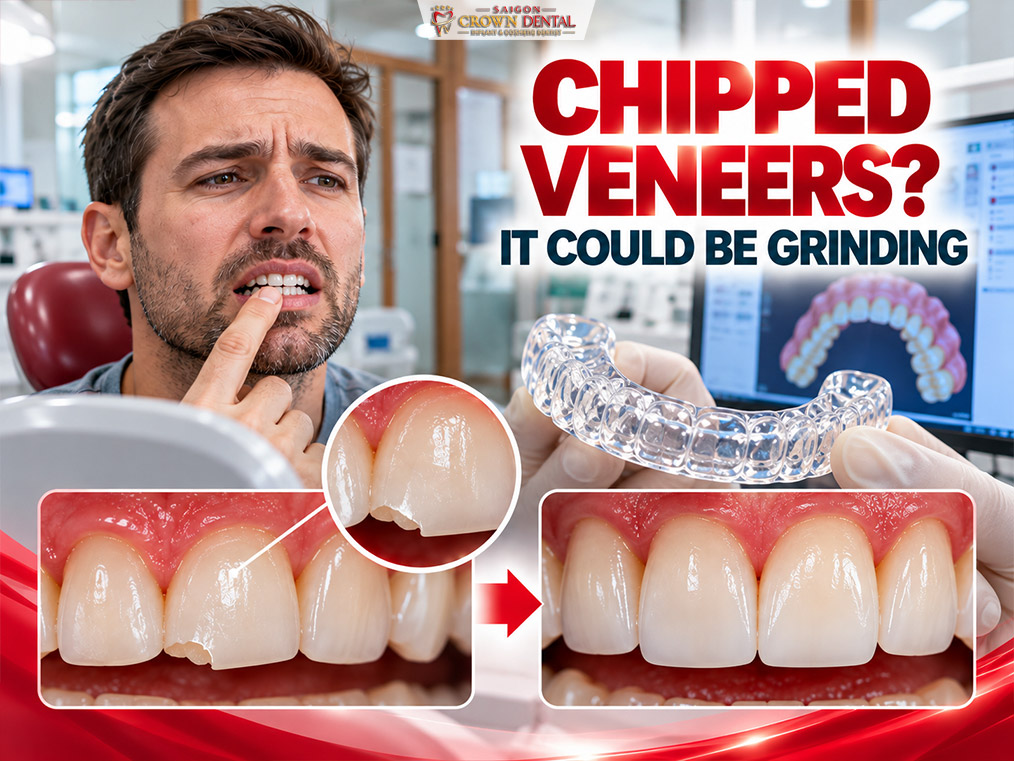
Over time, fillings loosen, crowns chip, veneers fracture, and implant-supported work takes on stress it wasn’t designed for.
-
Your jaw and muscles
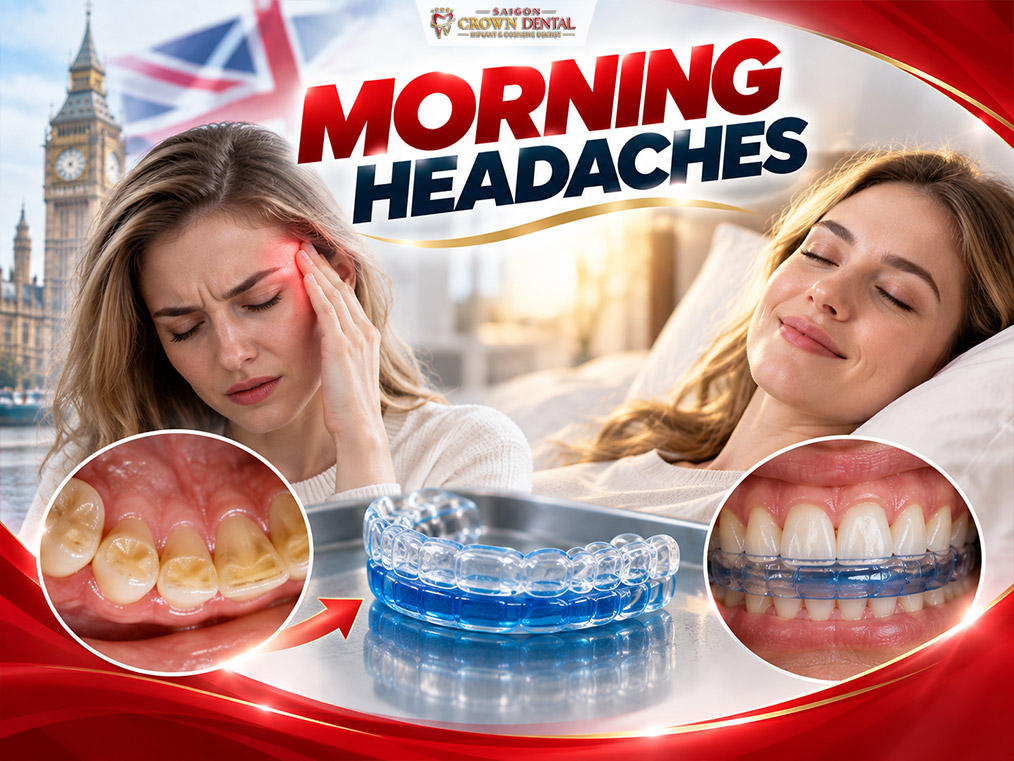
Meanwhile, chewing muscles stay tense, mornings start with a stiff jaw, and some patients develop recurring headaches near the temples
How we make your splint
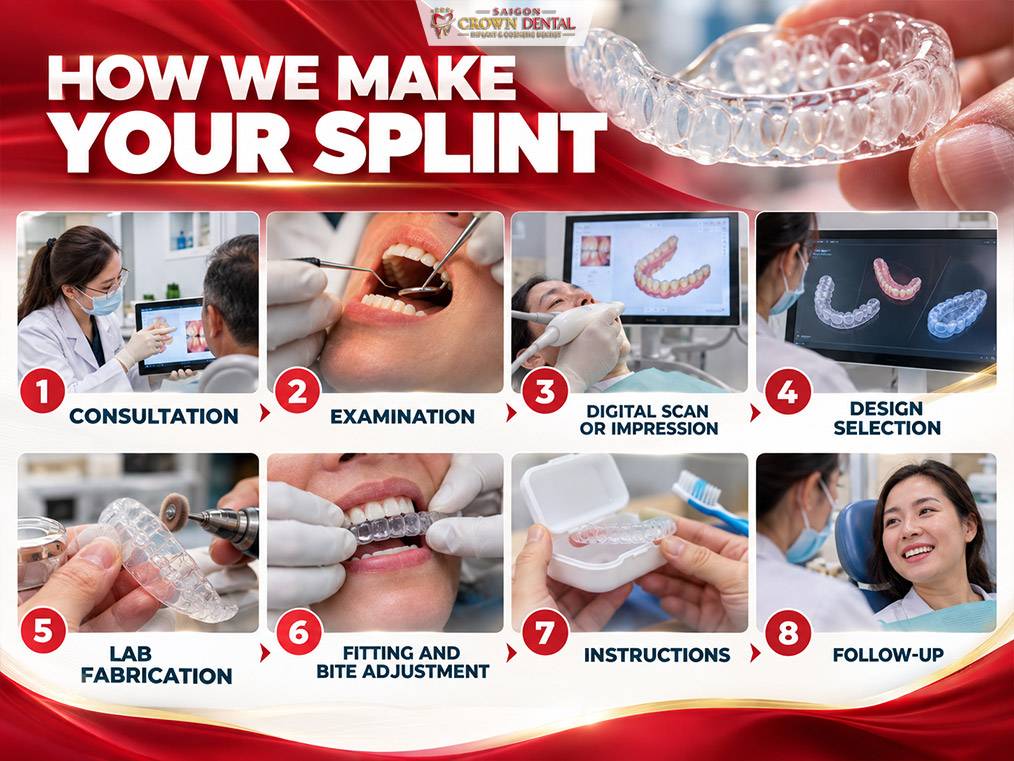
- Consultation
We ask about your grinding pattern, jaw pain, sleep, and any crowns, veneers, or implants.
- Examination
Next, we check tooth wear, bite contact, jaw muscles, and joint movement.
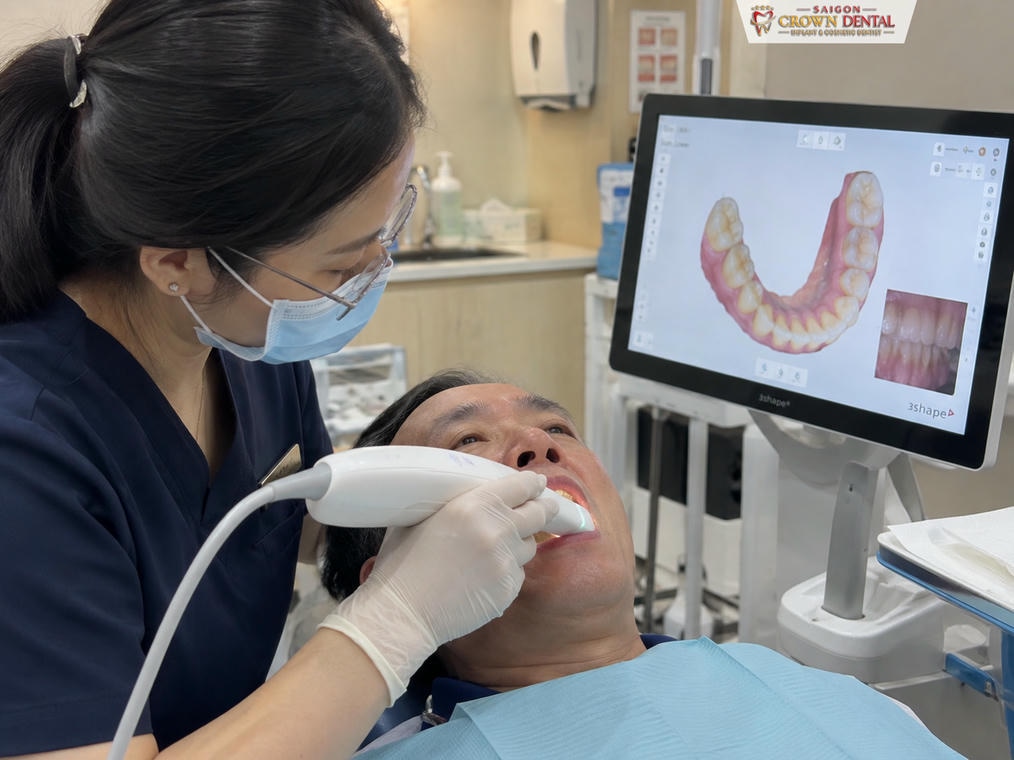
- Digital scan or impression
This captures the exact shape of your bite.
- Design selection
Based on your exam findings, we choose a hard, soft, or dual-laminate design
- Lab fabrication
Your splint is then built to that exact scan
- Fitting and bite adjustment
We check it in your mouth, not just on a model.
- Instructions
You learn how to wear, clean, and store it.
- Follow-up
Finally, we check wear, comfort, and bite contact after you’ve used it.
How long does it take?
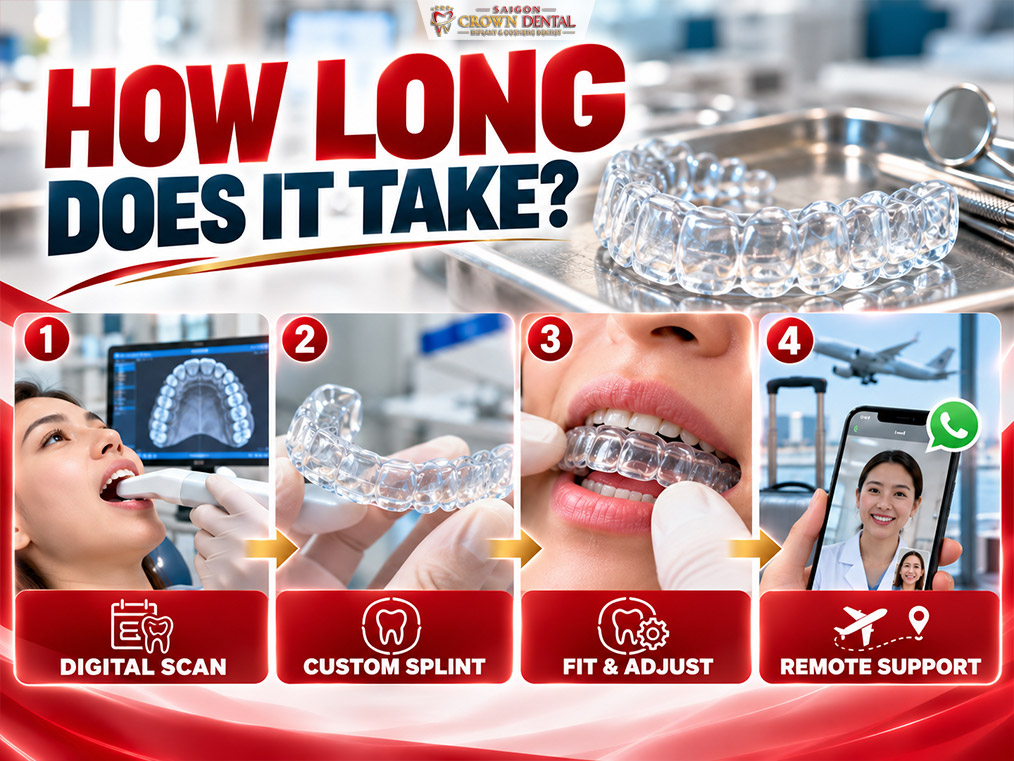
Because Saigon Crown Dental designs each splint for bruxism from an in-house digital scan, turnaround is faster than sending impressions to an outside lab.
-
Number of appointments:
Typically two. The first is for assessment and scanning, while the second is for fitting and bite adjustment.
-
Short-stay option:
If you’re only in Ho Chi Minh City briefly, we can schedule your scan and fitting close together. Afterwards, we follow up on WhatsApp once you’ve flown home, in case any adjustment is still needed.
Why choose Saigon Crown Dental for your splint for bruxism
-
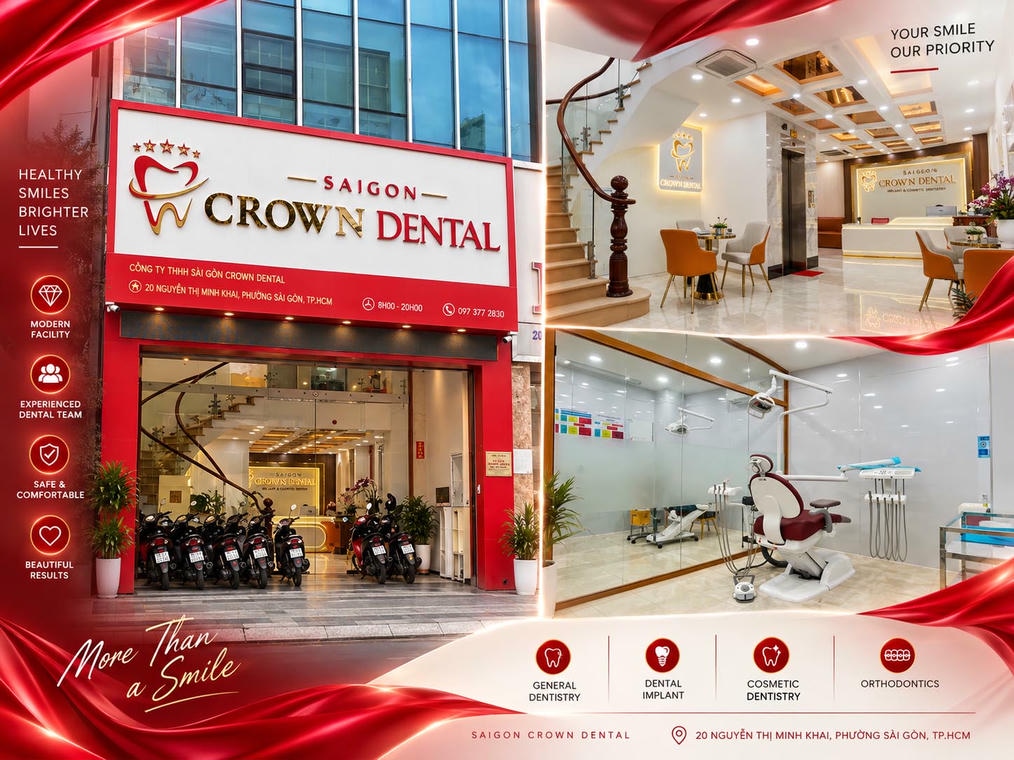
A central Ho Chi Minh City location, easy to find and easy to reach.
The clinic sits in the heart of the city, simple to reach from the airport, your hotel, or between other stops on your trip.
-
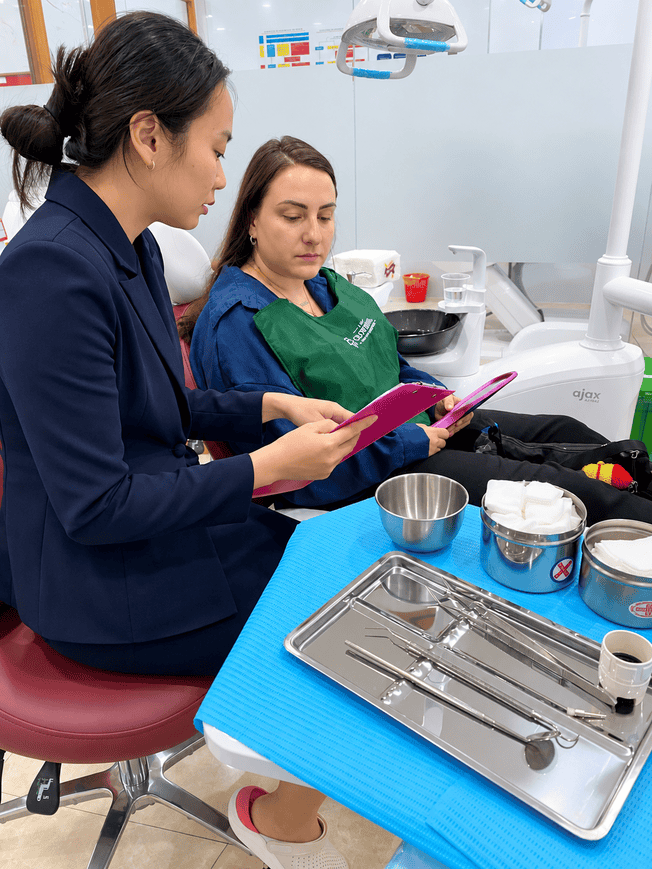
A team that communicates in English.
You can describe your grinding pattern, jaw pain, and sleep concerns clearly, without a language barrier getting in the way.
-
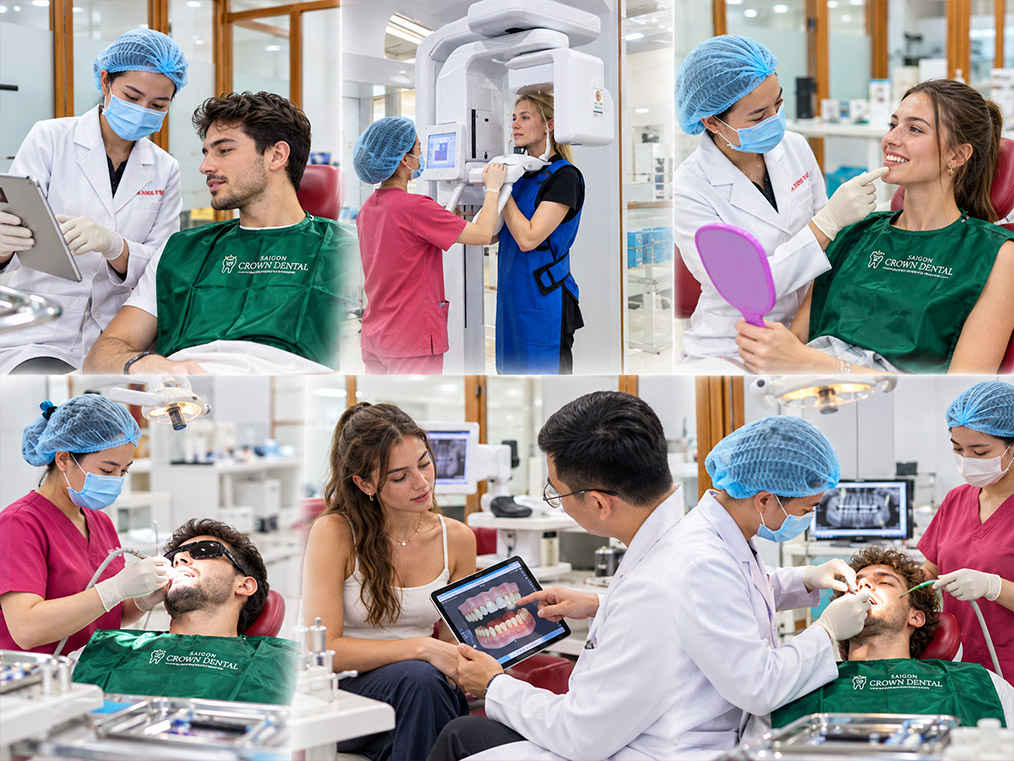
In-house digital scanning that shortens treatment time.
There is no waiting on an outside lab for your bite impression. Instead, the scan happens chairside, on the same visit as your exam.
-
Genuine, durable splint materials.
We use dental-grade acrylic and laminate materials chosen for durability and comfort, not the cheapest available option.
-
Transparent pricing, no hidden fees.
Your dentist walks you through the expected cost at your first visit, and we agree on it together before fabrication begins.
-
Strict sterilization standards.
Our equipment, instruments, and treatment rooms follow Ministry of Health infection-control standards closely.
-
Flexible payment options.
Cash, bank transfer, or card, whatever works for you.
Support for international patients
For example, we can remake a lost splint from your saved scan without a new impression.
- English-language instructions for wearing, cleaning, and storing your splint
- WhatsApp contact if the device feels uncomfortable after you’ve flown home
- A digital record of your scan, so a replacement can be remade without a new impression if yours is lost or damaged abroad
- Help coordinating your splint visits around a broader travel itinerary, including accommodation and transport suggestions when needed
- Scheduling built around however long you’re staying in Vietnam
Splint for bruxism cost at Saigon Crown Dental
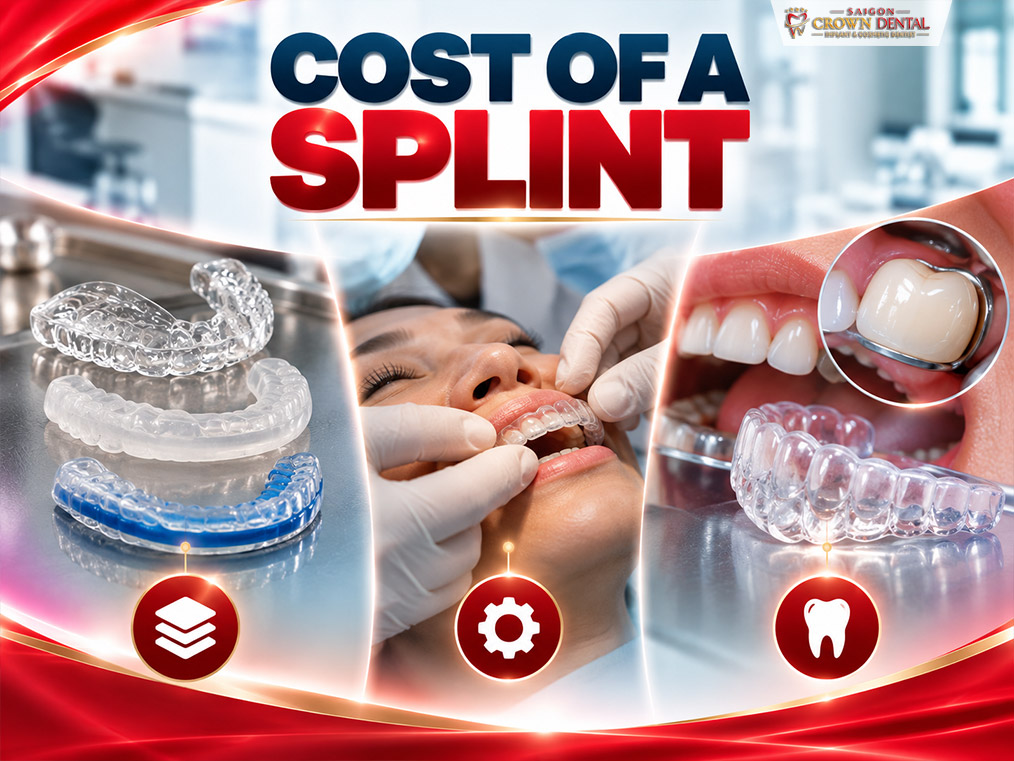
The cost of a splint varies depending on a few factors specific to your case.
-
Splint type.
Hard acrylic, soft, and dual-laminate designs use different materials and lab processes, which affects price.
-
Extent of adjustment needed.
A bite that needs more careful balancing takes more chairside time to fit correctly.
-
Whether restorations are involved.
Protecting existing crowns or veneers may call for a slightly different design.
Because every case differs, your dentist walks you through the exact cost at your first visit.
Splint care made simple
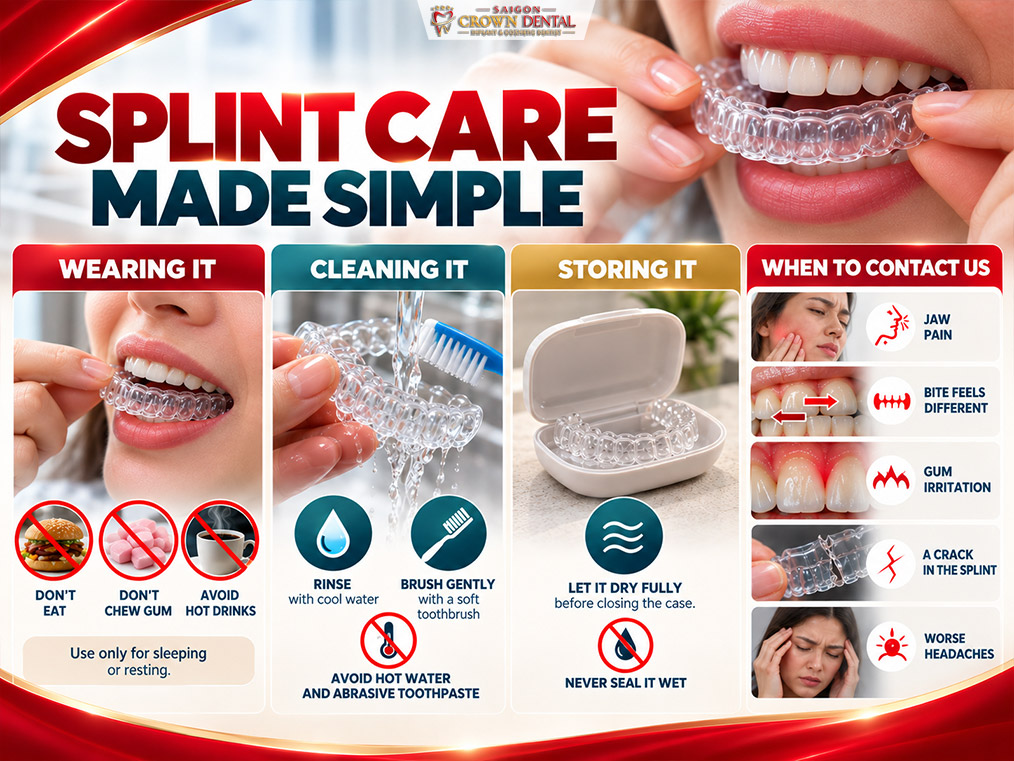
A splint only protects your teeth if it stays in good condition and you wear it consistently. In addition, a few daily habits can ease the grinding itself. Together, they help your splint work better.
-
Wearing your splint
Use the splint for sleeping or resting only. For example, don’t eat or chew gum with it in, and avoid very hot drinks while it’s in your mouth.
-
Cleaning and storage
After each use, rinse the splint with cool water and brush it gently with a soft toothbrush. Hot water and abrasive toothpaste can both warp the material, so it’s best to avoid them. Once it’s clean, let the splint dry fully before closing it in its case, because sealing it while wet can cause odor and bacteria to build up.
-
What causes bruxism, and what helps?
The exact cause isn’t always clear. However, bruxism is most often linked to stress and anxiety. Sleep problems such as snoring or sleep apnea, certain medicines, smoking, and heavy alcohol or caffeine use can also play a part, as the NHS guidance on teeth grinding explains.
Alongside your splint, these habits may ease grinding:
Make time to relax, for example with breathing exercises, music, or regular exercise
Keep a steady bedtime and a dark, quiet bedroom
Cut back on alcohol and caffeine, and avoid smoking
Skip gum and hard foods if your teeth or jaw hurt
These habits support your splint but don’t replace it.
-
When to contact us
Sometimes a splint needs adjusting. Therefore, get in touch with our team if you notice any of the signs below:
- Jaw pain
- A bite that feels different after you remove the splint
- Gum irritation
- A crack in the device
- Headaches that get worse instead of better
If you also have tooth damage, sensitive teeth, or pain in your jaw, face, or ear, please book a check-up so your dentist can review your bite.
Frequently asked questions
-
Does a splint for bruxism stop teeth grinding?
Not necessarily. Mainly, it protects your teeth and restorations from the force of grinding. It may ease discomfort for some patients, but it doesn’t guarantee the habit stops.
-
How much does a custom splint cost at Saigon Crown Dental?
Soft night guards start from $100, and hard acrylic splints start from $125. Your final price depends on the design and any bite adjustment needed.
-
Can I get a splint if I have crowns or veneers?
Yes. First, we check the condition of your existing restorations, and then we design the splint around them
-
How long does it take to get my splint?
Most patients need two visits: one for the scan and one for fitting. Moreover, we can plan the schedule around your travel dates.
-
Is a custom splint better than a store-bought guard?
A custom splint is made from your own scan and can be checked and adjusted by a dentist. A generic guard can’t offer either.
-
Does insurance cover a bruxism splint?
Coverage depends on your insurance provider’s policy. Please check directly with your insurer, or contact the clinic for guidance.
If your teeth or restorations keep taking the hit from grinding you didn’t even know was happening, message Saigon Crown Dental on WhatsApp. First, we’ll check your bite. Then, we’ll tell you honestly whether a splint for bruxism, and which kind, actually fits your case.